Fall 2020
A world without insects?
Insect abundance and biodiversity are declining worldwide. For Washington State University scientists, complacency is not an option. » More ...

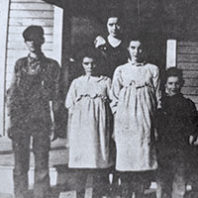
As an aquifer declines, farmers hope for water promised 80 years ago.
LAST SUMMER as we stood in the middle of Brad Bailie’s onion fields just north of Connell, the discussion, as discussions seem to do in the Columbia Basin, turned to water.
Bailie ’95 pumps irrigation water from a well drilled down 800 feet. Neighbors have pushed wells down to 2,000 feet. At such depths, the water is often laden with salts and minerals. After a while of irrigating with this water, a crust can form over the soil surface. Farmers must use a variety of means to break up the crust, including … » More …

The ‘lost’ apples of the Palouse entice a detective to sleuth for their rediscovery
Dave Benscoter’s obsession began innocently—as a favor to a neighbor, Eleanor, a retired missionary. Resettled near Chattaroy, and now beset with complications from childhood polio, she asked Benscoter ’78 to harvest some apples for her from the old orchard above her house.
“Every apple was too high for me to pick,” he says of his initial effort.
“One of the trees was 40 to 50 feet high. The trunk was split, and I couldn’t get my arms around either trunk.”
Determined to deliver Eleanor’s apples at some point, he started pruning … » More …
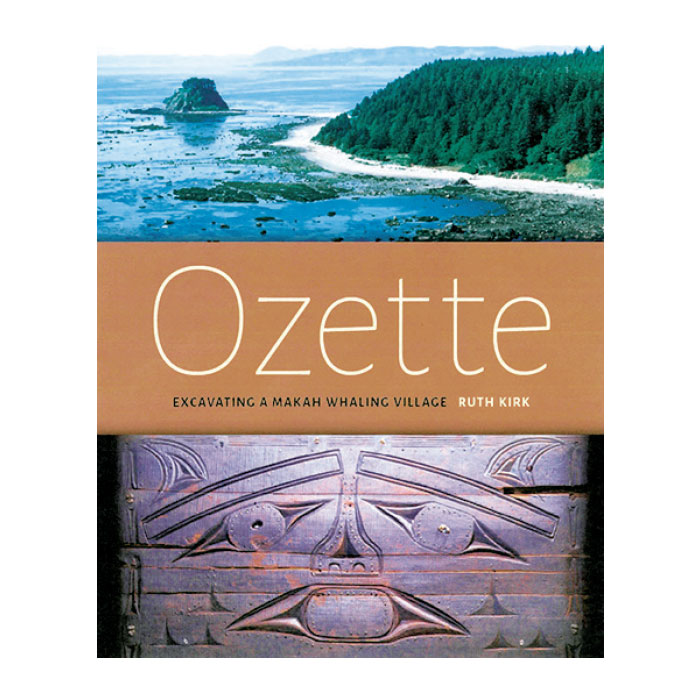
Ruth Kirk
University of Washington Press: 2015
Although the professional literature is rich and extensive, not enough had been written for the public on the extraordinary archaeological exploration at Ozette, the ancient whaling village on the Olympic coast between Neah Bay and La Push. There is Hunters of the Whale, by Northwest chronicler Ruth Kirk, written for young readers in 1974 when the expedition was barely half finished. Archaeology in Washington, coauthored by Kirk and … » More …
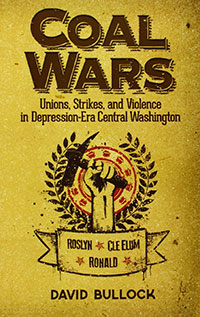
David Bullock ’85 MA
WSU Press, 2014
There was a time, it’s been recalled, when each home in Roslyn had three pictures on its wall: of Jesus, FDR, and John L. Lewis, the powerful head of the United Mine Workers of America, or UMW. But labor conflicts in the coal-mining town during the 1930s would severely strain and replace the loyalties reflected by the latter two. In Coal Wars, David Bullock recounts the bitter struggle in 1933-34 between the UMW and the more radical Western Miners Union in the mining communities of Roslyn, … » More …
“The whole concept has burgeoned ... to one where the landscape is part of why people select to live in certain locations, has political meaning, has religious meaning, has all of these other kinds of meaning.”
» More ...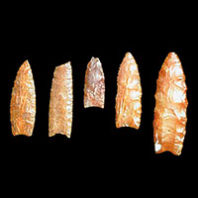
Up until fairly recently, archaeology of the western hemisphere stopped at about 13,000 years ago. Since the discovery of the beautiful and finely worked Clovis points in 1929, and subsequent discoveries of Clovis technology across the United States, archaeologists generally adopted the “Clovis First” belief, that whoever created these tools must have been the first humans to populate North America.
Over the last few decades, however, a series of dramatic discoveries have pushed the estimated arrival by humans in the Western Hemisphere further and further into the past. Dates that were once considered only on the fringes of academic archaeology are now being discussed seriously … » More …

This being my last “First Words,” I have struggled to conjure something profound and insightful, or at least clever, to leave you with. But I am coming up short. So I’ll just skip the philosophical and offer a few observations. Forgive me if I repeat myself. I’ll try not to get sentimental.
From Washington State Magazine’s inception, we have followed the simple principle that we would not produce anything we would not read ourselves. Add that to our tagline—“Connecting you to Washington State University, the State, the World”—and I believe we’ve created a pretty successful formula.
There are many things we deliberately decided not to … » More …
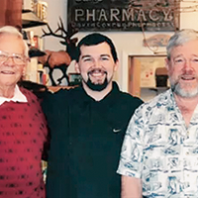
David Cox’s life seems equally divided between his South Bend pharmacy and hunting. And family encompasses both.
Cox is the second generation of a three-generation dynasty of pharmacists in South Bend, the county seat of Pacific County, just upstream on the Willapa River from Willapa Bay.
Don Cox ’46 graduated from Washington State University twice, first in chemistry before joining the Army during World War II, then in pharmacy in 1946. He began his career in Long Beach, then started the South Bend Pharmacy in 1958. The business is difficult to miss. Just off of U.S. 101, it is painted a tasteful gray with … » More …