
Summer 2022
Weeding out drug clash
New research shows cannabis and some OTC and prescription drugs definitely don’t mix. » More ...



If Shakespeare lived today, the playwright would surely be prescribed a sleep study. With his many references to sleep walking, apnea, insomnia, and nightmares, you can almost see the baggy-eyed bard sitting in his nightcap writing by candlelight.
“O sleep, gentle sleep! Nature’s soft nurse, how have I frighted thee, that thou no more wilt weigh my eyelids down?” he bemoans in Henry IV, Part 2.
It’s a familiar lament to all those who have lain awake yearning for sleep’s healing balm. But there the comparison ends.
While Shakespeare’s restless, seventeenth-century nights were lit with a single amber flame, today’s insomniacs are usually staring at … » More …
Humans generally think of themselves as highly evolved creatures, but when it comes to stress, our fear response is as primitive as the tiny beasts that fled predators 500 million years ago. Though lifesaving, this fight-or-flight system is also triggered by modern concerns such as political Facebook posts or being stuck in traffic. Over time, psychological stress can build into an internal time bomb.
While some suggest humans have outgrown their stress system, studies show there are ways to teach that old brain new tricks, helping to calm the angst that comes with contemporary living.
Ryan McLaughlin, assistant professor in the Department of Integrative … » More …

Imagine sitting on a park bench waiting for a friend. You’re checking messages on your phone when a noise catches your attention. You look up and suddenly realize it’s a beautiful autumn day. The sun is warm on your skin and a gentle breeze tempers the heat.
From a nearby tree, birds call while a few golden leaves flutter, break loose, and slowly drift to the ground. On the grass, a parade of tiny black ants drags a bread crumb. Traffic passes in the distance. Quiet voices chat and laugh.
The scene is a simple example of mindfulness, and your brain loves it, especially during … » More …
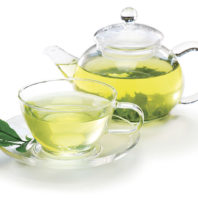
Much of what is known, scientifically, about the arthritis-fighting benefits of green tea has in one way or another come from Salah-uddin Ahmed and his research group.
It was Ahmed who helped establish that a phytochemical found in green tea essentially halts the progression of rheumatoid arthritis in lab rats.
It also was Ahmed who helped pinpoint where in the disease’s progression that the phytochemical, known as epigallocatechin-3-gallate or simply EGCG for short, is able to combat further degradation without blocking other cellular functions.
Now, with scientific evidence supporting green tea’s health benefits continuing to pile up, Ahmed hopes the research he and his … » More …

ViviAnne Fischer practices midwifery in her clinic near Pullman, where you can see her connection to the long and complicated history surrounding the practice.
In a green-colored house along a dirt road, at the top of a set of stairs, a large, nondescript black suitcase stands before a crammed bookshelf, her “library” for families. Inside the suitcase is a mix of new, modern medical equipment beside bottles of herbal extracts.
On the other side of the room is an odd-shaped stool at the foot of a bed. The bed is almost cot-like but the wooden frame poking out from beneath the quilt is carved. The … » More …

The health care system has long been focused on finding ways to improve patient care.
But to pharmacist Josh Neumiller and other members of an interdisciplinary research team at Washington State University Spokane, too often something was missing.
Patient perspectives.
“We flipped that around,” explains Neumiller, an associate professor at WSU’s College of Pharmacy who studies medication lapses and other adverse conditions among those who take multiple prescription drugs. “There’s been this realization…that the people these improvements were supposed to be for weren’t being included in the decision-making process.”
Neumiller, along with researchers from the WSU College of Nursing and Providence Health … » More …
Body fat has gotten a bad rap in recent years. It’s understandable given that 70 percent of American adults are reportedly overweight or obese, costing $190 billion per year in related medical bills. But new research shows not all fat is created equal.
Washington State University professor of animal sciences Min Du says our bodies are equipped with both good and bad types of fat that naturally work together to balance weight and metabolism. The process—along with a little help from diet and exercise— involves an intricate interplay between white, beige, and brown fat—or adipose tissue.
“When most people think of body fat, they’re … » More …