Fall 2023
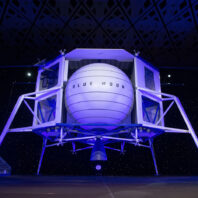
To the moon
If you understand hydrogen, you have a future. » More ...

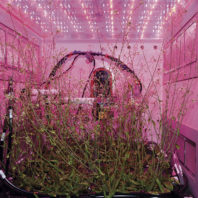
Surviving the challenges of deep space exploration could rely as much on botany as astrophysics.
NASA sees plants not only as potential food sources aboard future spacecraft but as natural oxygen producers. The space agency is preparing for its first in-depth study of how growth and development of plants is affected by gravity, or more specifically the lack of it.
“The overall significance is what it could mean for space exploration,” says Norman G. Lewis, a Regents professor at Washington State University’s Institute of Biological Chemistry and principal investigator for the NASA-funded study. “Whether it’s colonizing planets, establishing a station, … » More …
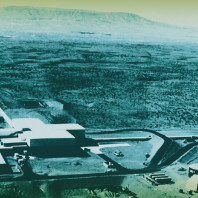
The silence is unnerving. Not another car in sight as I drive through the desolate Hanford nuclear area. The road unfolds in an eerie lacework of tarred concrete until finally I see it gleaming in the distance—the Laser Interferometer Gravitational Wave Observatory (LIGO.)
LIGO is home to Earth’s most sensitive optical instrument, uniquely designed to intercept gravity waves. These elusive cosmic waves—or ripples in space-time—are so miniscule that Einstein thought them impossible to view and measure. And so far, he’s been right. Yet if detected, gravitational waves could transform our fundamental understanding of the universe.
They also, incidentally, play a starring role in the hit … » More …