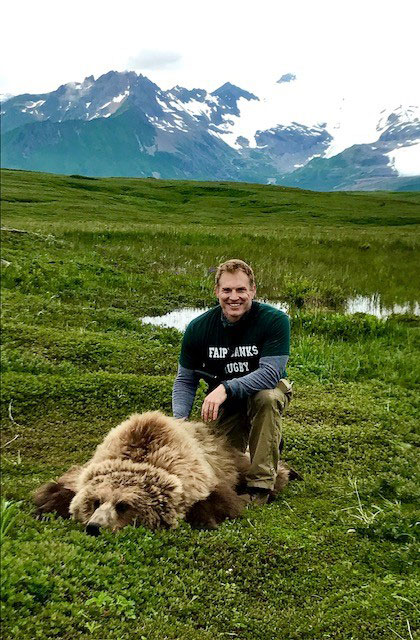
Grant V. Hilderbrand saw his first bear in the wild during graduate research at Washington State University. He was part of a team that helicopter-darted a female brown bear in Denali National Park. The adrenaline rush of the experience put the Midwest native on a career path to working as a wildlife research biologist in Alaska.
Hilderbrand (’95 MS, ’98 PhD Biol.) is the lead editor of Brown Bears in Alaska’s National Parks: Conservation of a Wilderness Icon, published in 2025 by University of Alaska Press.
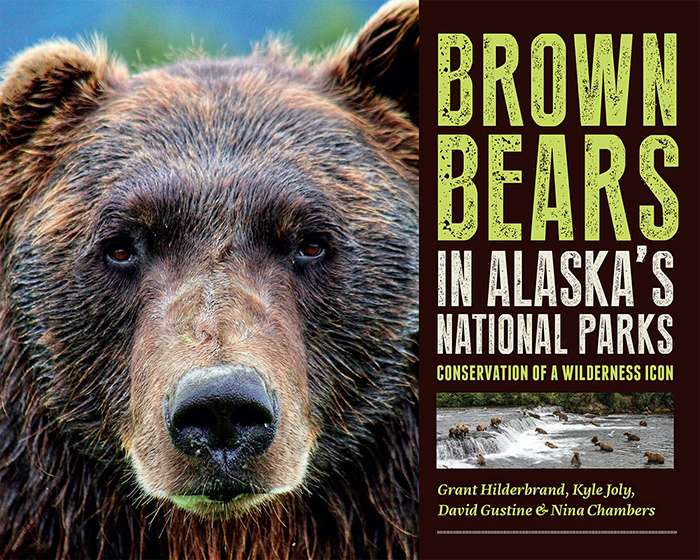
He’s also the superintendent of the Lake Clark National Park and Preserve in southwest Alaska—home to a sizable brown bear (Ursus arctos) population. Alaska’s 30,000 brown bears play critical roles in the state’s natural ecosystems, Alaska Native culture, and the tourism economy.
What drew you to bears?
I always had a certain affinity for bears, but I grew up in places where they just didn’t occur. Every summer, my family would drive west from South Dakota to visit national parks. I was always hoping to see one. I never did.
When I applied to grad school, I was looking for a great mentor, and it just happened that Charlie Robbins studied bears. He was also doing a fair bit of work on elk, moose, caribou, and deer. Getting the offer from Charlie, a research professor and director of the WSU Bear Center, changed my life.
(Courtesy National Park Service)
As a graduate student, I traveled to Alaska for field work. I was only there a short time before I was like, “I’m going to figure out a way to move here and work here.” It took a little while, but I got it done. I spent 12 years with the Alaska Department of Fish and Game as a research biologist before joining the Park Service in 2010.
What led to the publication of Brown Bears in Alaska’s National Parks?
About 10 years ago, my team had four research projects going in different parts of Alaska. It was quite a unique opportunity to study bears in various ecosystems. We published several dozen articles in scientific journals, but we also wanted to share what we learned with the broader public. Jeff Rasic (’00 MA, ’08 PhD Anthro.), science coordinator for the National Park Service for the Alaska region, was working with me on summary documents. He said, “I think you’ve got the skeleton of a book.”
Brown bears are an iconic symbol of wild things and places. By sharing our knowledge, we hope others will join us in becoming stewards of the species.
In the book, we also emphasize the long history of humans and bears in Alaska. Many of the national park designations in Alaska are relatively new, but the ways that people have been utilizing these lands goes back millennia. There is a long history of interactions between bears and people here.
How many bears have you worked with?
I don’t have it down to the bear, but I’ve been part of teams that have handled about 1,400 brown bears, and I’ve probably seen 10,000 black bears and brown bears—some of them repeats. I get the biggest kick and the biggest rush every single time. Even living here in Anchorage, every now and then I’ll see one crossing the road. It’s just precious. Every single time.
What type of graduate research did you do at WSU?
We were interested in salmon’s importance to bears’ diets. We used something called stable isotopes—new technology at the time—to trace and quantify the contribution of salmon for bears’ physiology. We did this through hair and blood samples.
Quantifying bears’ reliance on salmon helps with overall fisheries management. You want enough fish to meet commercial, sport, and subsistence fisheries, but you also enough to support healthy ecosystems through time. I would say the project was 50 percent lab work, but all our field work was up in Alaska.
Describe the first time you handled a brown bear.
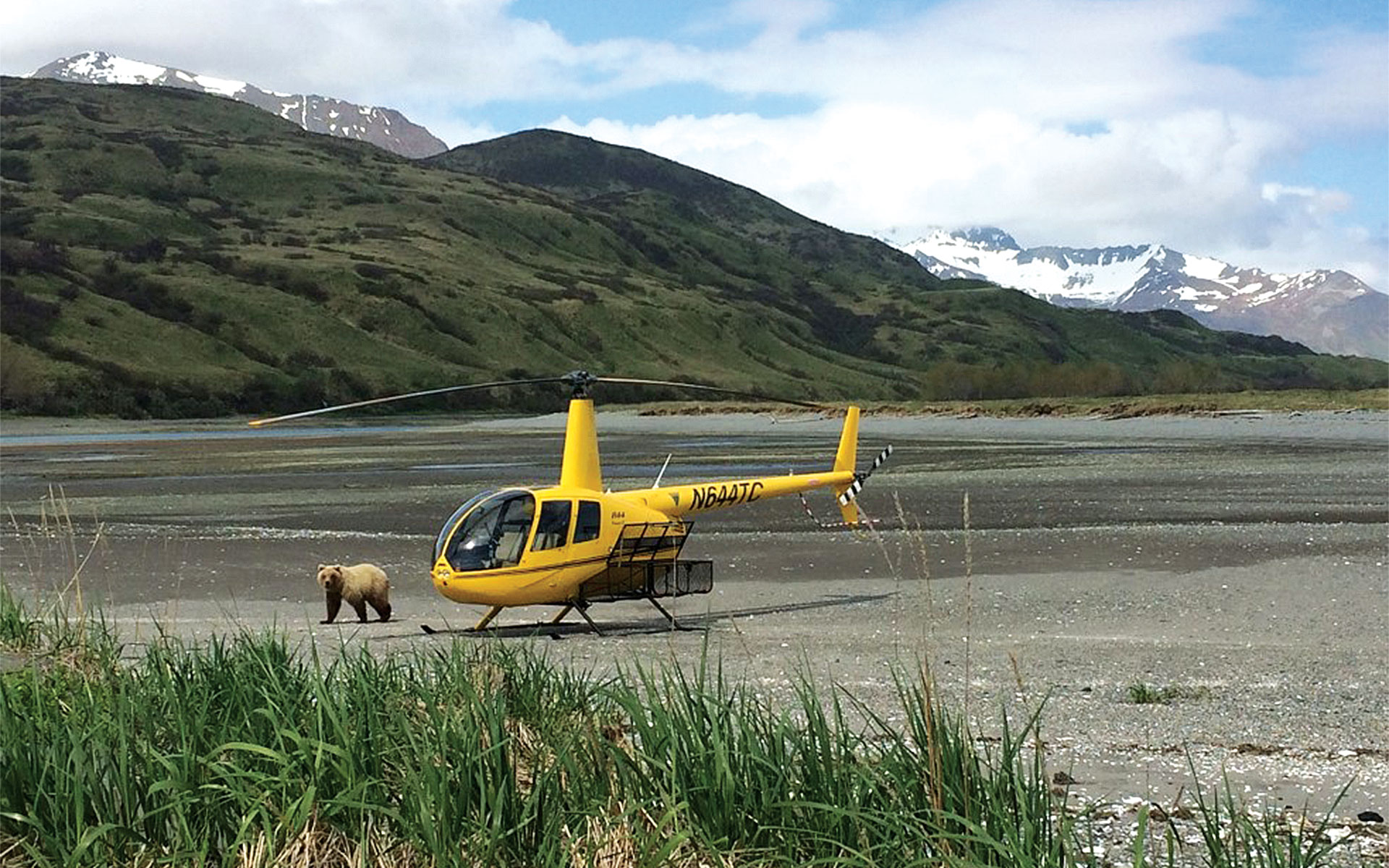
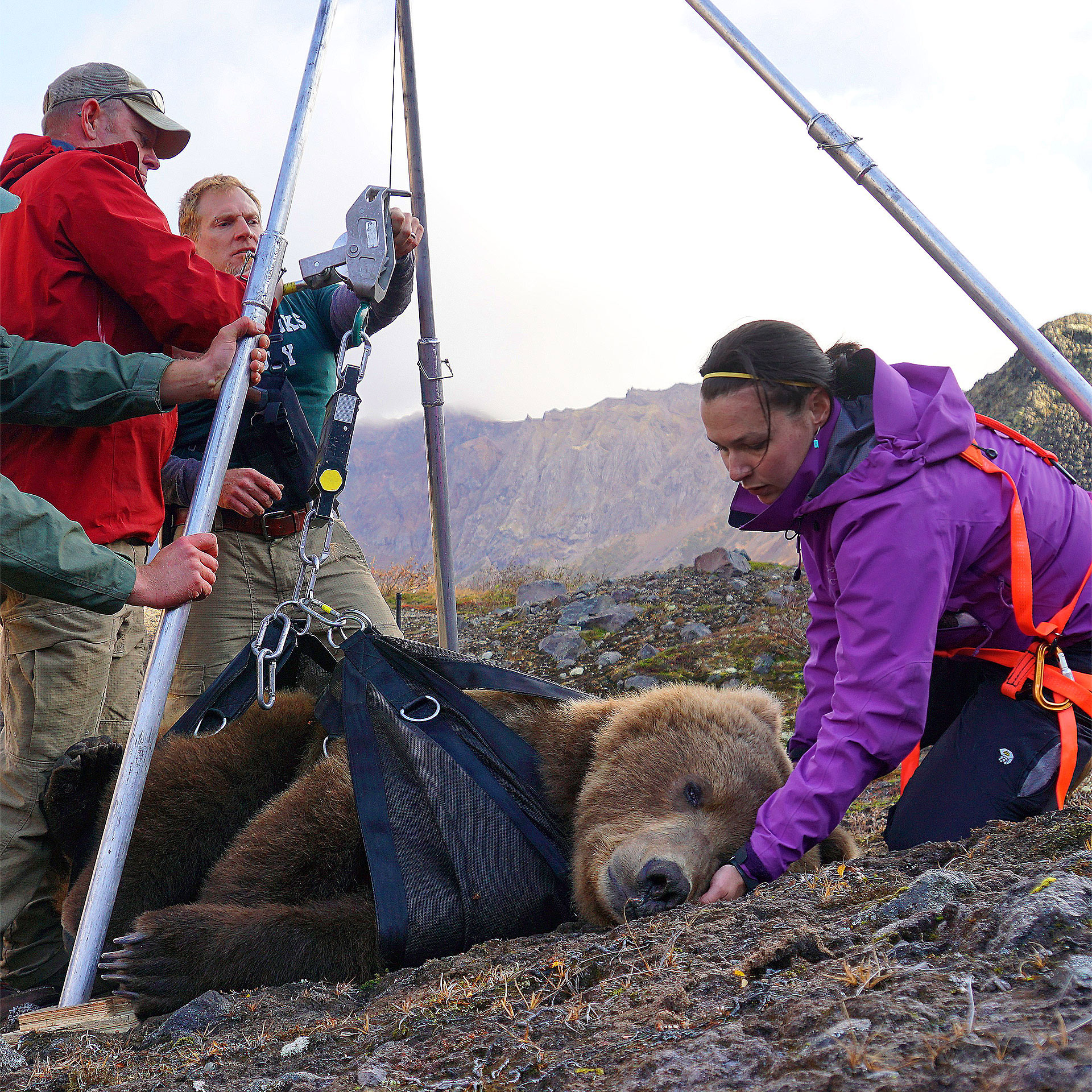
I was in Denali National Park, fairly close to the Muldrow Glacier. Everything we do up here is with helicopter darting. We don’t have roads, so we can’t responsibly put out traps for bears. We caught an adult female and she had two small spring cubs. We pulled a small tooth for aging, and she was about 32 years old. That’s still one of the oldest bears I’ve ever handled.
What was striking is that her teeth were ground down and she was just really, really lean, but she was still raising cubs. It was a reminder of how much these bears are living on the edge.
The crew usually leaves someone with the bear while they catch the next one. So, I was alone with that bear, waiting for it to wake up. The clouds broke and Denali was right there, towering above me.
We have some very safe and reliable drugs to sedate bears. They go down smoothly and wake up smoothly. The signs are very predictable. If we have a problem, we can give them a little bump and put them down longer.
Do you handle the same bears enough to learn their personalities?
In some of the studies, I overlapped with the same bears for 10 years or so. Some are highly predictable. There was one bear on the Kenai Peninsula who reacted differently to the helicopter than almost every other bear. The helicopter comes in low and quiet to minimize the chase as much as possible. When the bears hear the helicopter, they start to run. This bear would charge the helicopter instead of running. We would fly backwards to lead her where we wanted her. It’s harder to dart a bear facing you because there are things you don’t want to hit.
The book discusses two ways people might encounter aggressive bears—through a food source or protecting cubs.
The currency that bears live by is calories. That’s part of why they’re so food-motivated and why they can be defensive with food resources. They live and die by the fat they’re able to store up for the winter. When you’ve got a mom with little cubs, it’s even more of a challenge. Her food options are more limited because the threats on the landscape are exacerbated with cubs.
Female bears don’t have their first litter until they are seven or eight years old. The cubs will stay with them for three to five years. The mortality of cubs is quite high in the first year or two—there are lots of risks out there. There’s a heavy, heavy investment in those cubs, and that is why we think female bears defend their young so fiercely.
Alaska Native oral histories about brown bears are woven throughout the book. How is Indigenous knowledge important to managing bears and other wildlife?
Alaska is a bit different than other places in that we very much view humans as being part of a natural functioning ecosystem. About 70 percent of National Park Service lands in Alaska are open to subsistence hunting. We have to understand the effect of human harvest on bear populations, and also the harvest of species they prey on—whether that’s moose, caribou, or especially salmon. Those resources are critical to the food economies of rural Alaska communities, and they are equally important to Alaska Natives’ culture and language.
Sharing knowledge depends on cultural norms and practices. There are some Native cultures that won’t utter the word bear. As land managers, we benefit tremendously from knowing about the long history of human-wildlife interactions that folks can share with us. These are people living in rural areas, and they’re seeing things we certainly don’t see.