
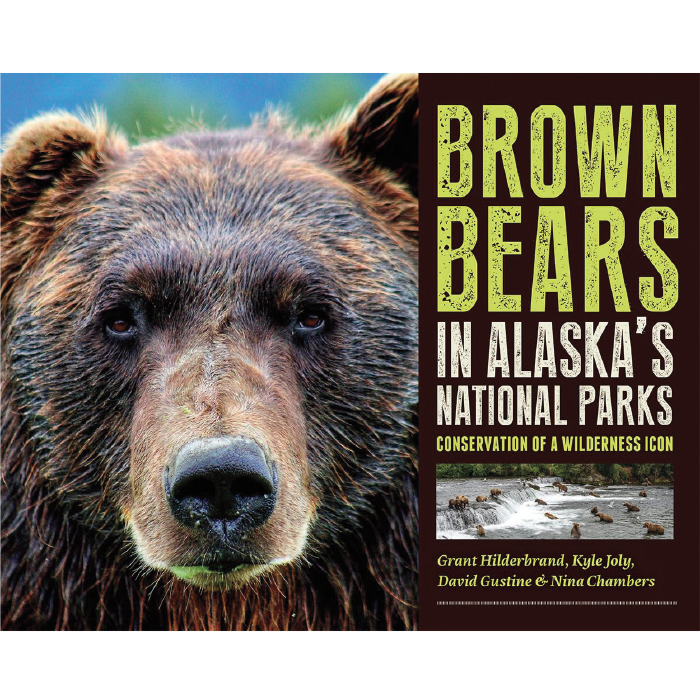
Grant V. Hilderbrand ’95 MS, ’98 PhD
University of Alaska Press: 2025
Alaska’s 30,000 brown bears are a symbol of the state’s wild places, a draw for tourists, and a source of reverence in Alaska Native cultures.
This collection of writings—lavishly illustrated with National Park Service photos—explores the natural history, ecology, and behavior of brown bears in Alaska’s national parks. More than 30 scientists contributed to the book with the goal of distilling decades of research into engaging reading for the public.
“By sharing our knowledge, we hope others will join us in becoming stewards of the species,” says lead editor Grant V. Hilderbrand, who has worked as a wildlife biologist in Alaska for 30 years.
The book highlights how brown bears are adapted to living across a wide variety of landscapes in Alaska’s national parks. The hefty specimens featured in Katmai National Park and Preserve’s “Fat Bear Week,” for instance, far outweigh the 200-pound brown bears in the Gates of the Arctic National Park. Despite the differences in the populations, the bears share the challenges of accruing enough fat to survive winter hibernation and raising their young in harsh environments.
Alaska is one of the few places that still has healthy brown bear populations and large, intact natural ecosystems. But the bears aren’t immune from the pressures of climate change, development, or even increased tourism.
The long co-existence of bears and people in Alaska is also part of the narrative. Archeological evidence from thousands of years ago documents the use of bears for food, fur, and tools. Indigenous oral histories highlight stories of brown bears’ strength, cunning, and close relationships with people.
Close interactions between people and bears continue today, the book notes. Compared to other national parks, many of Alaska’s national park designations are relatively new. Subsistence hunting remains a permitted activity on the majority of National Park Service lands in the state.
“Alaska is a bit different than other places in that we very much view humans as being part of a natural functioning ecosystem,” Hilderbrand says.
Read a Q&A with Hilderbrand about bears and Alaska