
Tom and Mary Fisher replaced their propane furnace with a heat pump last year. For the Whidbey Island couple, it was smart investment with environmental benefits.
They wanted a reliable heating-and-cooling system in their home of four decades. Doing their part to reduce greenhouse gas emissions was a priority too.
 Staff illustration of coast of Whidbey Island from Adobe Stock photo
“We like the clean energy aspect of heat pumps,” says Tom Fisher, a retired cabinetmaker. “About 60 percent of Washington’s electricity comes from hydropower—just think of all that water flowing through Grand Coulee Dam.”
More than 100 Whidbey Island households recently SWITCHED TO HEAT PUMPS through the Kicking Gas campaign, including the Fishers. The grassroots effort is using $1 million in state grant funds awarded through Washington State University Extension’s Energy Program to subsidize the cost of the heat pumps for income-qualifying households.
“We support communities across Washington as they make decisions about energy use,” says Georgine Yorgey, the WSU Energy Program’s director. “It’s one of the big societal issues we’re facing with climate change.”
After students staged climate walkouts in the South Whidbey School District, the city of Langley declared a climate emergency in 2021 and created a climate action committee. The walkouts rallied residents to think about how they could reduce fossil fuel use in their own community.
“One of the most achievable ways we saw that happening was through electric homes,” says Derek Hoshiko, who heads up the Kicking Gas campaign.
In southern Whidbey Island, many families heat their homes with propane, heating oil, or wood. Besides reducing emissions, heat pumps can lower utility bills and improve indoor air quality. The local Salish Sea Cooperative Finance offers low-interest, short-term loans to households that need financing.
Heat pump installers help spread the word about Kicking Gas, particularly among clients who get estimates but can’t immediately afford one. The state-allocated funds are aimed at “those middle-income folks for whom buying a new furnace is a massive undertaking,” says Erika Coveny, a WSU Energy Program
manager.
Now in its third year, Kicking Gas has received additional funds from the state Department of Commerce. The campaign is working with Bainbridge Island on their heat pump subsidy program and has expanded into Snohomish County.
Kicking Gas is nearing 300 conversions, which includes electric hot water heaters and induction stoves as well as heat pumps. Most of the conversions are residential, with a few nonprofits and small businesses.
Across Washington, local communities have many opportunities to act on the climate crisis, Hoshiko says.
“Communities need to respond to this challenge with solutions that are entrepreneurial and that help people,” he says. “When people step up, we can get things done.”
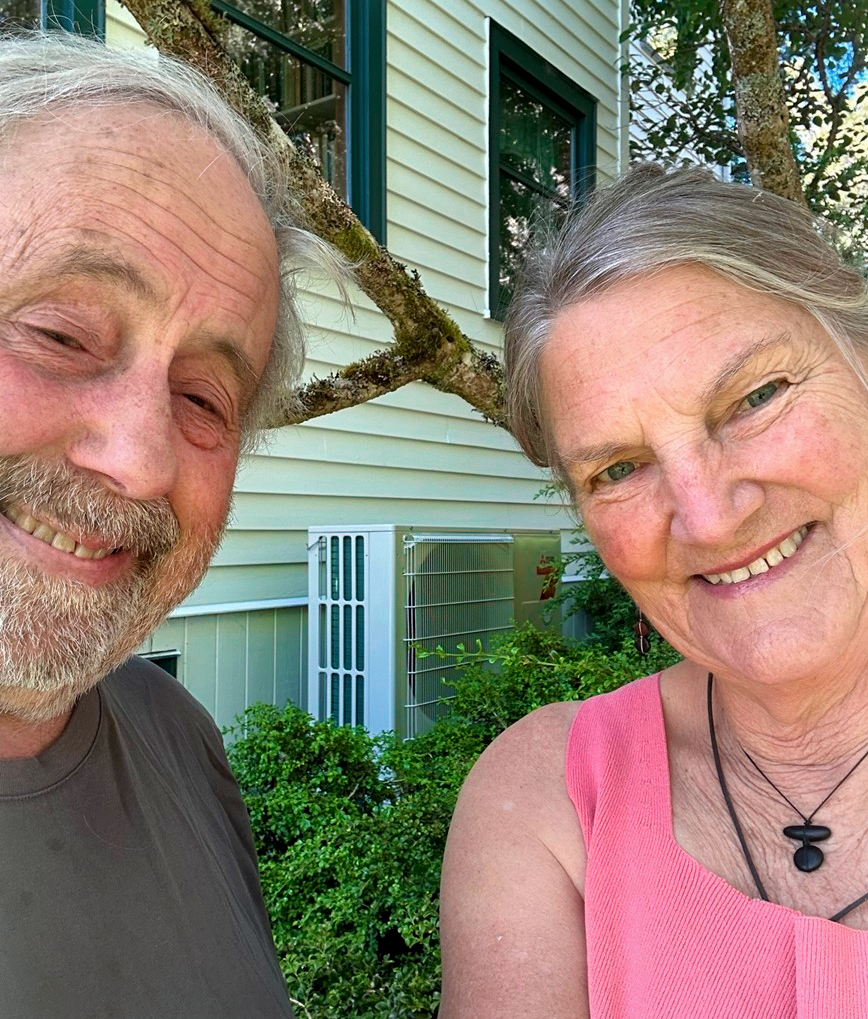 Courtesy Tom and Mary Fisher
More volunteer stories
Comforting arms: Maddie’s Place in Spokane takes care of babies born with prenatal exposure to drugs and alcohol, with the help of volunteers.
What’s cookin’: A commercial kitchen in Port Angeles reduces food waste and food insecurity, thanks to WSU Extension and community volunteers.
Launching butterflies: Monarch butterflies get a helping hand in Elkton, Oregon.