
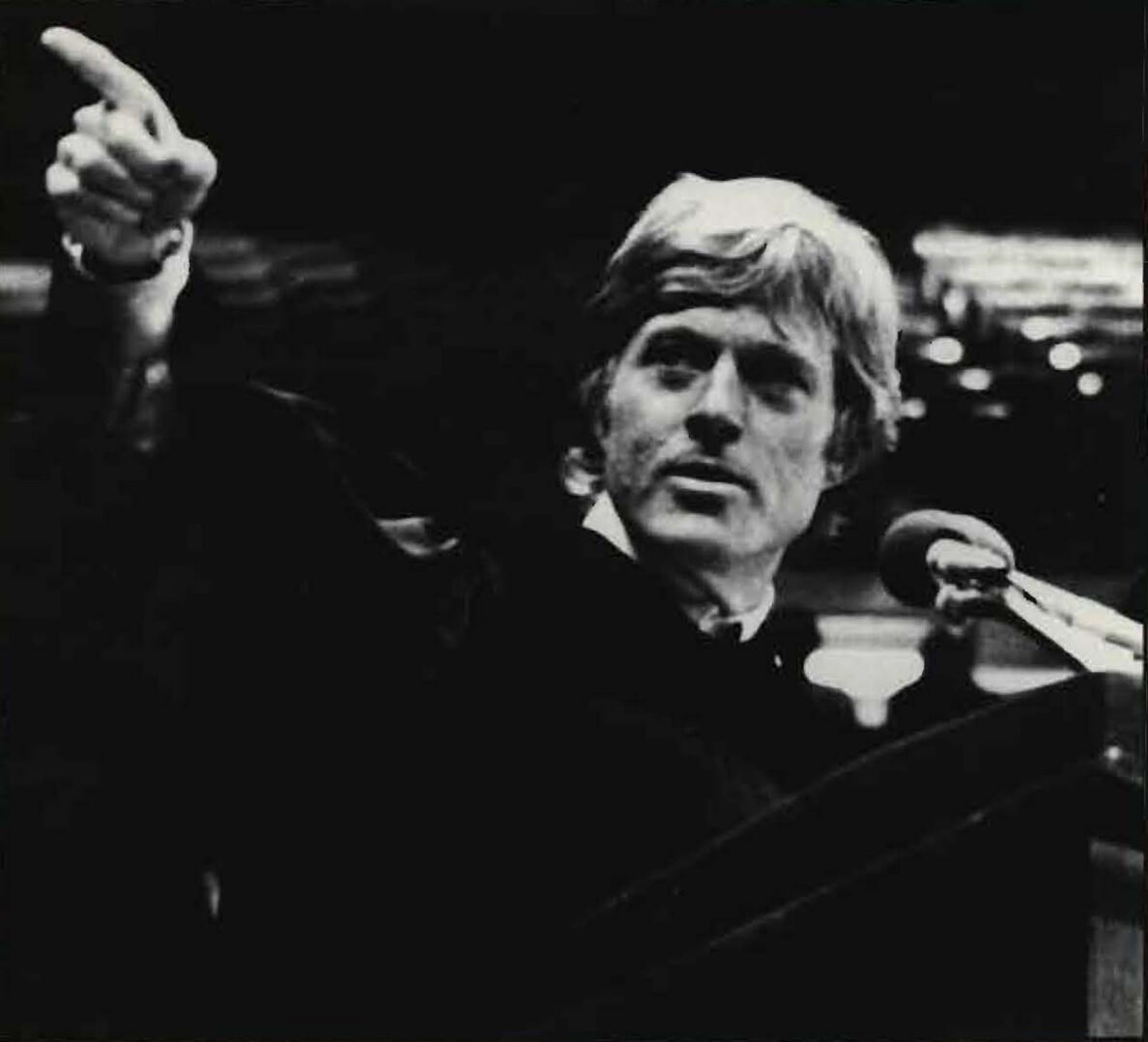
Robert Redford’s trip to Washington State University and eastern Washington in October 1982 was memorable—and not only for his insights into environmental issues to students.
Redford was visiting as part of the launch of the Institute for Resource Management, a joint effort with the University of Idaho. But on a tour, the group’s bus caught on fire and brought some unwanted drama.
Browse a photo gallery and read a WSU student’s story of the trip below.
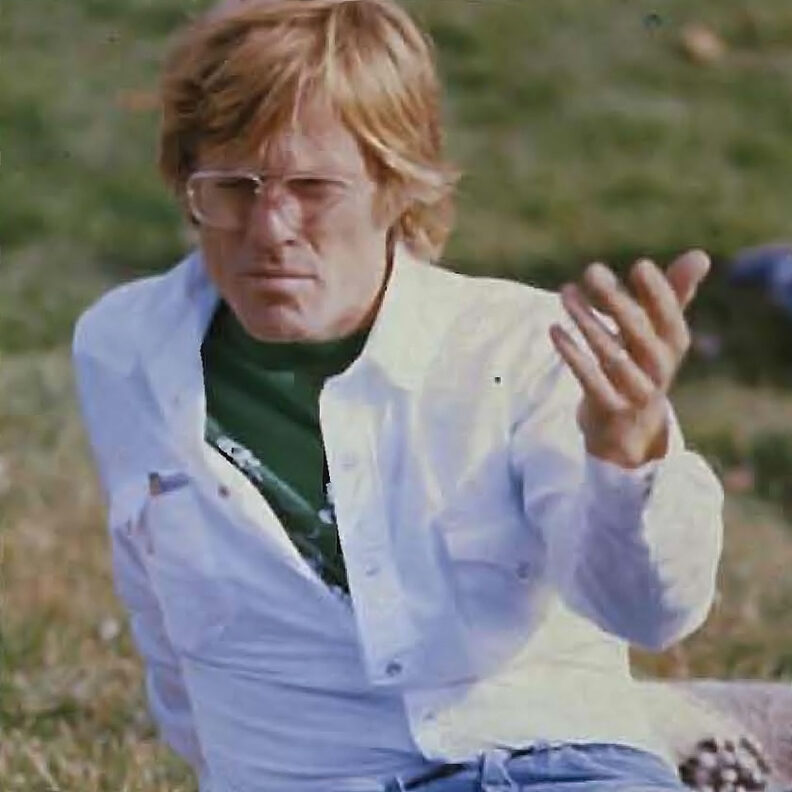
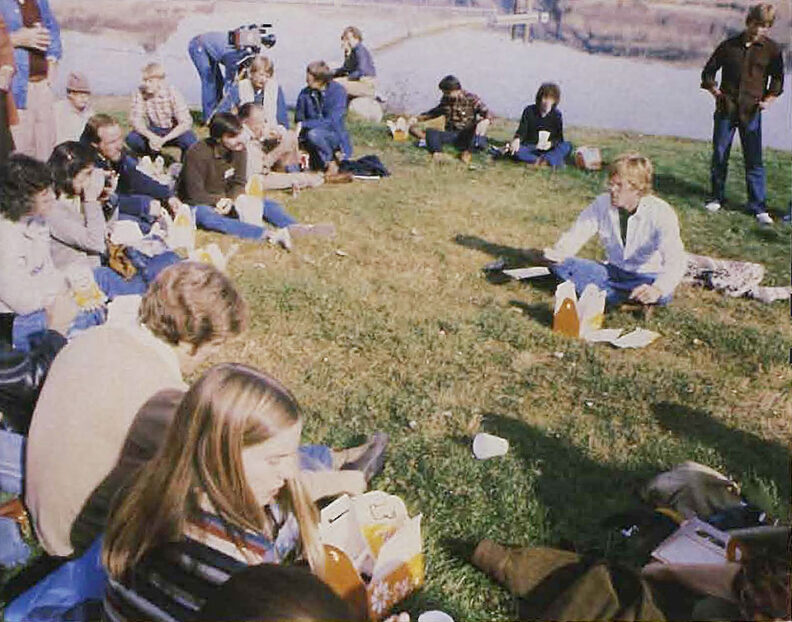
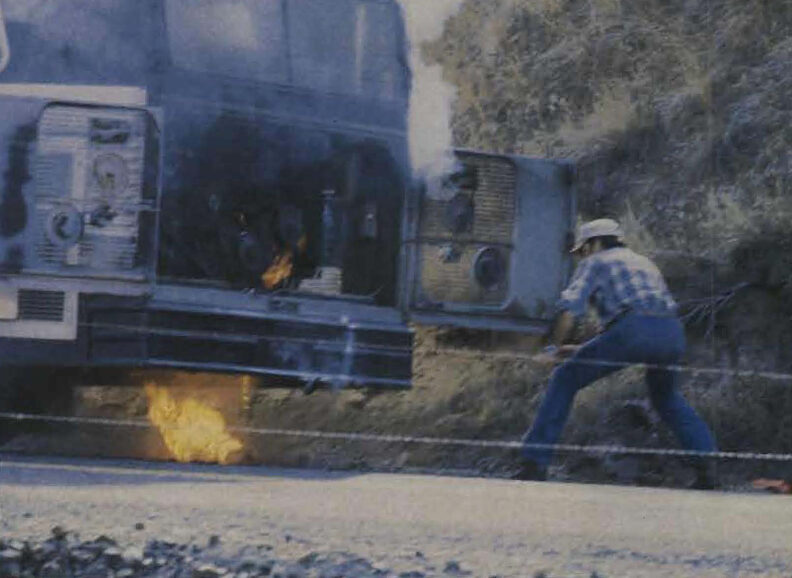
All photos from WSU Chinook 1983 yearbook
Leslie (English) Hynes (’84 Comm.) wrote an account of Redford’s visit for the 1983 Chinook yearbook:
Redford to the Rescue
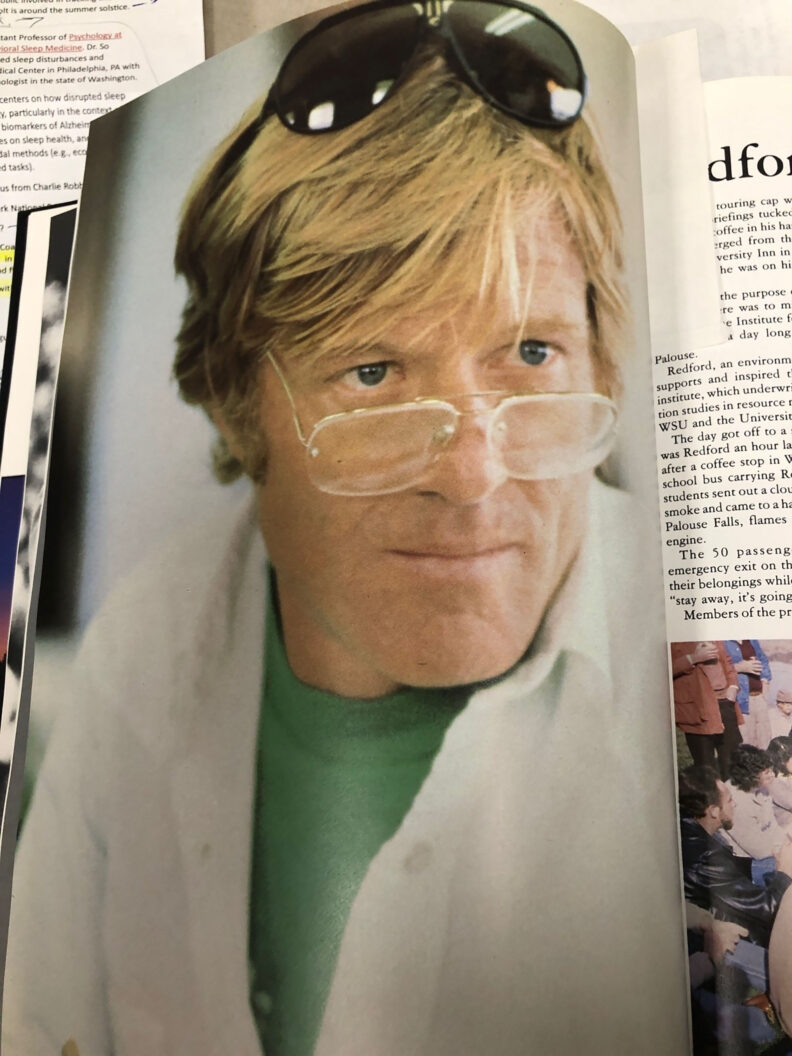
Sporting a touring cap with a bundle of papers and briefings tucked under his arm and a cup of coffee in his hand, actor Robert Redford emerged from the lobby of Best Western University Inn in Moscow, Idaho, looking as if he was on his way to direct a movie scene.
However, the purpose of Redford’s Oct. 20 outing here was to mingle with the 20 students of the Institute for Resource Management on a day long field trip of the Palouse.
Redford, an environmentalist, financially supports and inspired the creation of the institute, which underwrites graduate education studies in resource management at both WSU and the University of Idaho.
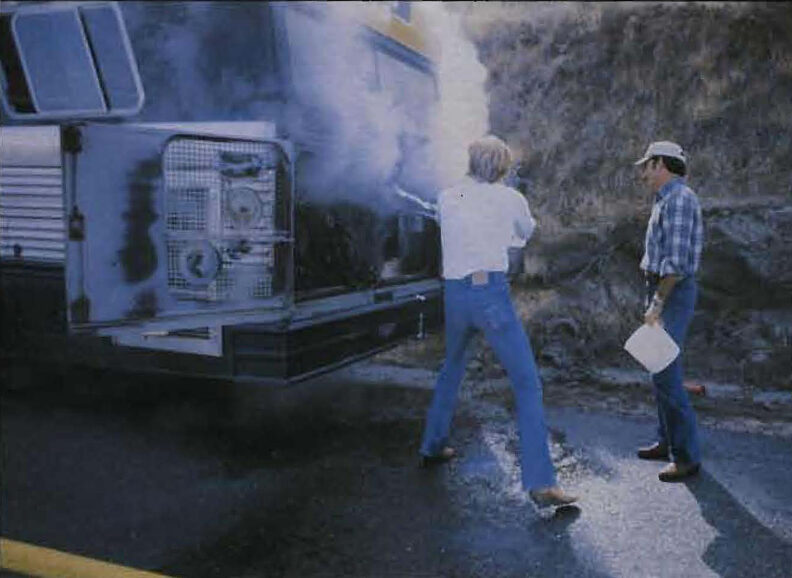
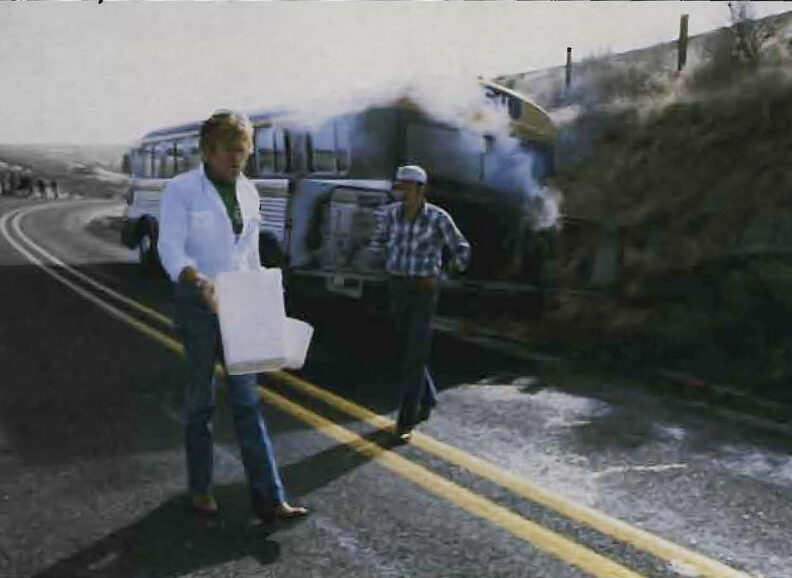
The day got off to a slow start. Not only was Redford an hour late that morning, but after a coffee Stop in Washtucna, the WSU school bus carrying Redford and the IRM students sent out a cloud of thick, black, oily smoke and came to a halt on a remote road to Palouse Falls, flames flaring from the rear engine.
The 50 passengers bailed out the emergency exit on the side of the bus with their belongings while the bus driver yelled, “stay away, it’s going to blow up.”
Members of the press and professors, who had been following the bus in vans and cars, stopped their vehicles in a disorderly pattern across the highway, and stood in a huddle with the passengers about 100 feet from the rear of the burning bus.
For about five minutes everyone, including Redford, stood there flustered, watching the bus burn as Josh Welch, the bus driver, continued to yell about the bus blowing up.
Then Welch ventured nearer the fire, attempting to smother it with handfuls of gravel from the roadside.
At first, the onlookers yelled at him to get back from the flames, but soon photographers, followed by reporters, also got brave enough to venture closer to the flaming engine to get an up close look at the news.
It was at this point Redford decided to play the role of real life hero. Butch Cassidy would have been right proud of the Sundance Kid, as he hopped into a blue Chevette and sped off to a nearby farmhouse for help.
Faster than his trusted steed, he returned with two large buckets of water, and saved the day as he doused the flaming bus in a show stopping performance for the band of photographers and reporters on hand.
With help on the way, the entourage of press, professors and students crammed into the vans and continued on the trip.
Redford wedged his way into one of the green vans between a reporter and an anthropology professor. Still playing the burning bus scene for all it was worth, he fed the reporters around him the quote of the day: “My comment is this is what cut backs in education have brought us.”
Following a brief sightseeing stop to view Palouse Falls, the group arrived at Marmes Rock Shelter for lunch, and the excitement caused by the fire began to fade. Redford put away his Sundance Kid hero role, and resumed his part as concerned environmentalist, the “real reason” he was there.
Sitting cross-legged on the park lawn beside the lake with his boxed lunch, and students gathered around him, Redford looked like a master guru ready to address his faithful followers.
Taking a bite of an apple, the master spoke. He told of his concerns that our educational and scientific disciplines are becoming too compartmentalized.
“What we have to do is start educating in resource management,” he told the students. “There have to be economic and scientific overlaps if we are to move forward, because our lives overlap.”
“I wanted to work up a program that signifies what I felt rather than just talk about it,” he explained between bites of his sandwich.
The IRM students, seated in a semi-circle on the lawn around Redford listened and ate their lunches as he told of his hopes for them.
“I’d like to see the students in the position of responsible decisionmakers.
“I will feel a lot more comfortable about it if people making the decisions are qualified.”
He told them he expects it to take five years to see the impact of the IRM program.
“My response to skepticism is we will let the progress speak for itself.”
Read more
Institute for Resource Management announcement in WSU alumni newspaper Hilltopics, March 1981
Anthropologist Richard Leakey presents the first lecture on environmental issues, sponsored by the IRM in October 1982 (1983 Chinook)
Students spend day with Redford (Daily Evergreen, October 22, 1982)