
Shortly after Robert Redford’s death in 2025, the pictures began surfacing.
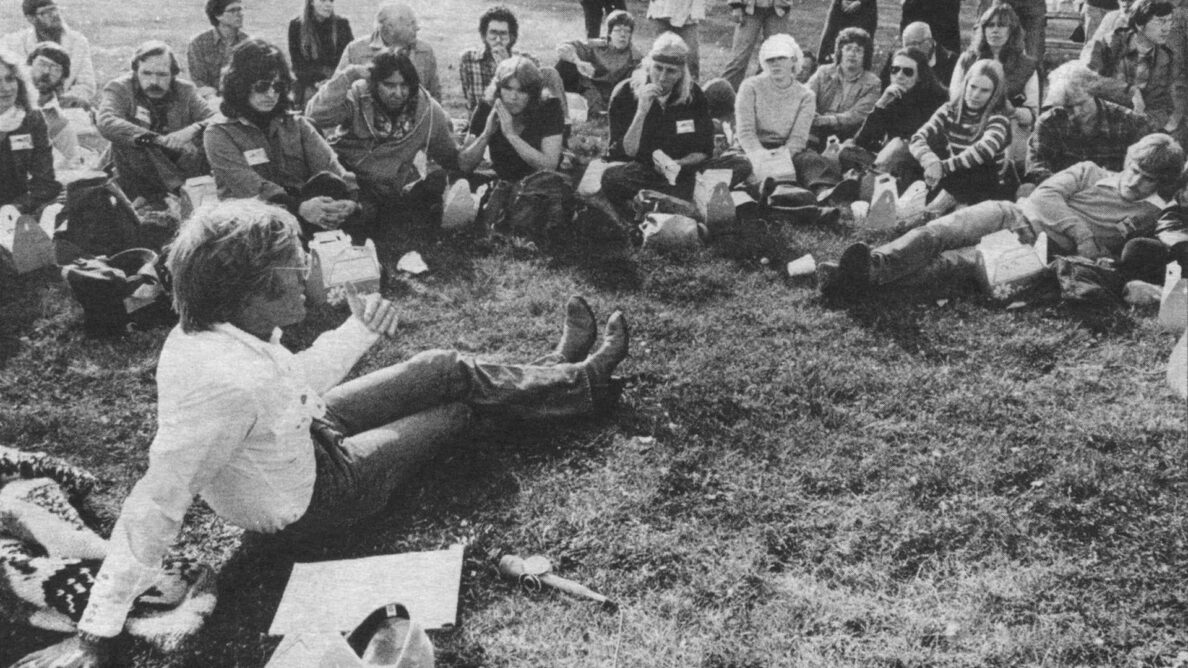
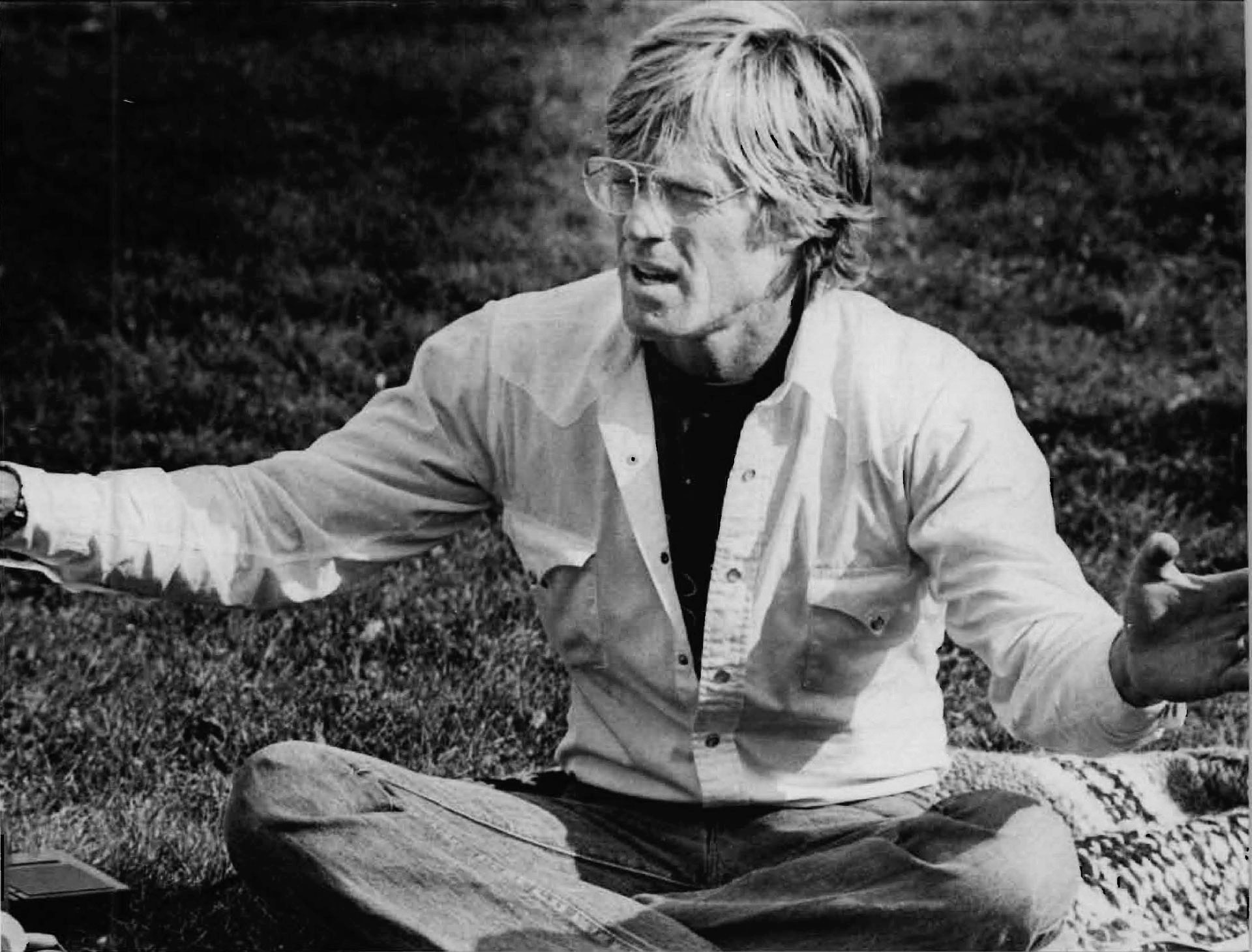
The actor/director helping extinguish a bus engine fire during a field trip to Palouse Falls. With paleoanthropologist Richard Leakey near the prehistoric Marmes Rockshelter site on the Snake River. Sporting faded jeans and a sweater at a black-tie reception.
In the early 1980s, Redford was working to establish the Institute for Resource Management at Washington State University and University of Idaho. The Hollywood celebrity’s visits to the Palouse, while brief, left a lasting imprint on environmental education.
Redford envisioned an interdisciplinary master’s program whose graduates would help Western communities chart their way through thorny environmental issues. He picked WSU and UI because of their existing programs and proximity to agriculture, forestry, and other resource industries.
Despite Redford’s involvement, the Institute for Resource Management was a short-lived experiment. He and the nonprofit institute failed to raise the promised endowment. The institute operated just two years, graduating 19 master’s students before closing.
Redford’s legacy on the Palouse, however, lives on in several ways. The graduates went on to shape environmental policy through jobs at federal and state agencies, nonprofits, and corporations. And the institute’s cross-disciplinary training—new at the time—remains embedded in WSU’s School of Environment.
The 1960s and 1970s marked the passage of major US laws protecting the environment and increasing public involvement in decision-making. The legislation followed highly publicized disasters—like the 1969 Santa Barbara oil spill that fouled California’s coastline and repeated fires on Ohio’s Cuyahoga River from industrial pollution.
“The public was upset that all this was going on,” says Allyson Beall King, director of WSU’s School of the Environment. “People just got tired of it, and our politicians listened.”
But the environmental movement also spurred backlash. Redford was burned in effigy and labeled a radical environmentalist for opposing a large coal-fired electrical plant near Utah’s national parks. Rather than “fighting individual brushfires,” Redford wrote in an op-ed for Coal Industry News, he established the institute to train well-grounded professionals to work on the country’s natural resource issues.
“There’s a need for a balanced, orderly approach to our environment that recognizes both the need for development and our responsibility to protect our resources,” he later said during a WSU visit.
Redford was “ahead of his time in realizing that change was inevitable in the West and that resource extraction had a limited lifespan,” says Steve Lustgarden (’84 MS Env. Sci.), an institute fellow. “And he realized it was incumbent upon resource managers to work with communities to anticipate that change.”
The fellowship paid for Lustgarden’s master’s degree and provided a modest living stipend. During his time at WSU, Lustgarden focused on strategies for farmland preservation. After a long career with nonprofits, he retired as the assistant director of California Certified Organic Farmers.
The fellowship kickstarted Stephanie Burchfield’s career in water resources. After studying hydrology and engineering at WSU, she worked on fish passage at Columbia and Snake River dams for Northwest tribes. Burchfield (’85 MA Env. Sci.) later worked for the Oregon Department of Fish and Wildlife as a water resource manager and eventually retired from NOAA Fisheries.
“I hadn’t taken any engineering classes as an undergraduate, and the beauty of this program was that you could design your own curriculum,” she says. The program’s interdisciplinary approach, including sessions on rural resource economies, proved valuable throughout Burchfield’s career.
At WSU’s School of the Environment, that interdisciplinary work continues. “Students are earning a science degree, but there’s a lot of the human element involved,” Beall King says.
She and her colleague designed a class on conflict resolution and shared governance that requires students to role-play various side of environmental issues.
“For one week, you might be the rancher. If you don’t know how to think like a rancher, you’ll learn,” Beall King says. “Environmental problems are so big and messy and there’s so many perspectives involved. Unless you plan to litigate everything, you have to learn how to find common ground.”
Other classes teach students about different value systems related to land management, including Indigenous ecological values.
Redford’s involvement with the institute, meanwhile, remained a conversation starter for the fellows. People were curious about the actor known for Butch Cassidy and the Sundance Kid, All the President’s Men, and other classic films.
Neither Lustgarden nor Burchfield had significant interactions with him. On the field trip to Palouse Falls, Redford was briefly conversing with each fellow. Just as he reached Burchfield, the bus engine caught fire, and he ushered her out the emergency exit.
Lustgarden also missed his chance to talk to Redford but didn’t mind.
“My recollection is that he didn’t want the institute to be about him. It wasn’t the Robert Redford Institute for Resource Management; that wasn’t his style,” Lustgarden says. “He had a deep and genuine care for the land, wildlife, and communities. I remain grateful for his vision and generosity.”