
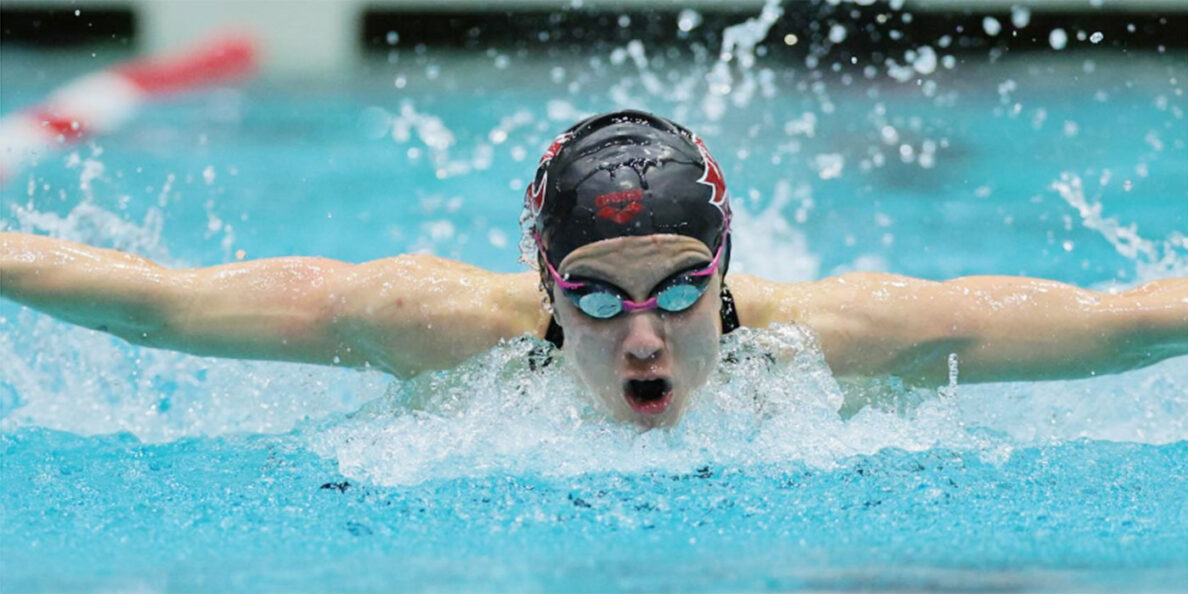
Highlights of swimming Cougs over the decades
Since the earliest days of the college, when students would jump into Reaney Park pool, to the record-breaking 2024-25 season for the women’s intercollegiate swim team, Cougs of Washington State have been swimming for fun and competition.
Read on for a sampling of some swimming and other water milestones of Washington State.
(All photos below courtesy WSU Manuscripts, Archives, and Special Collections)
Swimming for fun in the early days
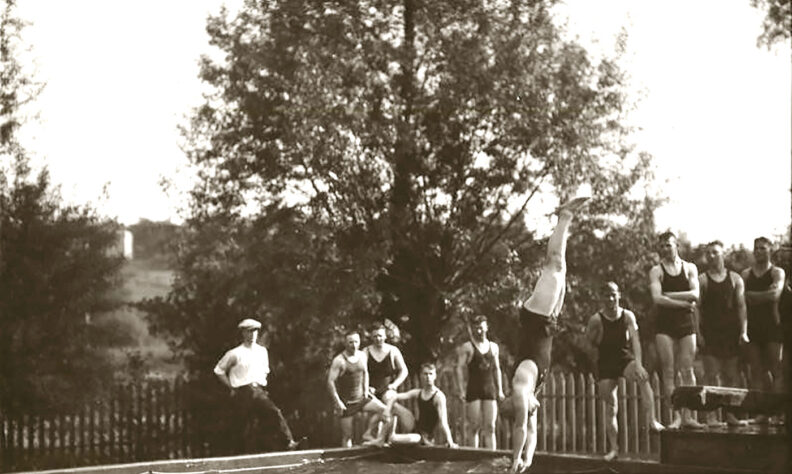
It took a couple of decades to get a pool on campus at Washington State College, but there was a lake.
Silver Lake, a 1.6-acre pond, was built by the school in 1899, in the space that now houses Mooberry Track and the Hollingbery Field House. Informally known as Lake de Puddle, it’s not clear that students swam there. They probably did fall in during tug-of-war contests.

The first community pool in Reaney Park, just down the hill from campus toward downtown Pullman where it shared space with a roller rink, was built by the city in 1917. Students took advantage of the nearby location for entertainment and probably for some swimming and diving bragging rights among living groups.
Washington State takes to the pool
Even though there was no pool on the WSC campus at the time, the earliest mention of competitive swimmers from the college was in the 1918 Chinook yearbook, when Harold “Doc” Merrin (1921 Mining Eng.) won the championship in the Pacific Northwest Athletic swimming meet in Spokane. Merrin took first in the 440, 220, and 880 dashes, as well as second in the 100.
The following year, Merrin didn’t fare that well when he and “Shorty” Helander from WSC lost against Spokane YMCA. Merrin did take first in the diving contest.
The new gymnasium opened in 1928, later named Bohler Gym, became a cornerstone of Washington State sports. It included a tiled swimming pool, 35 feet by 75 feet, in the basement that “will compare favorably with anything in the Northwest,” according to the 1928 Chinook.
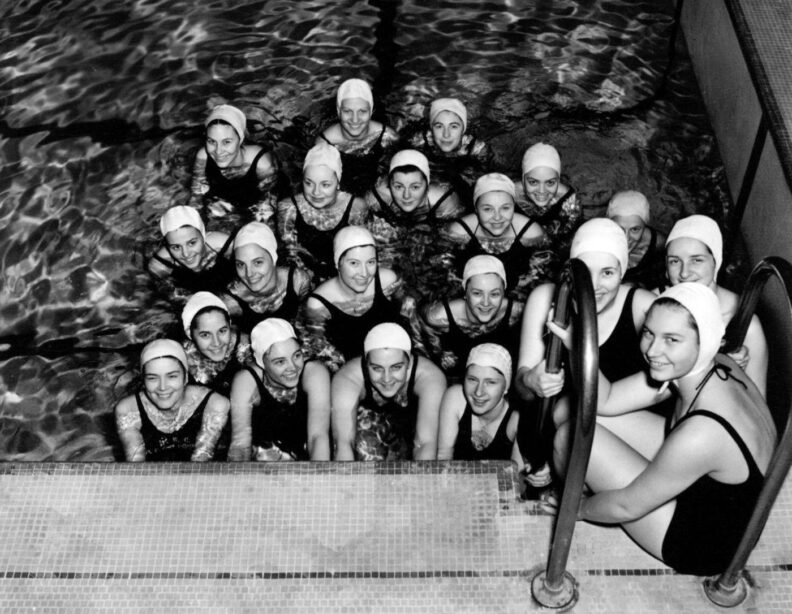
The new pool also opened opportunities for women. According to the 1930 Chinook, “With the completion of the new gymnasium pool in 1929, swimming was made possible for women for the first time. There were no class meets this year as customary, but members of the different group houses met for an intramural meet. A women’s swimming honorary has been organized, which will award points for life-saving, diving, and fancy swimming. These points will count toward the winning of a W. A. A. sweater.”
By 1930, WSC had a varsity swim team under Coach William R. Bond. They had four major swimming meets that year and split them 2-2. At the first meet versus Idaho, “Bond’s natators copped the points handily and romped away with 38 tallies while the Vandals were jilted with 28,” that year’s Chinook noted.
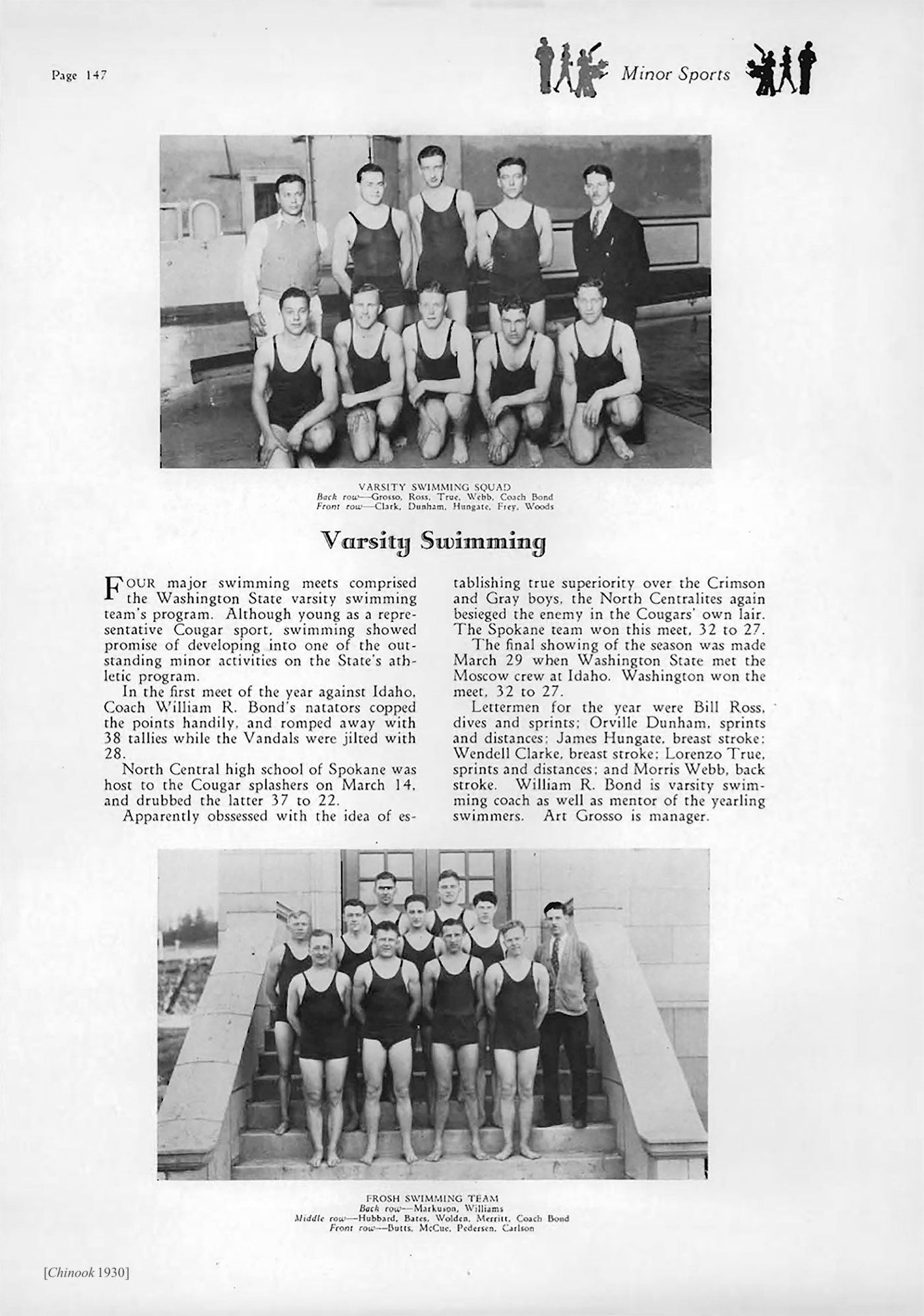
Bond continued to coach the WSC swimmers until 1942, when he joined the Army in World War II.
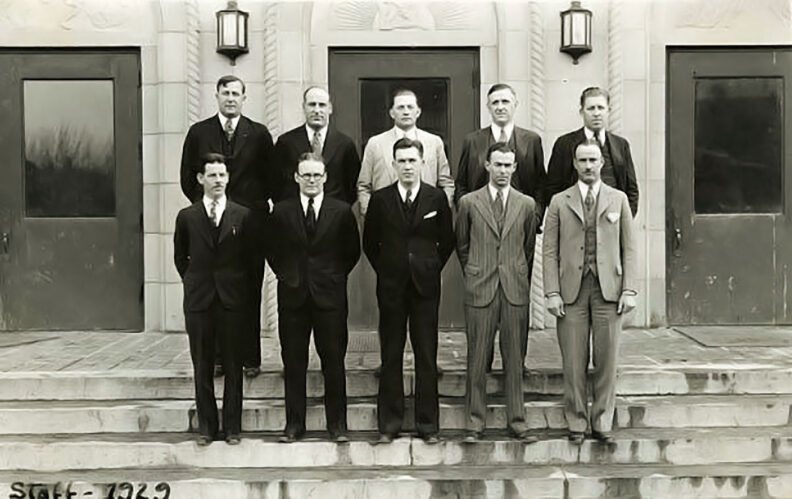
One of Bond’s star swimmers from 1939-1942 was Doug Gibb (’42 Phys. Ed.), who took over coaching duties as a WSC senior.
Legendary coach Doug Gibb
Gibb came to WSC from Bellingham and joined the varsity swim team as the world headed toward World War II. During the war, Gibb coached WSC swimmers and taught in the Army’s physical education training program when the Air Corps came to campus.
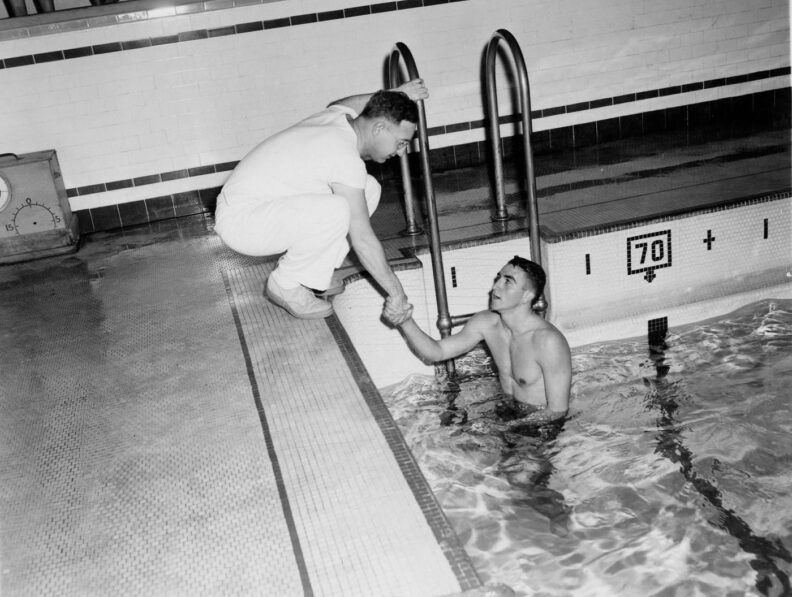
Gibb led the Cougar men’s swim team for 38 years, until his retirement in 1980.
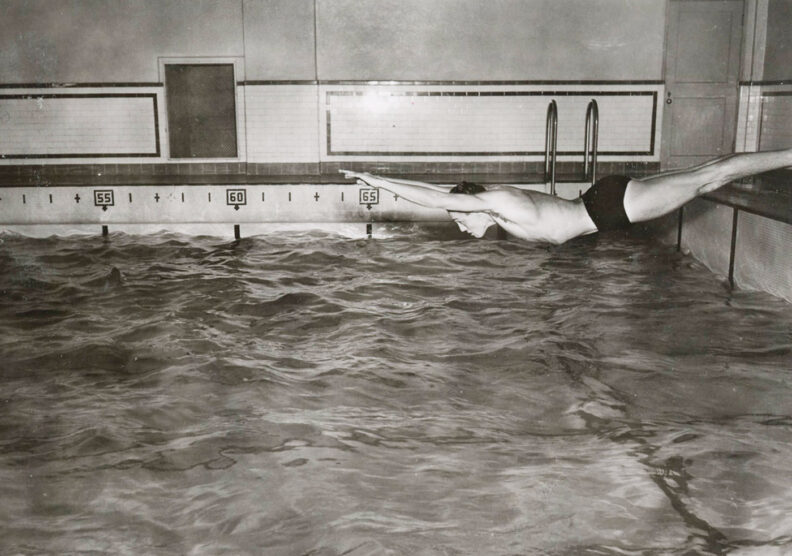
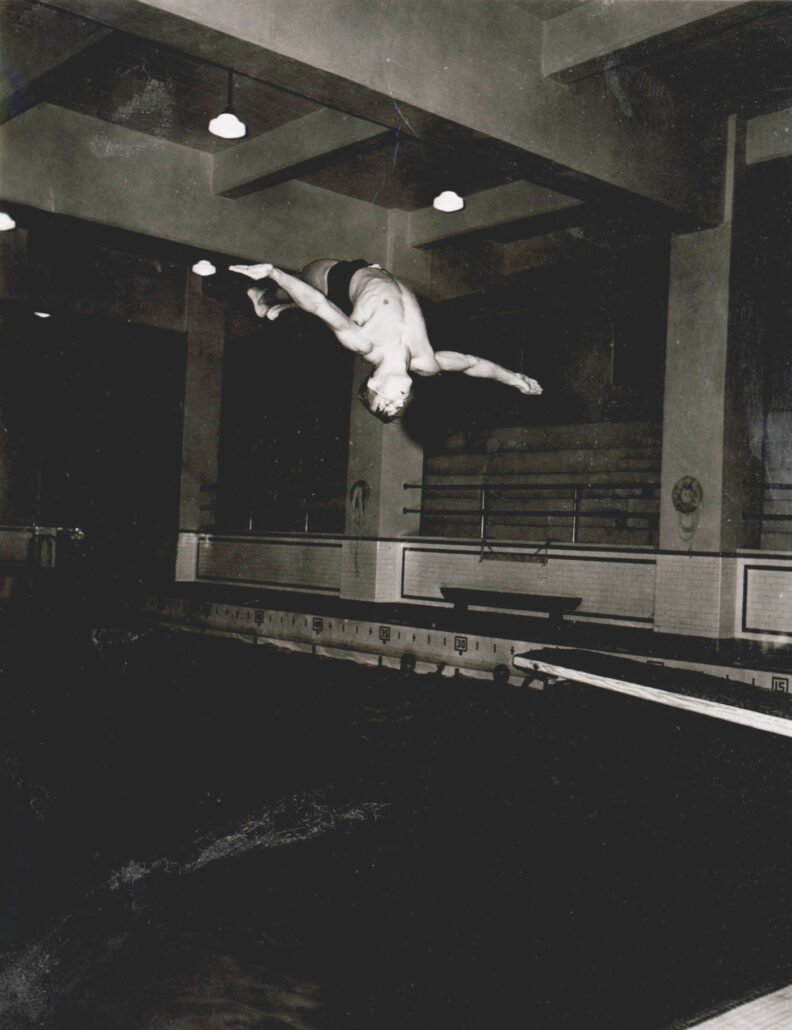
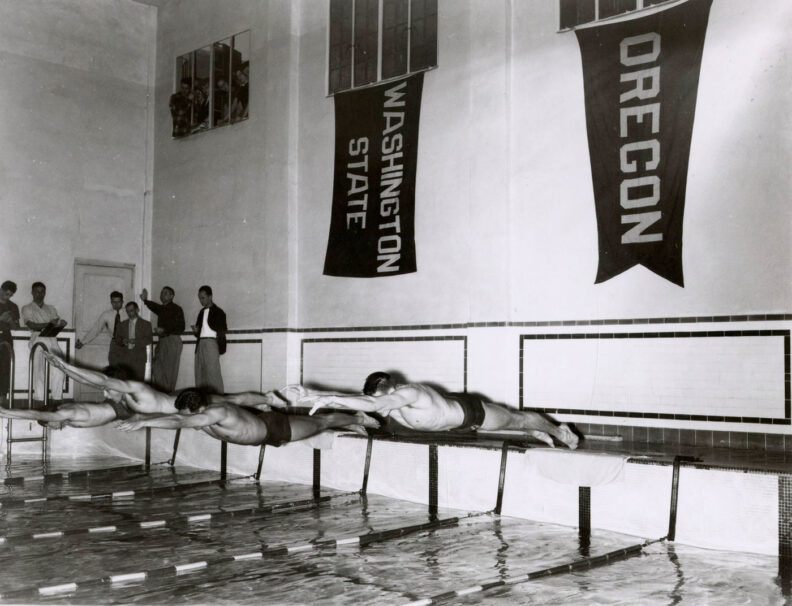
An early success for Gibb and his team came in 1949-50, when they were Northern Division champions. Dick Hannula (’51 Busi.), later a prominent high school swim coach, was co-captain that year.
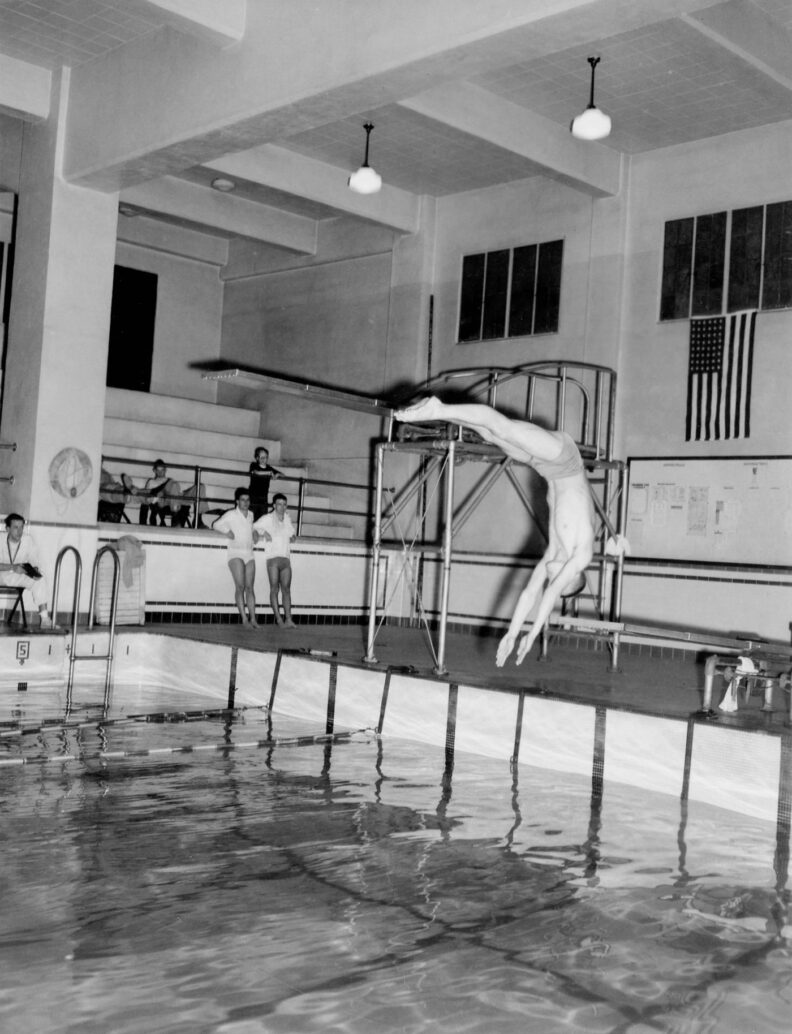
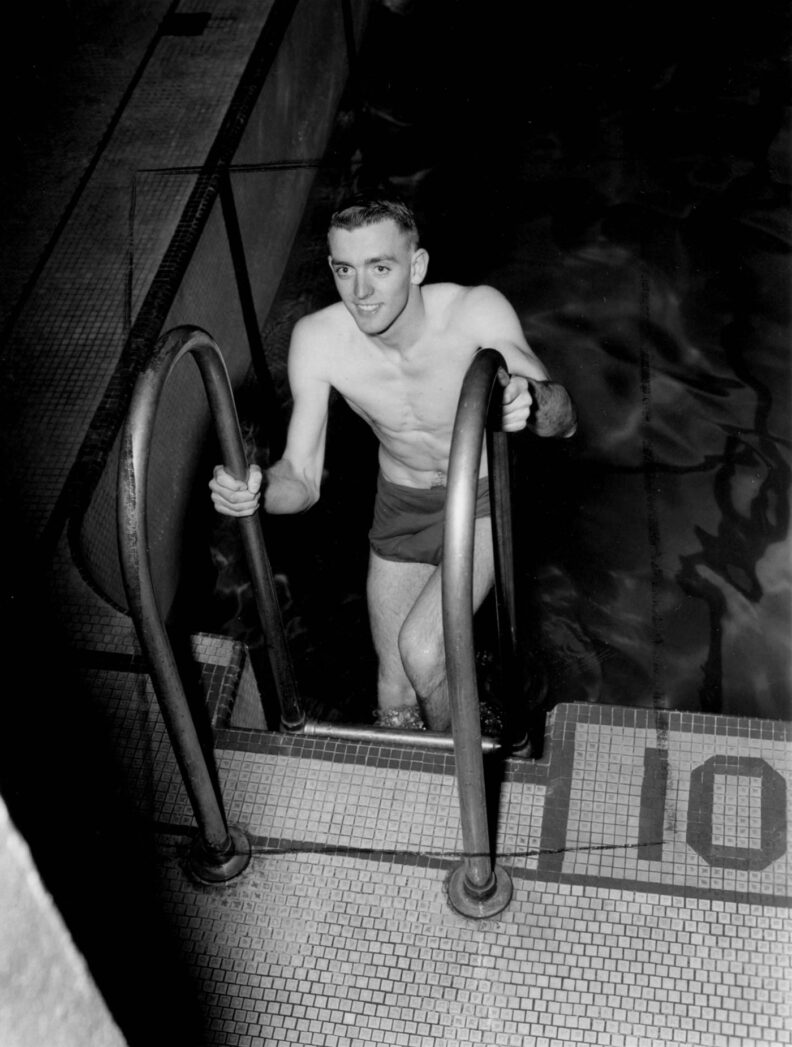
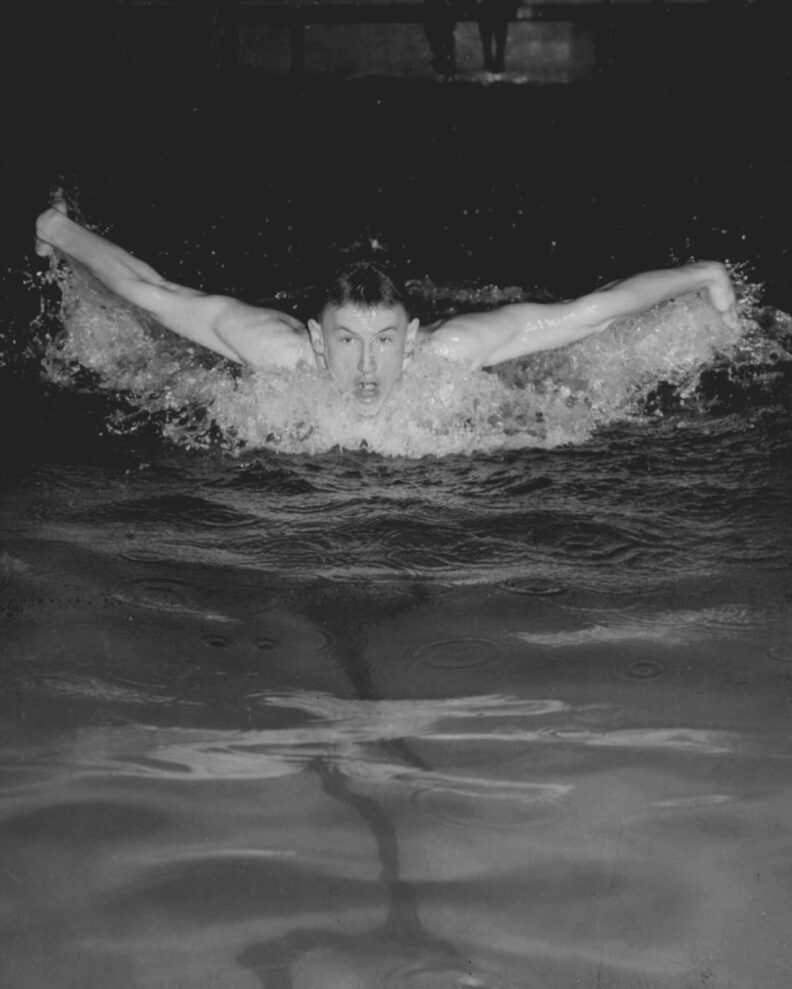
(Photo Robert O. Bullis)
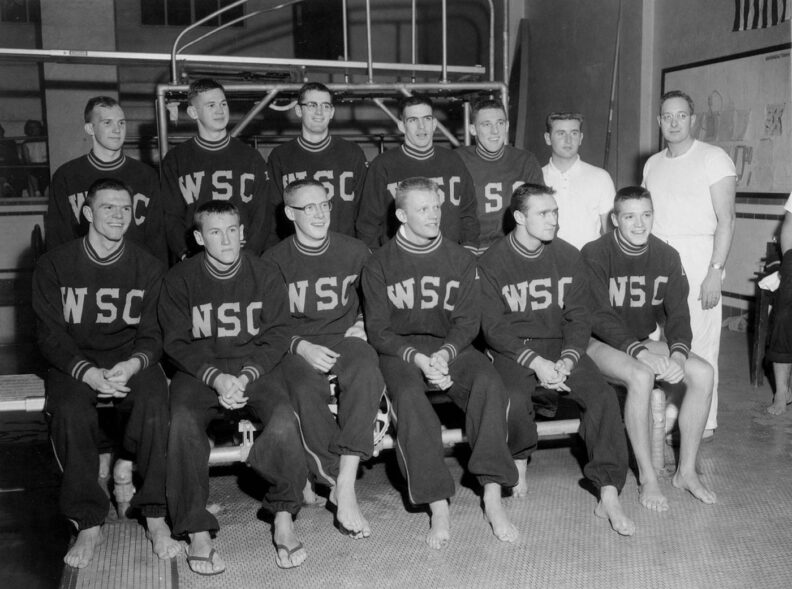
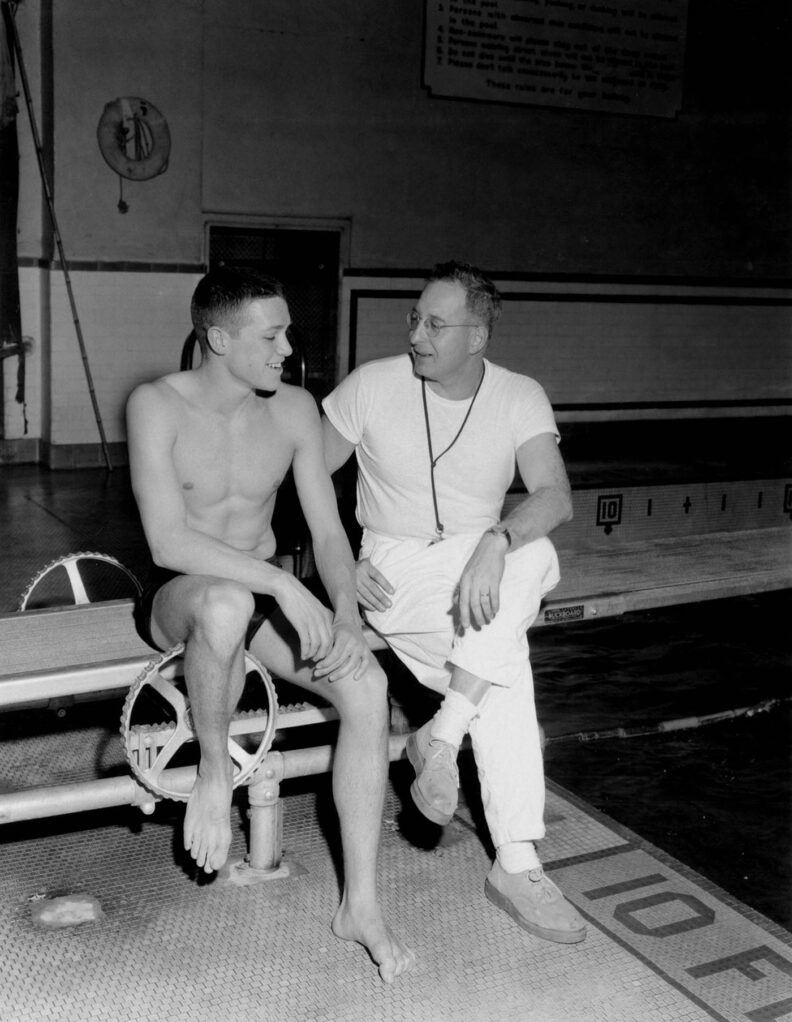
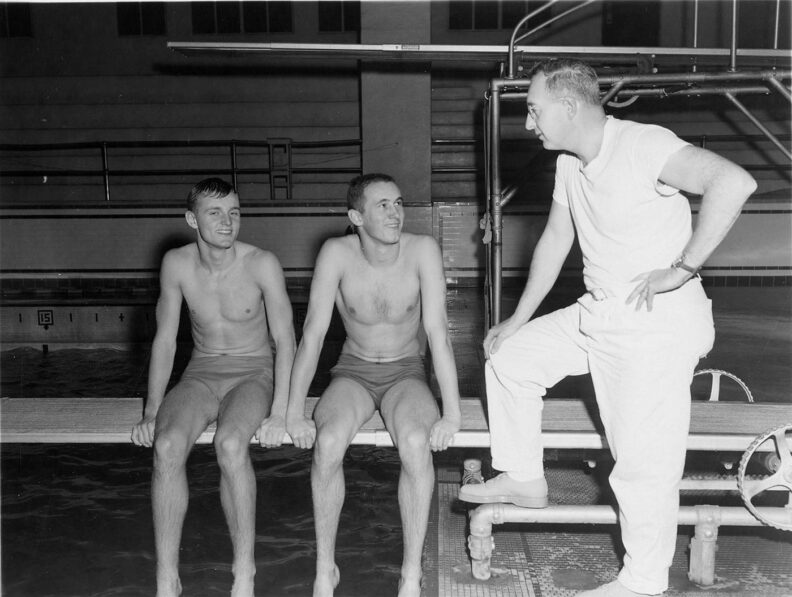
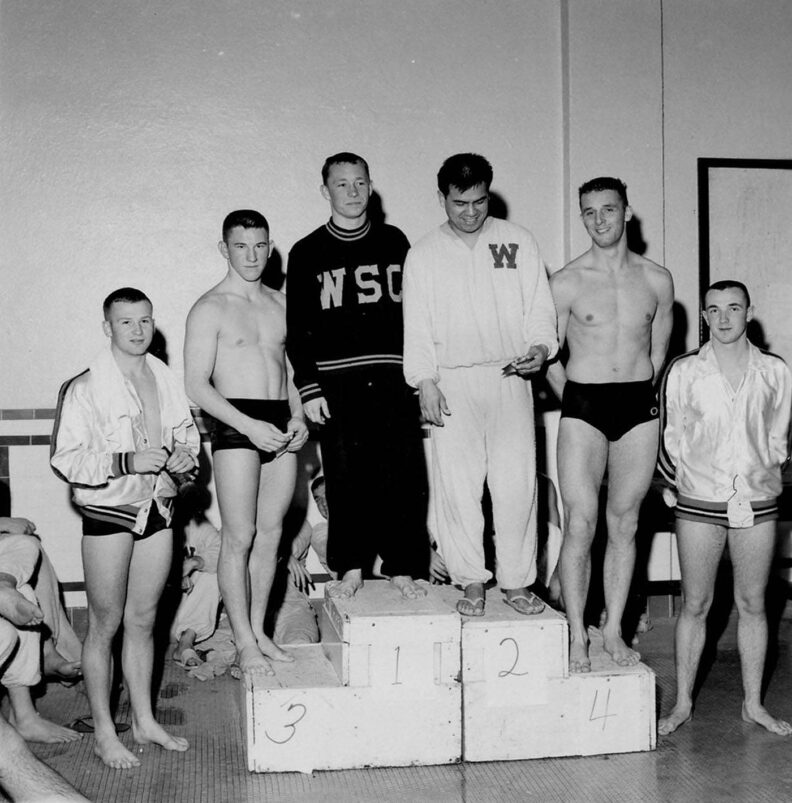
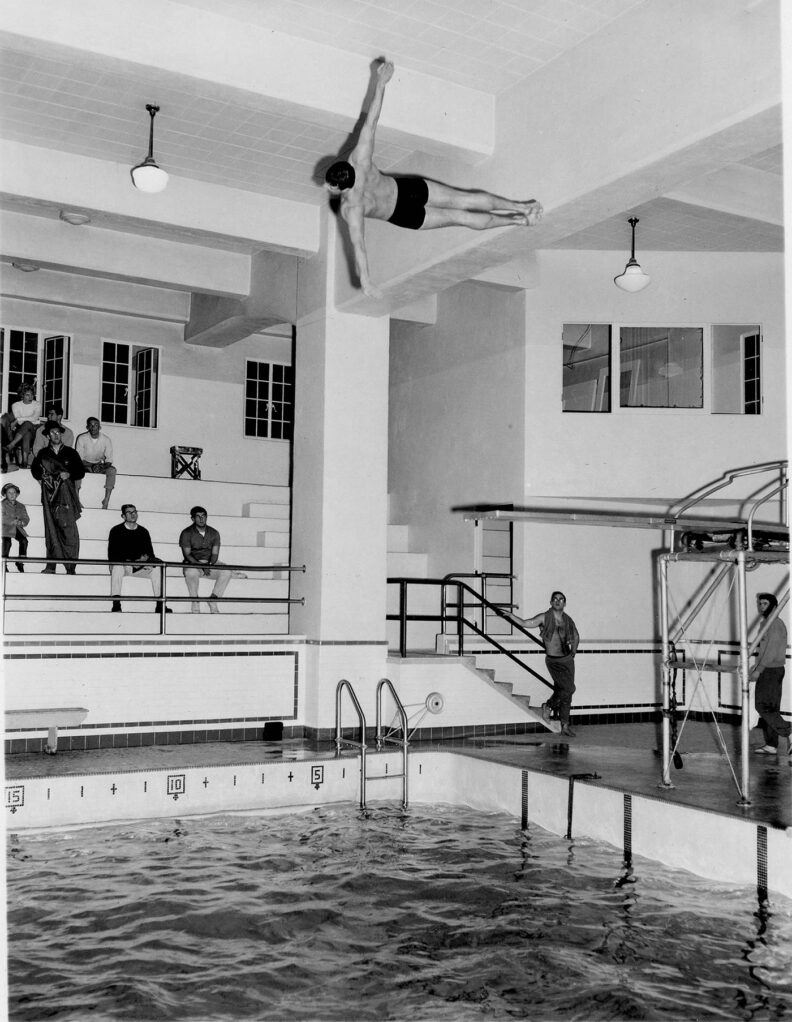
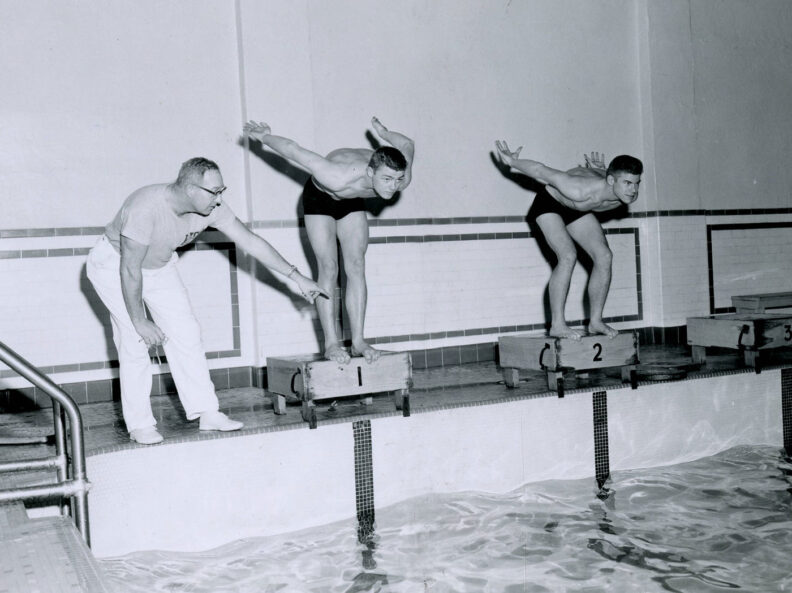
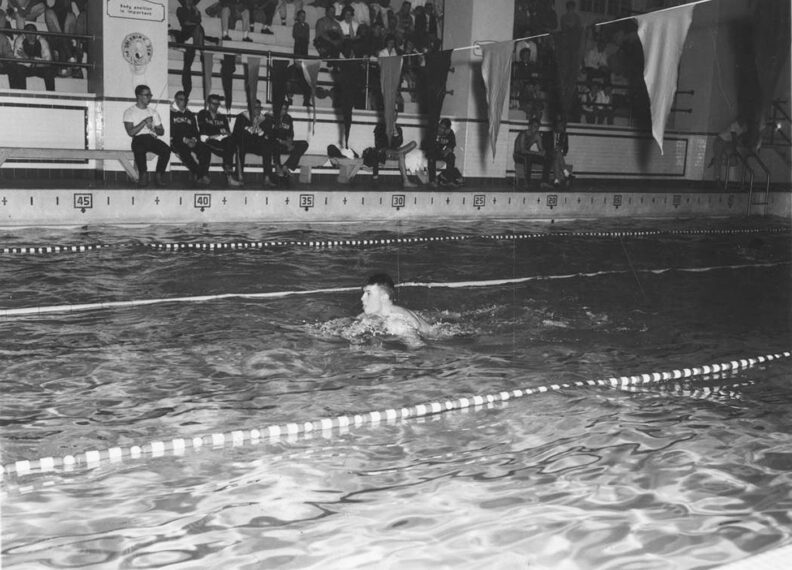
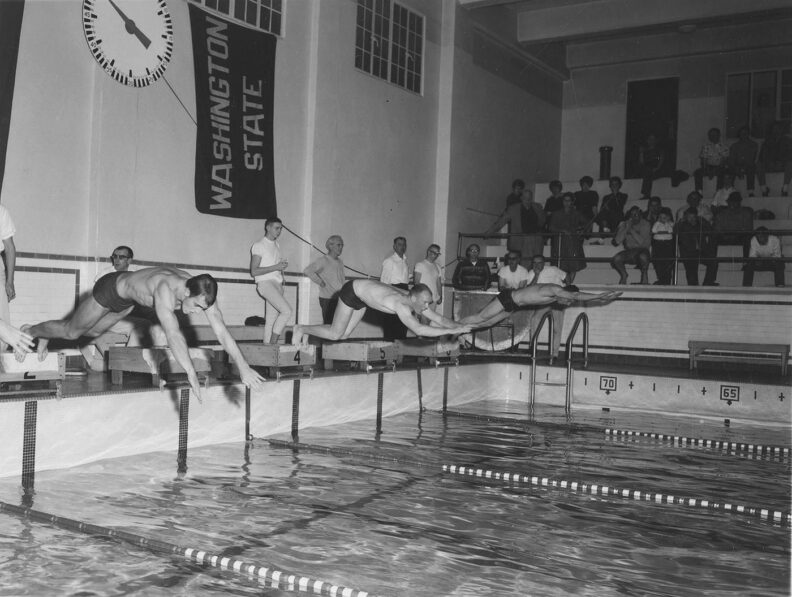
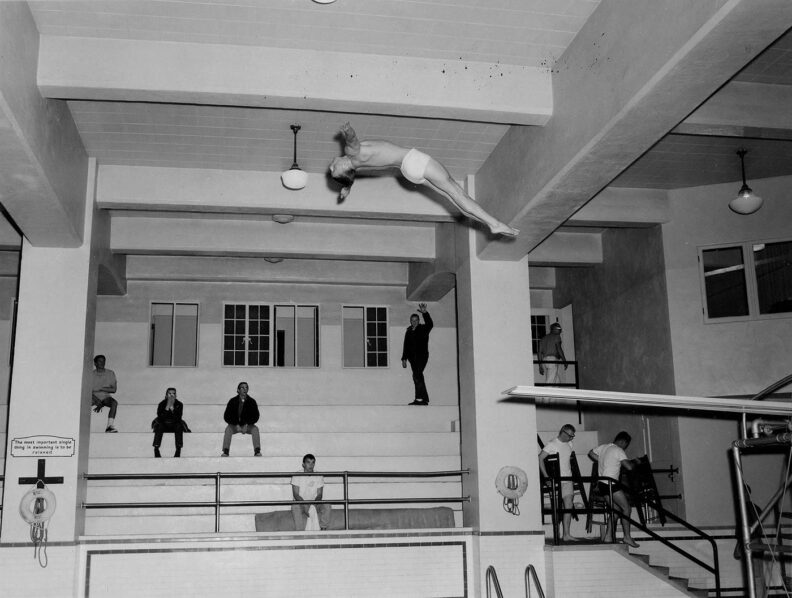
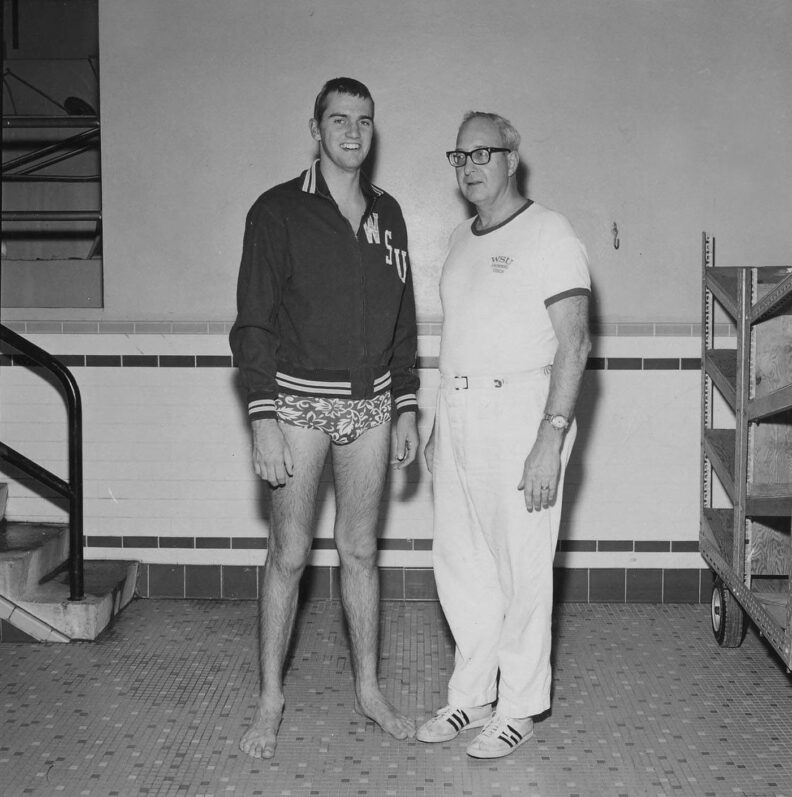
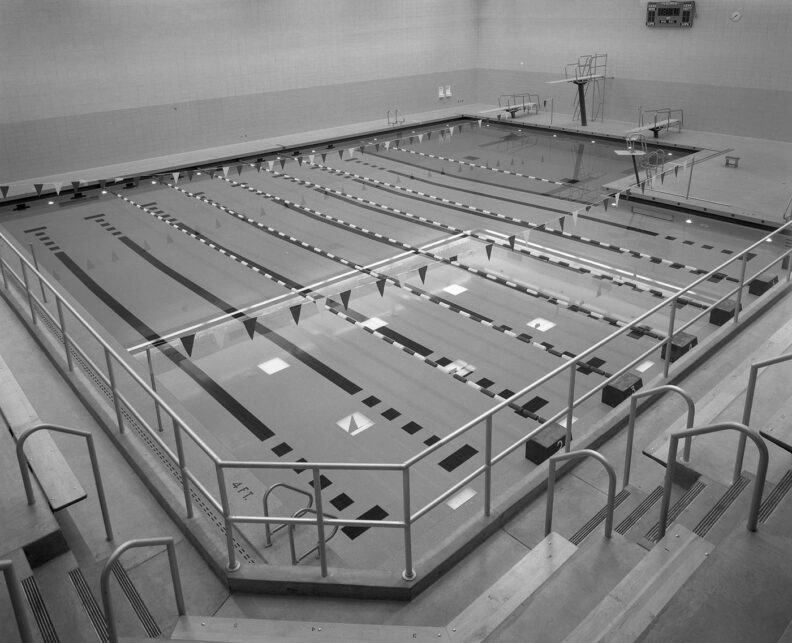
Many swimmers learned and improved under Gibb’s tutelage in the 1940s, ’50s, and ’60s, but the 1970 opening of the Physical Education Building and its 8-lane, L-shaped swimming pool with a diving tank changed the sport at the university. The pool would be renamed Gibb Pool after the longtime coach when he retired in 1980.
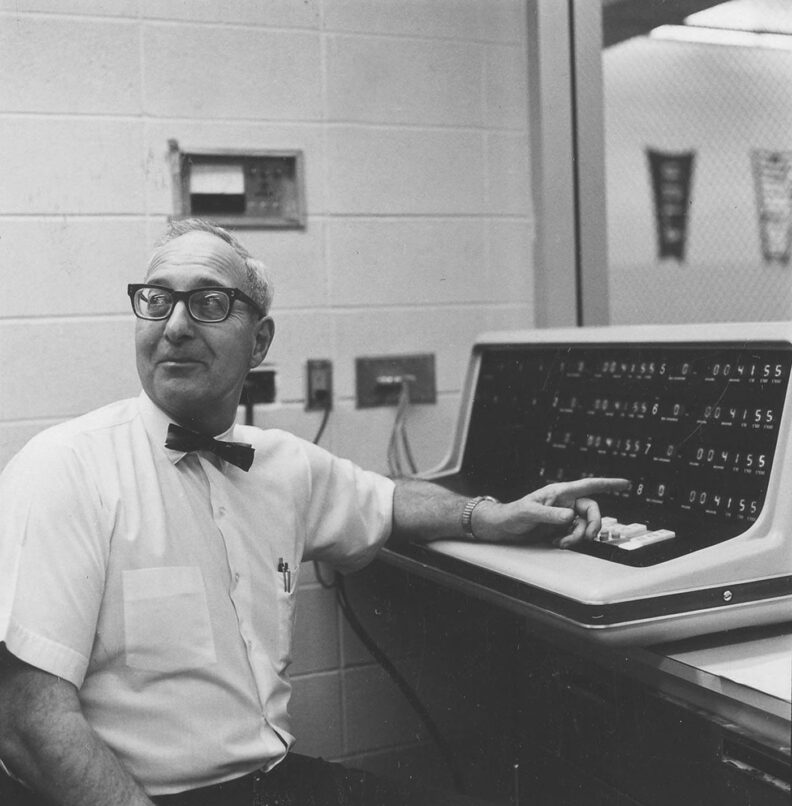
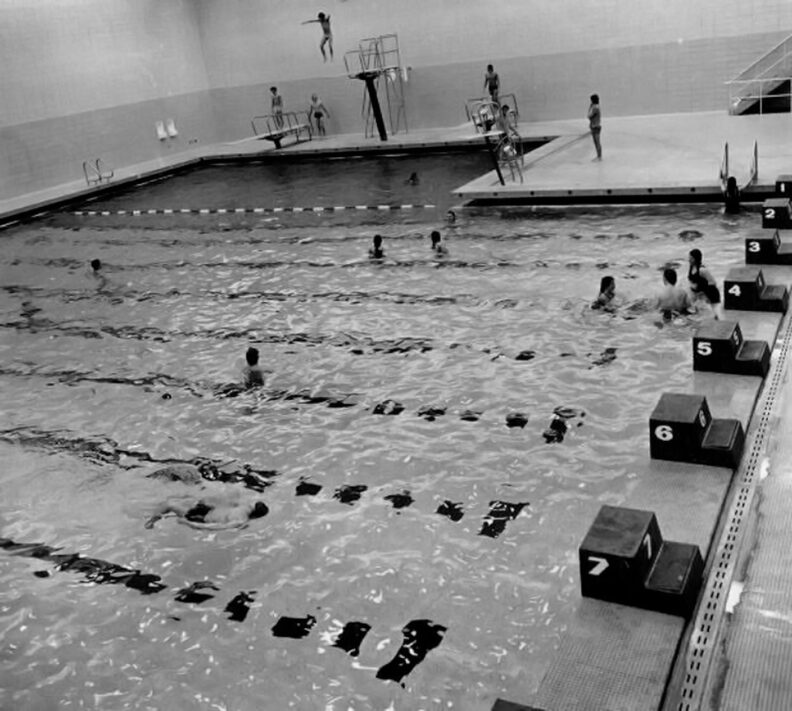
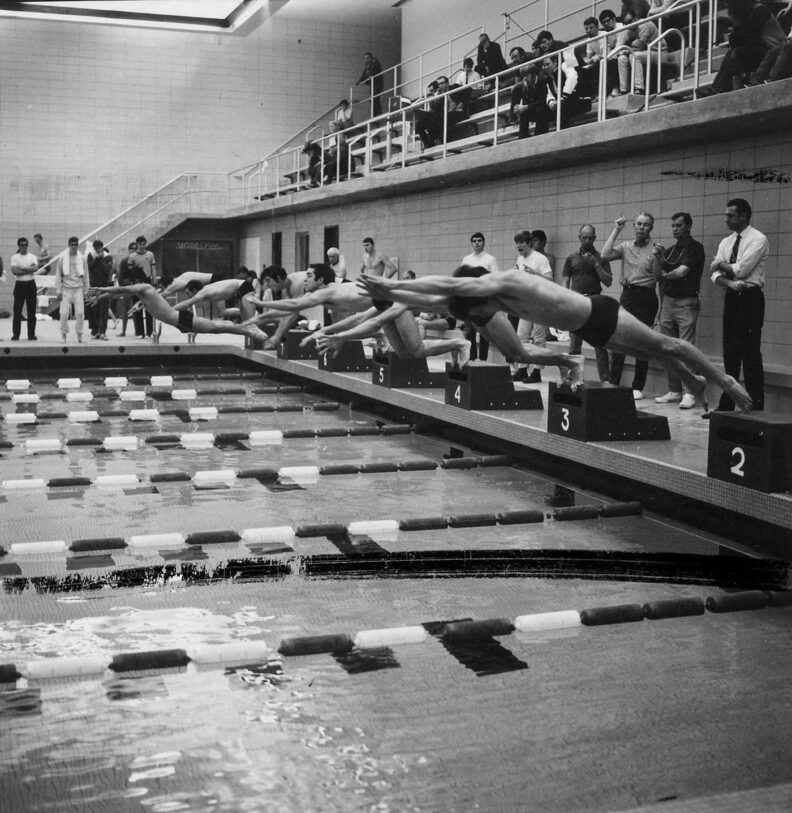
(Photo Robert O. Bullis)
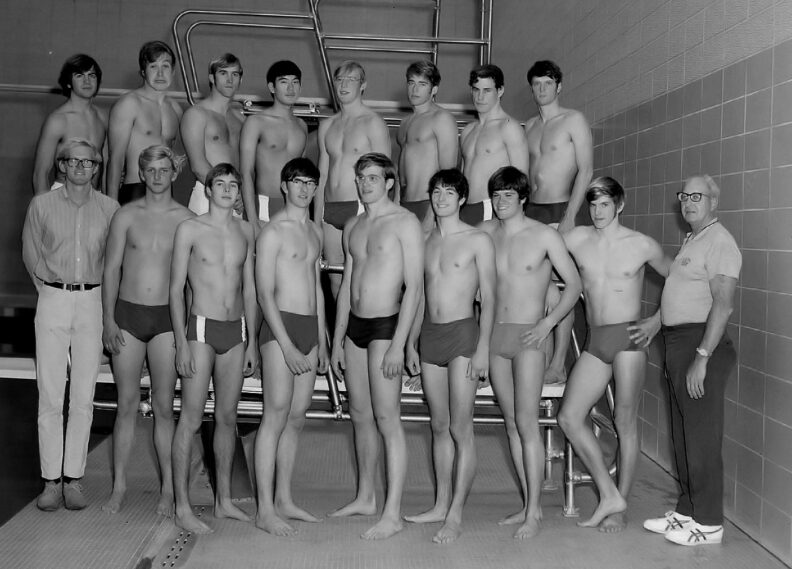
WSU hosted the Pac-8 championship at the pool in 1970, and then 1971 brought a solid 7-5 season, with swimmers breaking eight school records. Standout Brad Storey (’73 Civ. Eng.) took outstanding swimmer award for the year, and went on to represent Canada in the Pan-American Games.
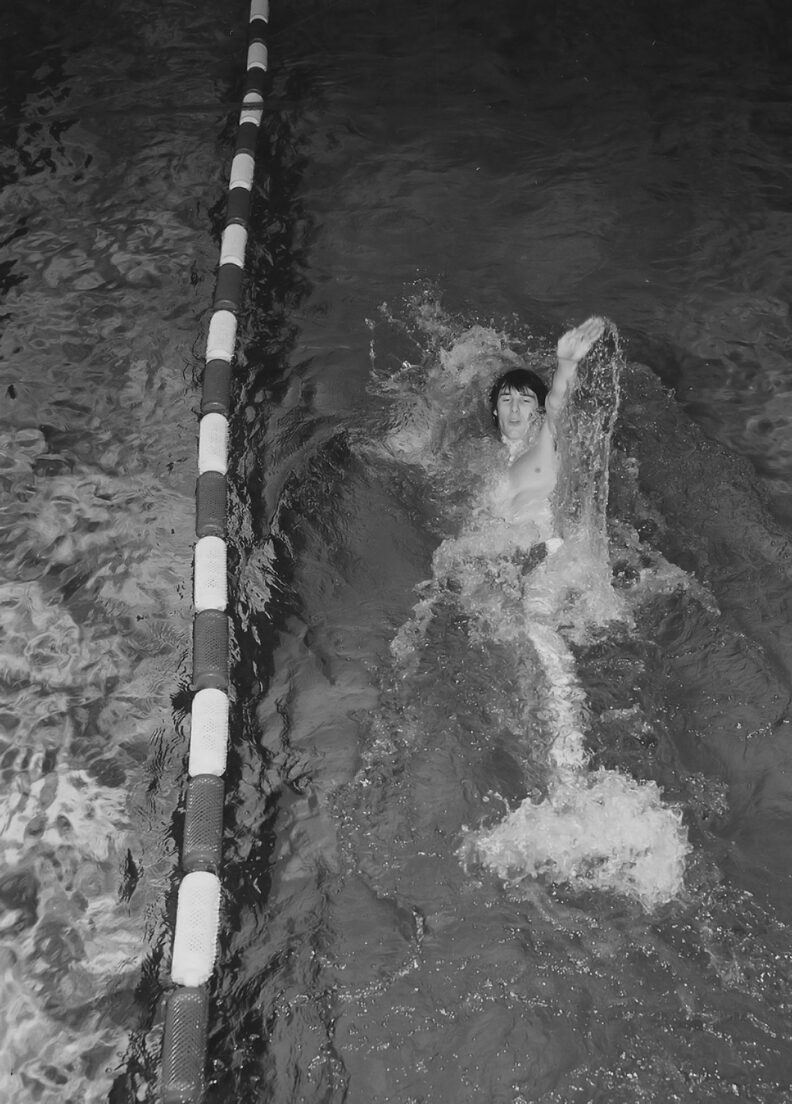
The National AASU Men’s and Women’s Short Course Swimming Championships were held in Pullman in 1971 as well.
Dick Hannula: A world-class swim coach
Gibb’s mentee Hannula moved to Tacoma after his 1951 graduation from WSC and launched a legacy of swim success.
He started the nationally recognized Tacoma Swim Club in 1953 and coached there until 1993. Hannula also coached his Wilson High School boys’ teams to a nearly unprecedented 24 consecutive state championships from 1960-1983, and a total of 323 winning consecutive swim meets.
Among his swimmers were Olympic team swimmer and 1969 gold medalist Kaye Hall Greff, 1979 World University Games Gold medalist Janet Buch, Olympic pentathlete Chuck Richards, and 1976 Olympian and Tacoma Swim Club swimmer Miriam Smith.
Hannula was also an author, mentor, lecturer, writer, and inventor, and he gave back to the international swim community. He served as president of the National Swimming Association for four terms; coached the US national swim team in 1973, 1975 (in the Pan American Games), 1976, 1978, and 1985; and managed the national swim team in 1979, at the 1984 Summer Olympics and the 1988 Summer Olympics. In 1990, he was the commissioner of swimming for the Goodwill Games.
Hannula’s achievements earned him the 1980 National High School Coach of the Year, WSU Athletic Hall of Fame honors, and a spot in the International Swimming Hall of Fame.
WSU women join the swimming competition
Before the 1970s, women at Washington State took part in the Women’s Recreation Association swim team, intramural competitions, and physical education and training.
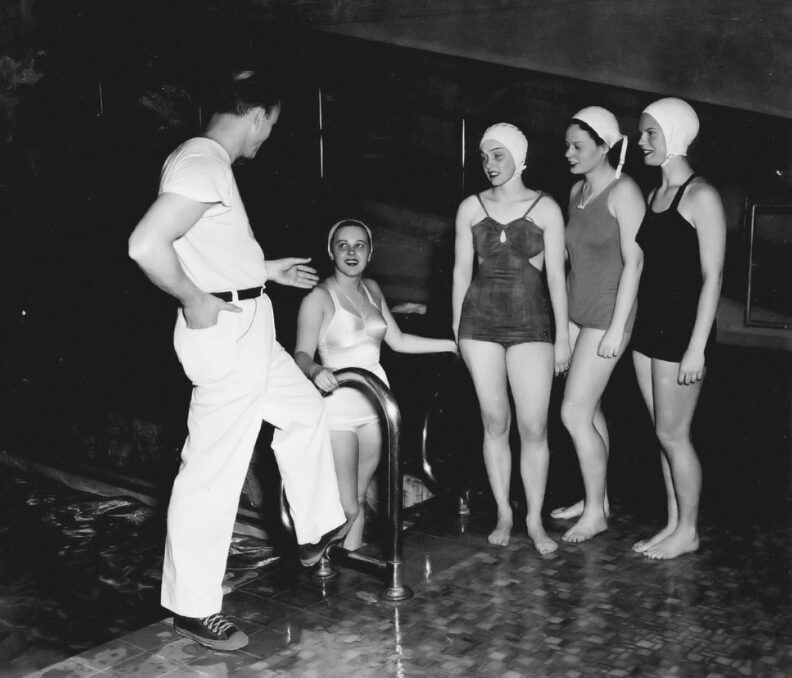
After the PE Building pool opened and Title IX took effect, women’s swimming at WSU started gaining stroke.
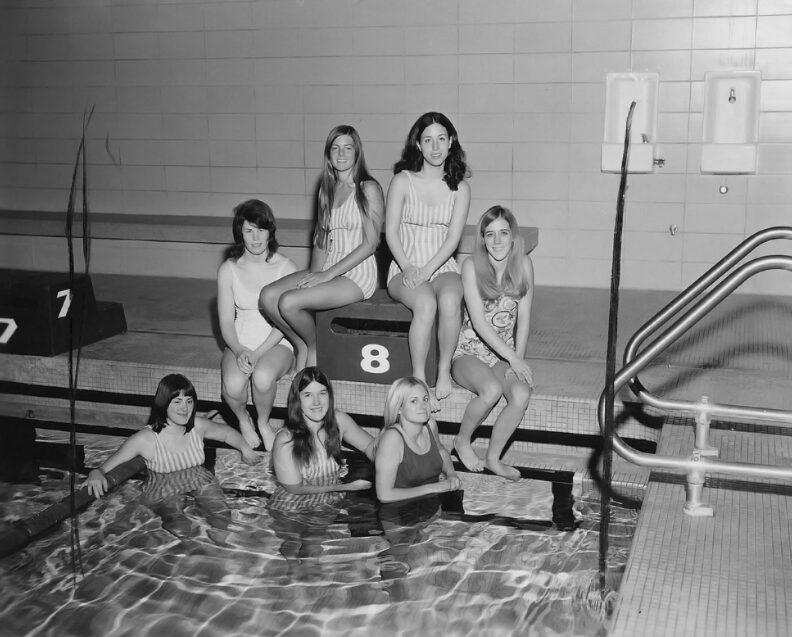
The women’s team set five school records at meet with UI in 1975, from Dawn Kuntz, Theresa Butt, Sandy Ragsdale, Marianne Berry (’78 Phys. Ed.), Glenda Kotulan, Sue McDougall, and diver Pat Rowe (’78 Zool.), under coach Wilma Harrington.
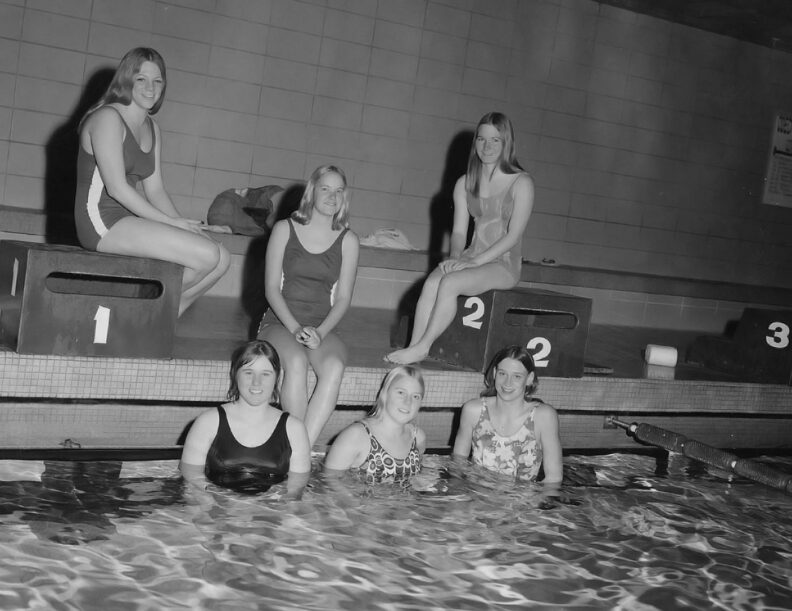
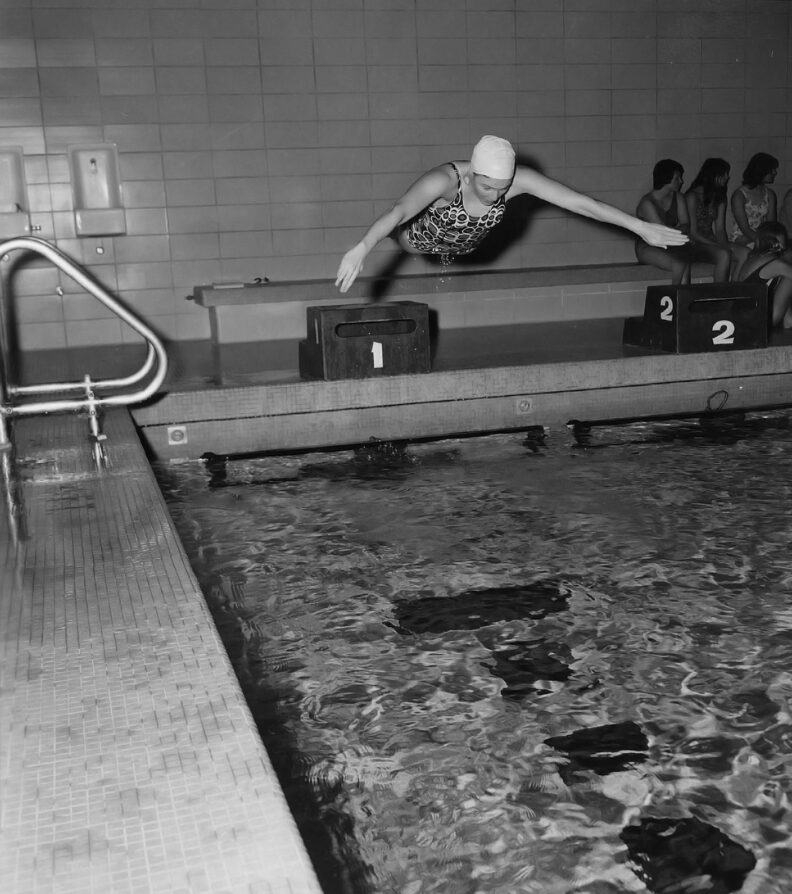
(Photo Arden Earl Literal)
Coach Debbie Pipher continued to lead in those early years of the intercollegiate WSU women’s swim team. The Debbie Pipher Memorial Invitational in the late 2000s honored her legacy with the team.

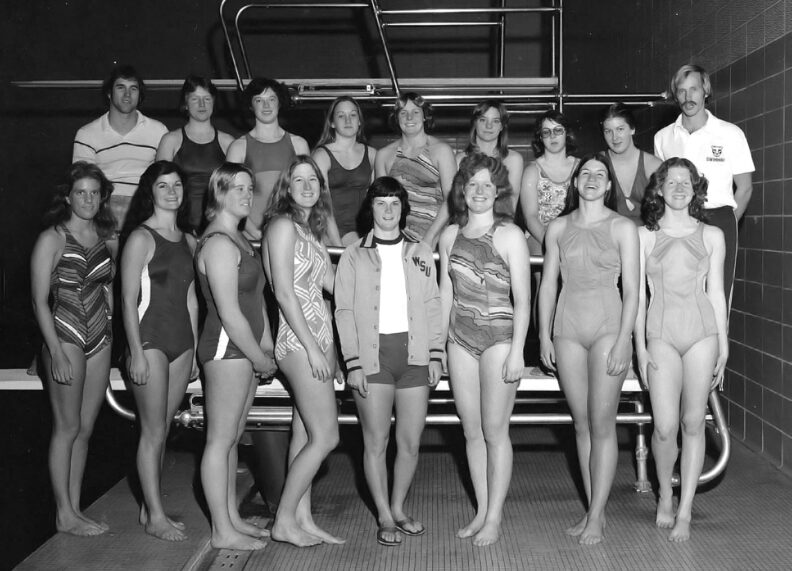
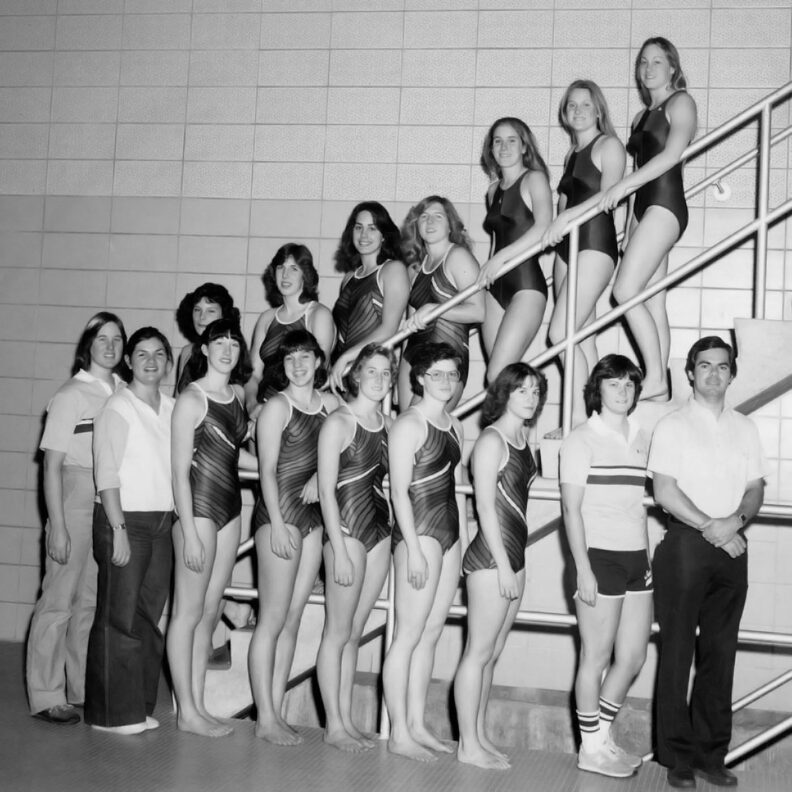
The program showcased swimmers into the 1970s, 80s, and 90s. Among others:
- Teri Leonard (’77 Socio.) went to nationals for diving in 1976 and 1977, and held WSU diving records until 1988.
- Tami Stewart (’84 Comm.) took three regional titles and set a school record in the 50 in 1980.
- Twyla Porter (’94 DVM) set three school records as a freshman in 1983.
(Photo Arden Earl Literal)
(Photo Arden Earl Literal)
The 1997-98 season brought one of the best swimmers in the history of the women’s team in Erin Eldridge (’00 Human Dev.). She ranked fourteenth in the nation in the 200 breaststroke and was the program’s first All-American.
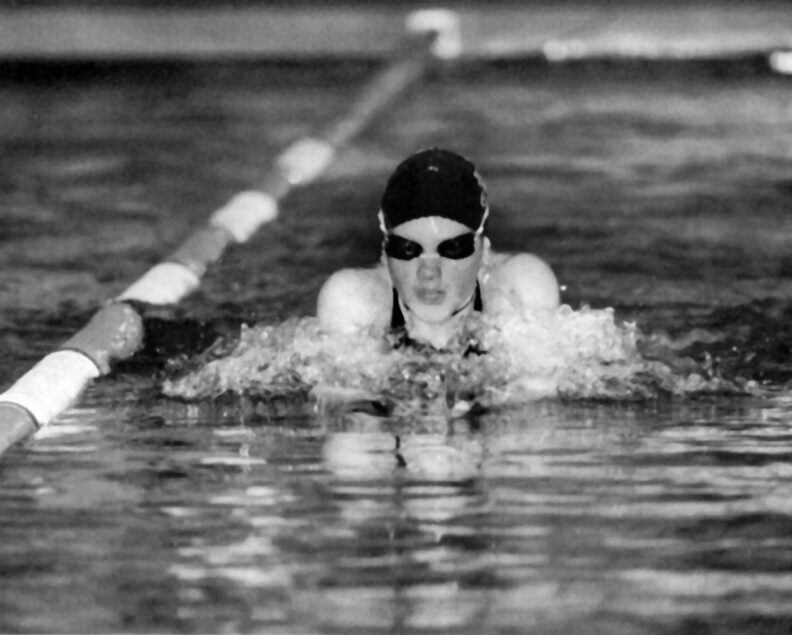
Rugilė Mileišytė (’11 Soc. Sci.) went to the 2008 Olympics for Lithuania for the 50-meter freestyle. She is a multiple-time Lithuanian champion and a five-time national record holder for both the freestyle and medley relay events.
In the early 2010s, Tom Jager took on coaching duties for the team. Jager—an accomplished swimmer who earned seven Olympic medals, including five gold, and six NCAA titles—brought his experience to the swimmers that built the program. He coached the Cougs until 2018.
Matt Leach followed Jager as coach starting in 2018. Multiple athletes, such as Chloe Larson (’22 Sport Sci.) and Taylor McCoy (’20 Poli. Sci.), won both in the pool and the classroom with postseason success and All-Academic honors.
Russell Whitaker worked as director of swimming operations under Jager and Leach, then took over as head coach for the 2024-25 season.
He and the WSU women’s team had tremendous success even as they entered a new conference, the Mountain West, after the Pac-12 shrank to two teams.
They had the best season in program history: an 8-0 record, numerous school records broken, and three swimmers selected for the NCAA Championships. Junior Emily Lundgren was one of them; she took sixth place nationally in the 100 breaststroke—best national showing in WSU swim history—and became the first All-American selection from WSU since Eldridge.
Water polo, synchronized swimming, and…battleship? A few other water sports at Washington State
Washington State featured more than just competitive swimming in its history with water sports.
Fish Fans, a synchronized swim club that drew audiences for 70 years, required participants to pass rigorous tests in the water.
The 1969-1970 WSU athletics media guide listed a men’s water polo team, and they played into the early 70s. Many members of the men’s swim team also participated in water polo.
Intramurals and recreational swimming at the university got a boost with the opening of the Student Recreation Center in 2001.
Intramurals at WSU have included not just swimming, but pool games like Battleship, where teams of four in the pool fill their opponents’ canoes with water until they sink, while blocking water from filling their own canoe.
And for those Cougs who want to get out of the pool, the rowing team and Cougar Crew give them a chance to ride fast on the water.
The Outdoor Recreation Center too has hosted rafting trips around the Pacific Northwest since 1971.
If you have swim stories from WSU, please let us know.