
Before mixing tapes, burning CDs, and downloading individual songs or albums, kids collected 45s. More than half a century later, one of those kids, now retired and a grandfather, is using the same singles in the record collection of his youth to tell the story of his coming of age.
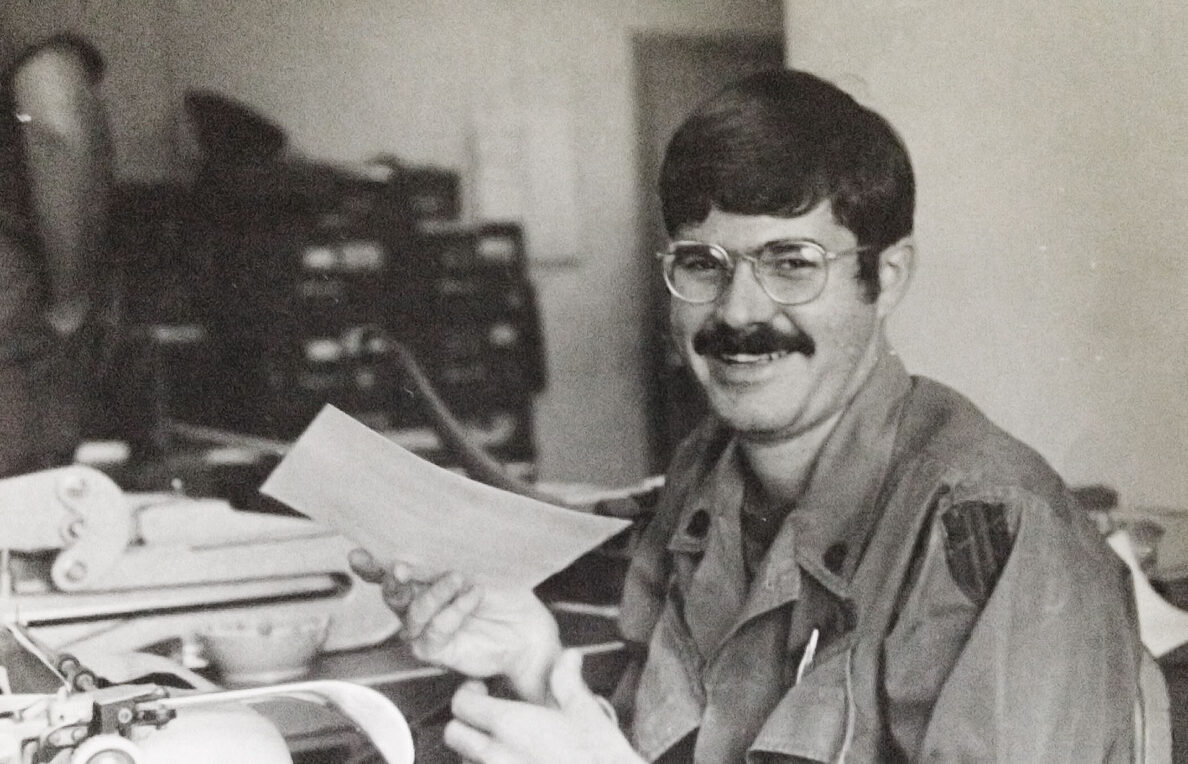
Doug Bradley (’74 MA English) grew up against a backdrop of rock ‘n’ roll and racial tension. The Tracks of My Years: A Music-Based Memoir (2025, Legacy Book Press) shares the music that meant something to him as a boy in post-World War II Philadelphia and Pittsburgh, as a college student in 1960s rural West Virginia, and as an enlisted communications specialist in the US Army in Vietnam from 1970 to 1971.
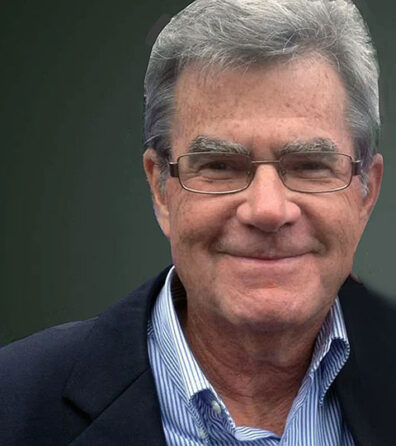
For this and his other works, the Vietnam Veterans of America honored Doug Bradley with its 2025 Excellence in the Arts Award, celebrating artists who have made lasting contributions to the public understanding of the Vietnam experience. In all, Bradley has written four books discussing Vietnam and music as therapy for himself and others who served. He also co-taught the popular course “The U.S. in Vietnam: Music, Media, and Mayhem” for eight years at the University of Wisconsin before his retirement from higher education communications.
The songs of his youth continue to heal and serve as a refuge for him today. Youth slips away. Music and the feelings it evokes endure. Here, Bradley discusses writing the soundtrack of his life, going to Rico’s in downtown Pullman with his future wife, spending time with his mother in her last days, and more.

What do you hope readers take from your music memoir?
How important music is. Music and memory, that’s who I am and what I do. Everybody has their own soundtrack. Whether it’s an old song or a new song, one of mine or one of yours, music can check and recheck who you are, and put things into context for us. It’s very personal. I think it’s one of the best things we have. Music is healing, and healing is essential. Music is essential. It’s what you need to keep going. I hope folks get a chance to read Tracks of My Years and find ways to do their own healing through music and memory.
There’s lots of detail in the book, and dialogue is in direct quotes. Did you keep a diary growing up that you referred to when writing this memoir? Or do you work through memory? What kind of research or interviews did you do with friends or family members or kids you went to school with?
I have been gifted with an extraordinary memory. And I believe it has benefitted even more by music. Sure, at times I might forget a special day or someone’s name, but, amazingly, I remember the songs, and the songs help me to remember what I experienced. Moreover, as soon as I could write, I kept a journal—still at it in my late ‘70s—and they also help with explaining and understanding my life. Honestly, I didn’t need any of my family and friends to fact check what I experienced. I lived it!
Did you use people’s real names in Tracks of My Years?
In some cases. But most names are changed.
Your high school creative writing teacher is a key, but sort of mysterious and unsettling, character throughout the book. Is W.J. Kirkpatrick his real name?
W.J. Kirkpatrick is not his real name. When I met him in 1964, I was 17. He was 23. He looked younger than we did, and he hung out with kids our age. It was not physical or sexual. But it was odd. At the time, though, his friendship was what I needed. He was the best English teacher and very influential for students. At the 50th reunion in 2015, I heard some of the kids from my class were going to encourage him to participate. But some other folks really didn’t want him to be there. I later learned he died in 2006. The last time I saw him was 1974. I never saw him again.
You go to Woodstock, a major cultural and musical turning point. But in your music memoir, the event is barely a blip. What happened?
It’s sort of like a post-college commencement and Vietnam on the horizon. A college friend and I thought we’d see what was going on. We even bought tickets. We drove to New York and arrived on Tuesday. It was already happening. We saw some of the groups and musicians—Jefferson Airplane, Joe Cocker—but we didn’t see them performing. By Tuesday, it was already crazy. It just got to be too crazy. It wasn’t fun. We didn’t have a tent. We didn’t have any place to sleep. We didn’t have water. After a couple of days, we were wondering how to get out. We were stuck. We didn’t have enough gas. We left when the rains started. We had to leave the car. We hiked out of Woodstock.
Did you have any mentors at WSU?
Charlie Blackburn was a World War II veteran. I think that made a difference because he and I had a veteran connection. He and I started a correspondence by letters. That’s how I’d communicated through Vietnam: writing letters to my family and friends and people I cared about. Afterward, I thought I was going to go to law school. Instead, I wanted to go someplace and write and think and read, and Charlie was the guy. He wrote me the nicest letters, and we had a good rapport. We talked about Vietnam. He told me he was in World War II. And we just clicked. By February or March 1972, it was already late to apply. Everybody else had a TA at that point. Charlie told me, “We can put something together for you in grad school.” And he did. In my master’s program, I did a lot of writing around Vietnam, around the war, around language. A lot of that had to do with Charlie. He had a kinship with me in ways I didn’t know. If it wasn’t for him, I wouldn’t have turned my life around. And it saved my life. It really did.
Pullman sounds like it was a difficult time.
It was for me. Even though I wasn’t in a kill-or-be-killed situation in combat, there was so much trauma involved in the war, and it always stays with you. It will never be gone. I was a combat correspondent. One of the guys in my unit was killed in Vietnam. When I came home, I wanted to say, “It’s over. It’s done. We’re done. We’re going to turn the page.” I had a small degree of PTSD. There I was in Pullman, thinking I was going to be in Seattle and wondering what I did wrong. This was ’72. I wanted to reach out to other vets and know more of them. But it wasn’t Madison or Ann Arbor or Berkeley. It was Pullman. It wasn’t the same climate. I was a little lost—because of the war and because I was a big deal (in undergrad) and now I didn’t know anybody. I was lonesome. I was trying to figure that out as well as my Vietnam and Army stuff. The second year was better. And things were improving by spring semester. Dennis Baeyen (’71 English) and I started writing a review column for the Daily Evergreen called “All Along the Watchtower.” It was published every week in spring semester 1973. We wrote about music and books and movies. We did a lot with the drama department. It was a lot of fun. We had a great editor named Nancy [Hyslop (’73 Comm.)].
You met your wife at WSU.
Pam Shannon had been at UW. The other UW. The University of Wisconsin. She had graduated and took a year working with AmeriCorps Vista. Then she decided she wanted to go to law school. She came to Pullman because she wanted to see the Northwest and meet friends. She was working on the WSU campus in, I think, international programs. And we ended up falling in love. I was really lucky. I’ve been with her for more than 50 years.
Where was your first date?
Rico’s. We had a drink. We had a great conversation. We talked about world affairs and Madison in the ’60s and Vietnam. It was perfect. We were just on the same wavelength. It was a good conversation, and I was hooked. For me, it was falling in love at first look. It took her a little longer.
Talk more about the writing process for Tracks of My Years. How long did it take to write?
I’ve been with a writer’s group of mostly vets for more than 25 years. Often, I’d write one of my “tracks” about music and memory. During COVID, I had a lot of time on my hands. I had tons of examples and different tracks for The Tracks of My Years. I also wrote two other books during that time. Some of the people that are in The Tracks of My Years I still talk to. A couple of people have passed away. There are other people that I hadn’t been in touch with. One of the other two books is about music and therapy. I worked with two other authors on it. And I completed another book about my mom, which will be published in May 2026, titled All the Books She Never Wrote. My mom was 99 when she decided she didn’t want to be 100. She still had all of her faculties, but she decided she would stop eating. She didn’t realize it was going to take her 49 days. She kept saying she wanted it to go faster. She was sharp as could be up until the end. I wrote this book about my mom in the tone of (Mitch Albom’s 1997 nonfiction book) Tuesdays with Morrie. It’ very short. It’s just me and my mom. We were trying to write a mystery story together, and it became this little piece I did having her right next to me as she was saying her last goodbyes.
What are you working on next?
Strangely enough, more Vietnam. It’s never going to leave for me. I’m trying do something a little different—all fiction and not any music. It’s going to be a little more liberating for me.
Who are your favorite authors?
Salinger, of course. Steinbeck. Faulkner. Hemingway. Hemingway was so big for me because he was a combat correspondent as well. And now’s there’s just so much good to read. I’m a fan of Toni Morrison and Jane Smiley.
What are your top five songs or top five musicians of all time?
Like a Rolling Stone (Bob Dylan, 1965)
What’s Going On (Marvin Gaye, 1971)
We Gotta Get Out of This Place (The Animals, 1965)
Bridge Over Trouble Water (Simon and Garfunkel, 1970)
I Say a Little Prayer (Aretha Franklin, 1968)
Read a review of The Tracks of My Years.