
Luke Falk ’17 Soc. Sci.
Maison Vero: 2025
One of the best ways to program failure is to tell a player not to do something. Don’t miss the shot. Don’t strike out. Don’t give up the goal. The thing you say not to do is the very thing the person immediately pictures doing.
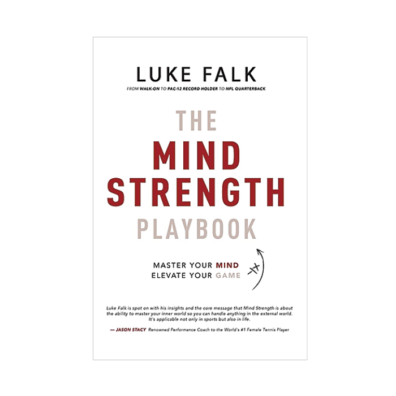
The brain turns thoughts into mental pictures. Instead of helping people imagine poor outcomes—missing the shot, striking out, giving up the goal—spiking anxiety and dropping confidence along the way, former Washington State University quarterback Luke Falk recommends flipping the script. Turn a negative statement into “a clear, confident ‘do,’” he encourages. Focus on the skills, processes, and other things you can control to help athletes—yourself, maybe—with “taking ownership of your response.”
That idea—“State What You Want”—is one of the core mind strength skills that Falk dubs “The Falk Five.” He describes these as tools “that every athlete, coach, and high-performer should have at their disposal.” The same could be said for all seven chapters’ worth of tips and strategies in The Mind Strength Playbook. Each chapter of the well-organized, easy-to-follow guide offers practical ways “to build clarity, resilience, and focus.” Also included is “walk-on wisdom,” coaching tips, parent tips, and quick reviews. Online, there’s a “virtual locker room” of additional digital materials and resources.
At the outset, Falk specifies his book is for athletes, coaches, and parents of athletes. But its advice can be applied to regular life. Non-athletes could benefit from this playbook, too. Falk defines mind strength training as “mastering your inner world so that you can handle anything the external world throws at you.” Who doesn’t need that?
He opens up about his own struggles, insecurities, and mistakes as well as what he’s learned from them. “It’s clear to me now—I wasn’t just meant to play football. I was meant to teach it,” he writes. “But more than that, I was meant to coach the mindset behind it—the discipline, the belief, and the habits that carry over into everything else.”
He writes about dealing with performance anxiety, making comparisons, and silencing your own inner critic. He recommends visualization and affirmation, along with other techniques and anecdotes. The Mind Strength Playbook is peppered with personal stories from Falk’s record-breaking Cougar football days, beginning as a walk-on, as well as his short stint in the NFL. He discusses his triumphs as well as shortcomings—times when he played the victim, blamed others, and made excuses.
Plenty of props go to late Coug football Coach Mike Leach. Falk shares Leachisms that most resonated with him, such as “Respect Everyone, Fear No One” and “You are either coaching it or allowing it to happen.”
Chapters feature quotes from other famous figures, too, including Falk’s idol and NFL star Tom Brady. Ted Lasso fans will recognize this advice: “Be a goldfish.”
What matters most on and off the playing field, Falk writes, is your response. “Because once you take ownership, everything else becomes possible.”
Web exclusives
Finding his mind strength (profile of Falk)
Mind Strength: A conversation with Luke Falk (WSM webisodes podcast)