
Through seven decades as a distinguished archaeologist, professor, visionary and advocate, William “Bill” Lipe contributed to the understanding and preservation of ancestral Puebloan culture in the American Southwest while mentoring generations of scholars at Washington State University and beyond.
A preeminent scholar of ancient Southwest cultures, he pioneered approaches in conservation archaeology and cultural resource management. Lipe advanced a stewardship model for archaeology, balancing research with long-term preservation of archaeological sites, and profoundly shaped the ethics and practice of American archaeology.
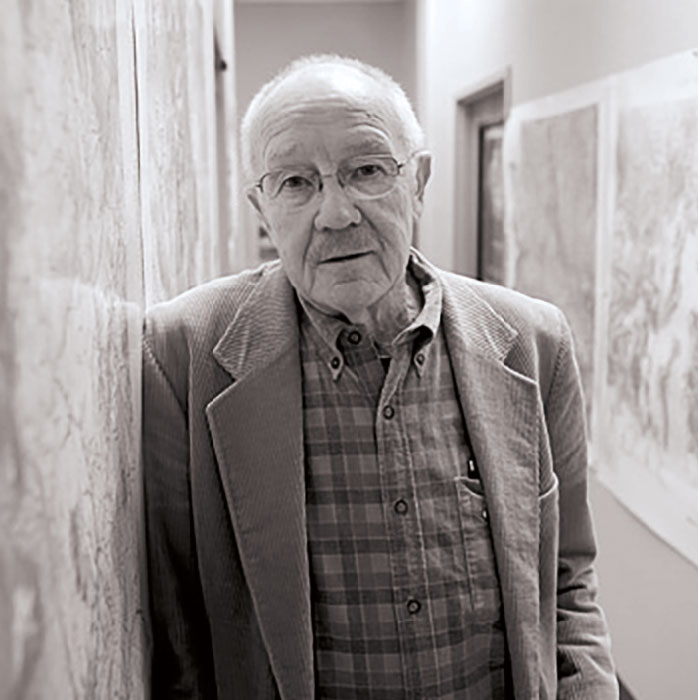
Lipe died April 9, 2025, in Moscow, Idaho.
He was born May 5, 1935, in Struggleville, Oklahoma, and later attended the University of Oklahoma to pursue his interest in Native American history.
Lipe married June Finley in 1962, with daughter Carrie born in 1963 and twins Jessica and David in 1965. In 1976, the family moved to the Palouse when Lipe joined the WSU faculty. He spent nearly 50 years at WSU and, even after his retirement, continued to conduct research, serve professional organizations, and consult with policymakers on issues related to cultural heritage preservation.
From 1978 to 1985 he led WSU’s collaboration with the University of Colorado on the vast Dolores Archaeological Program. One of the largest such projects in the nation’s history, it became a model for structuring large-scale archaeological investigations.
Lipe collaborated on developing the nonprofit Crow Canyon Archaeological Center in Cortez, Colorado, a 170-acre “living classroom” with research opportunities and preservation of ancestral Pueblo Indian cultures.
Late in his life, Lipe helped preserve other ancestral landscapes, including the 174,000-acre Canyons of the Ancients National Monument in Colorado and the Bears Ears National Monument in southeastern Utah.
Lipe was president of the Society for American Archaeology in the 1990s, which he helped to transform into an authoritative resource for archaeological practice and professional ethics. The society recognized him with the Distinguished Service Award, its highest honor.
He also sat on the boards of a number of professional societies and was a fellow of the American Association for the Advancement of Science.
Lipe received WSU’s highest honor, an honorary doctoral degree, in 2021.
Bill Lipe’s illustrious career
Field position as a crew chief on the historic Glen Canyon Archaeological Project in southern Utah, directed by the National Park Service in 1958 with teams of archaeologists from the University of Utah and the Museum of Northern Arizona. The damming of Glen Canyon was the first major development project to signal a shift to salvaging information about ancient cultures before they flooded.
Started, with his friend and colleague R. G. Matson, the Cedar Mesa Project, which ran from 1967 to 1975, to explore and document sites in the little-known area.
Published in 1974 “A Conservation Model for Archaeology,” in which he called the archaeological record a “non-renewable resource” and pleaded for “slowing down the attrition of the resource base.”
Principal investigator in 1976 leading an inventory two major tributary drainages of Grand Gulch, in anticipated creation of the Grand Gulch Primitive Area within the Bears Ears National Monument.
Director of Research at Crow Canyon Archaeological Center in Cortez, Colorado, from 1985 to 1993. Lipe oversaw studies of Pueblo settlement patterns, community organization, and sociocultural shifts in the Northern San Juan region.
Anthropology faculty at WSU from 1976 until his retirement in 2006
President of the Society for American Archaeology (SAA) from 1995 to 1997
WSU College of Liberal Arts Distinguished Faculty Achievement Award in 1997
John F. Seiberling Award from the Society of Professional Archaeologists in 1998
SAA Distinguished Service Award in 2000
A.V. Kidder Award from the American Anthropological Association in 2010.
Distinguished Alumnus from the Dodge Family College of Arts and Sciences at the University of Oklahoma in 2023
Worked with conservation campaigns and the Bears Ears Inter-Tribal Coalition in 2015 in efforts to recognize the Bears Ears and Cedar Mesa region as, Lipe said, a national treasure with “great potential for future archaeological research, as well as for productive collaborations between scientific researchers and Native American groups.” The monument was proclaimed by President Barack Obama in 2016.
Authored or co-authored no fewer than 150 publications, and at least as many presentations and papers read at various conferences
Honorary doctoral degree at WSU, its highest honor, awarded in 2021 to Lipe, now an emeritus professor
In Memoriam: Bill Lipe (from Archaeology Southwest, by R. E. Burrillo, Archaeology Southwest Research Associate)