
When Douglas Poole made a go at running his family’s third-generation dryland farm after a decade away, he realized that something needed to change.
“The fields just didn’t look like they used to,” says Poole (’90 Busi.), who returned after a 20-year career in education finance to the land near Mansfield, where his father and grandfather had raised wheat and cattle for more than 70 years.
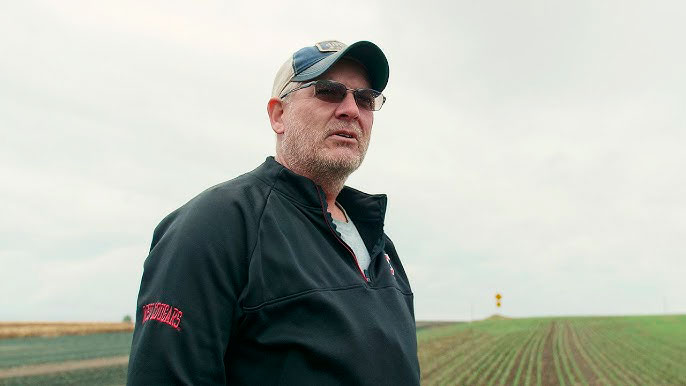
“My soil had been worked for over a century,” he says. In places, erosion had swept it to bare bedrock: “The more we tilled, the more it blew away.”
It was Poole’s third and final attempt at farming. The ranch hadn’t been big enough to fully support him along with his dad and uncle, but by 2011, Poole was ready to take over. Farming had always been in his blood.
Inspired by other pioneering farmers, Poole began exploring a brave new approach to food and farming: regenerative agriculture.
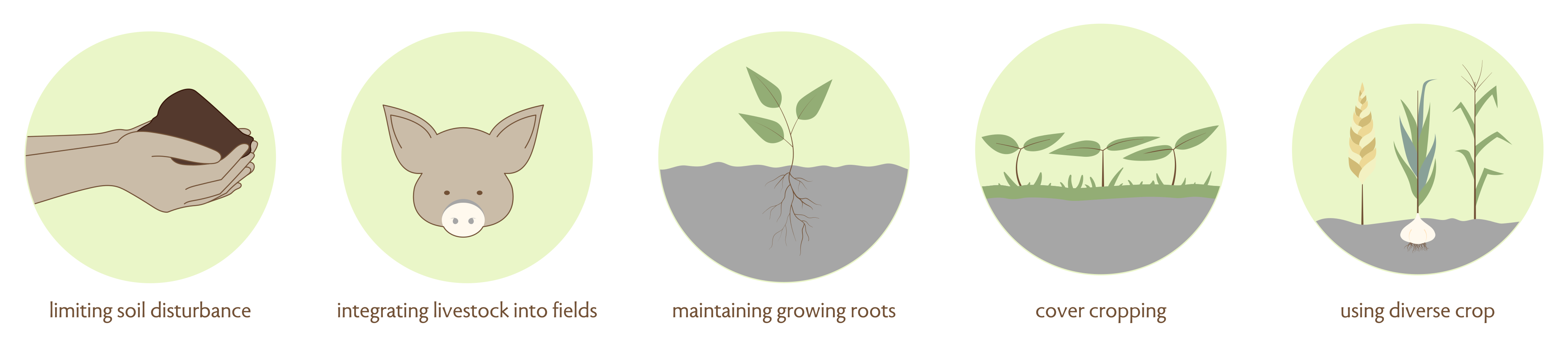
There’s no single definition of regenerative agriculture, but broadly recognized principles include limiting soil disturbance, using diverse crops and cover cropping, maintaining growing roots for as long as possible, integrating livestock into fields, and enhancing the health of people and the food system.
“We have to turn things around, and we need to start with the soil,” Poole says. “You have to believe that the soil is alive.”
He has partnered for years with researchers from Washington State University and other institutions, hosting one of the nation’s longest-running test plots using biosolids to nourish the soil. The most recent WSU project at Poole’s no-till Double P Ranch studies whether sorghum rotation can beat increasingly herbicide-resistant weeds.
Farmers like Poole recognize that a researcher’s role is to try new things.
“I keep hearing from growers that they want us to try things even if they fail, before growers do,” says Lynne Carpenter-Boggs, professor and chair of the Department of Crop and Soil Sciences. “We save them time and pain in the growing process.”
Carpenter-Boggs and other scientists across the WSU system examine regenerative practices and understand their impacts.
Near Burlington, experts at the WSU Breadlab study improved genetic diversity in wheat, including the use of ancient grains. At WSU’s Wilke Research and Extension Farm near Davenport, researchers are investigating livestock integration, soil compaction, and the effects of compost. The Wilke Farm site is one of six Long-Term Agroecological Research and Extension projects examining sustainable crop treatments and soil effects across the state as part of the Washington Soil Health Initiative.
These approaches seem new, but they are based on well-established principles. For nearly two decades, the Biologically Intensive Agriculture and Organic Farming grant program at WSU’s Center for Sustaining Agriculture and Natural Resources (CSANR) has helped faculty explore and share concepts like cover crops, biocontrol of insects, and soil regeneration. Research continues to refine the principles into more reliably effective practices.
Scientists know that farmers are seeing regenerative phenomena happening in their fields, says CSANR Director Chad Kruger.
“WSU’s job is to understand the science behind what’s happening and to ask, ‘If I do this, will I get better crops? Or a return on my investment?’” he says.
Students are also engaging with regenerative practices. Four years ago, WSU soil scientist and assistant professor Deirdre Griffin LaHue launched a soil health and regenerative food systems course to spark ideas and connect students with working farmers and agricultural professionals.
“The goal is to get students thinking critically about agriculture, and the role they might want to play in it as they move forward in their careers,” she says.
At Double P Ranch, Poole says he can see, smell, and feel the difference in his soils, and that he’s starting to see the results in increased yields. But he believes the full fruits of his 12-year journey into regeneration won’t come in his lifetime.
“I’m trying to heal 100 years of tillage and chemicals,” Poole says. “Those things aren’t going to be fixed overnight. But I know that if I get these practices somewhat established, my son will benefit. As my father strived to do, I’ll be proud to leave my farm better than I found it.”
Some principles of regenerative agriculture