
Joshua Neumiller’s work impacts millions of Americans—the nearly 12 percent of the country’s population that has diabetes.
Neumiller (’03 Gen. Stu., ’05 PharmD) is the Allen I. White Distinguished Professor in the Washington State University College of Pharmacy and Pharmaceutical Sciences as well as a leader in the American Diabetes Association (ADA).
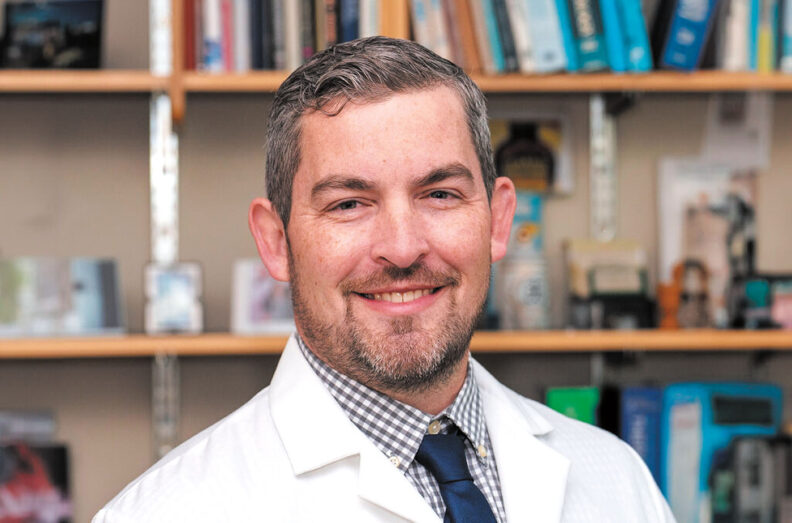
He was the first pharmacist to head the ADA committee that annually updates “Standards of Care in Diabetes,” the guidelines for health care professionals to use in treating patients with diabetes. This year, Neumiller will become the ADA’s president for health care and education. In 2024 he was named the association’s outstanding educator.
“Education is huge in diabetes,” he says, whether educating patients and caregivers about medications and lifestyle changes, or educating the primary care providers who deliver most diabetes care about new science and best practices.
Pharmacists are ideal candidates to provide that education, Neumiller says. Pharmacists are among the most accessible health care providers. And with a shortage of endocrinologists who provide specialty care, pharmacists can help bridge the gap between primary and specialty care.
But Neumiller’s work also has a more personal impact: he was diagnosed with type 1 diabetes at age 25.
That surprise diagnosis changed his career trajectory. After getting his undergraduate degree and a pharmacy doctorate from WSU, Neumiller had begun a doctoral program in immunology at the university.
“I was about nine months into my PhD training when I was diagnosed with type 1 diabetes, and I realized even as a health care professional how overwhelming that was, and difficult to deal with,” he says. He began a pharmacy residency focusing on diabetes care and clinical research.
It’s an exciting time to be involved in diabetes education, research, and care, Neumiller says.
“In the last 20 years we’ve seen incredible advancements in the management of diabetes, and I think it’s only going to increase in speed,” he says. There are new agents to slow the disease’s progression, and new insulin pumps and delivery devices. Agents from the GLP-1 receptor agonist class, like semaglutide, are helping some people achieve a normal blood glucose level for the first time, and there are more of those types of therapies in development. He predicts artificial intelligence will have a big impact on how information is distributed to health care providers and patients.
However, he adds, “at the root of type 2 diabetes management is lifestyle. Unfortunately, while we’ve had incredible therapeutic advancements, we’re more slow to make advancements in improving lifestyle.” Projections show an increase in the number of people with diabetes in the United States and globally—making his focus on diabetes education all the more critical.
Says Neumiller of his work at WSU and the American Diabetes Association, “It’s a huge responsibility, but very rewarding.”