
There are doors—and then there are really big, automated doors.
For the latter, Darren Kiesler (’05 Arch.) and Boone Helm (’03 Comm.) run the Big Door Company, which installs and automates large door systems throughout the western United States and British Columbia.
The longtime friends met at WSU and then became business partners a few years ago.
Kiesler and Helm answered questions for Washington State Magazine about their unusual company, time at WSU, incredible projects, and how automated doors could help people.
All photos courtesy the Big Door Company
How did you get the idea of a company focused on big and automated doors and windows?
Kiesler:
I started in construction on the Palouse building grain silos out in Colton, Washington, while I was going to WSU in construction. I ended up back on the East Coast for a little bit, where I was working on the Children’s Hospital for the University of Virginia, and they essentially put me in charge of all the doors, windows—kind of all the big, crazy custom stuff that they had going on there, like big revolving doors. I just had a passion for it. And when that project ended, I wanted to explore more projects involving these kind of state-of-the-art custom door systems.
I talked with friends who were sellers and dealers in doors and windows. They had really started to develop this niche market of these giant door systems. There was a big demand for it. As they were getting more common, people were starting to see these in their houses and starting to request theme in other businesses. There weren’t a lot of people that were that knowledgeable of those systems.
Helm:
Darren was seeing what I was doing with marketing and PR in Seattle, so I built and ran comedy clubs and event centers, like corporate event centers. Darren moved back to Seattle—I think it was 2017—and his business just really took off. It was 2021 that he said, “You know, I’ve discovered sort of automation of big doors. And I think this is a whole new sort of company.”
What kinds of projects do you tackle with the Big Door Company?
Kiesler:
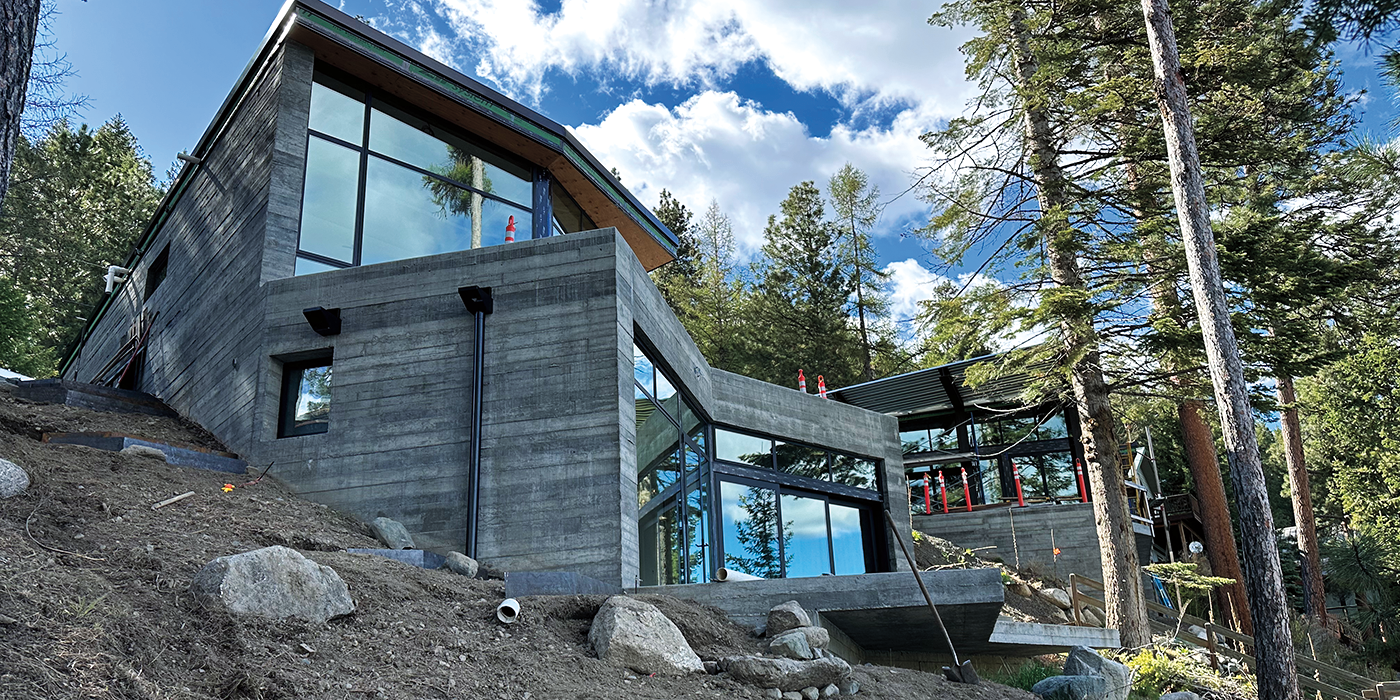
We were just in Portugal, looking at systems that are 60 feet wide and weigh 5,000 pounds on one piece of glass, and they’re just pushing the envelope. We did a project in Canada that was 20-foot-tall doors on a private residence, automated. We did another project out there on Wallowa Lake, just steel frame windows, massively architecturally striking, right on the lake.
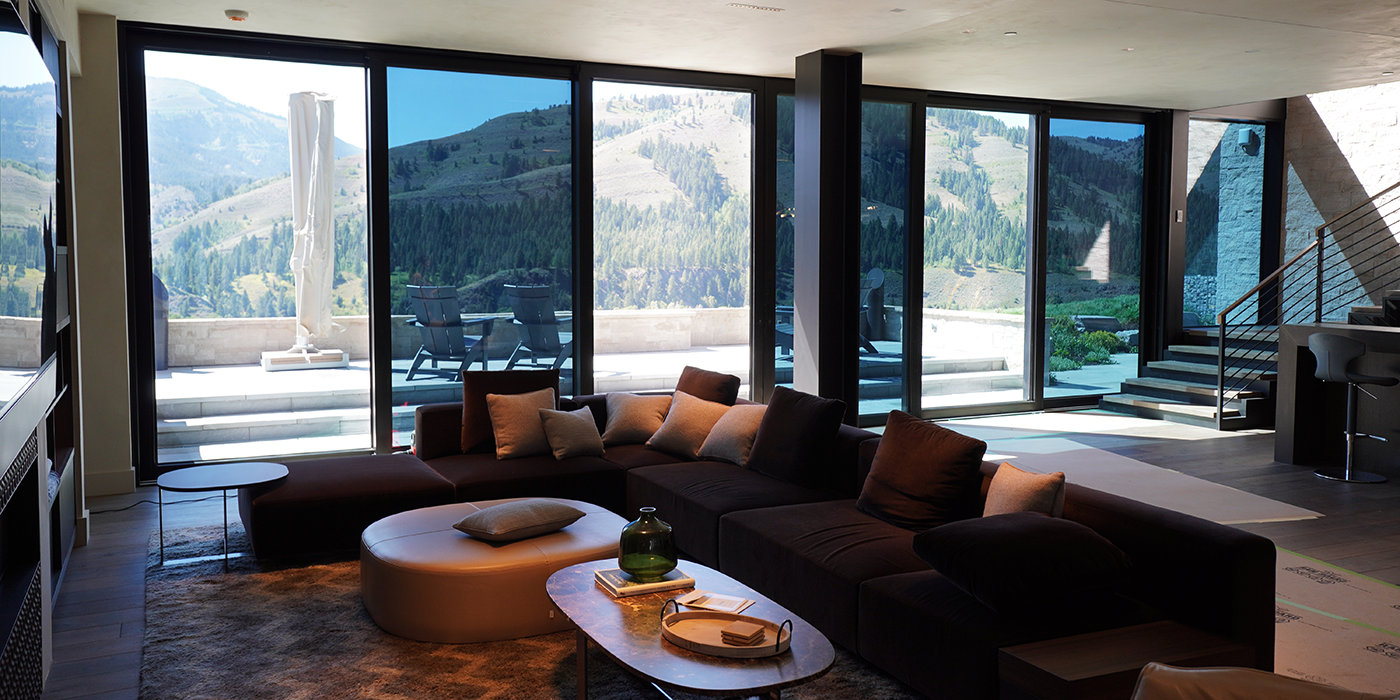
I think one of the biggest trends we’re seeing, which I really love, are called pass-through windows, which is this idea of being able to stand at your kitchen and open a door and pass through over a counter to your guests outside. Then close your window or your door, but it sits on top of the countertop. The sky’s the limit with innovation.
Helm:
It’s those transition spaces between the inside and out. We’re in a lot of lake regions and then on the coast, and then in the mountains. All these landscapes really lend themselves well to these big projects with these big automated systems where people not only want the view, they want to feel like they’re part of the outdoors while they’re inside their homes.
The automation that we’ve seen is not just big doors anymore. We’re doing giant automated storm shutters now, custom pivot doors and live-edge doors, and things where we can incorporate the automation with our own sort of artistry and custom works.
People ask, “Why can’t my stairs drop down from the ceiling?” It’s like we’re creating Batman caves. We’ve been looking at bookshelves that open up to reveal secret rooms or hidden things behind them.
Any favorite or unusual projects?
Kiesler:
The most remote was on an island in the San Juan Islands that’s not serviceable by any ferry system, so you have to take a ferry from the mainland to the Big Island, then get a private boat from the Big Island to the little island and land at the customer’s private dock and carry everything by hand. There’s no power at this little getaway retreat that they’re building; everything’s generator run.
Helm:
The one in in Vancouver, Canada, has panels that are 20 feet tall. And, the whole side of the house just opens on both sides, right onto the water in Vancouver. The sheer logistics of it are sort of just a jaw-dropper.
What are some of your challenges?
Kiesler:
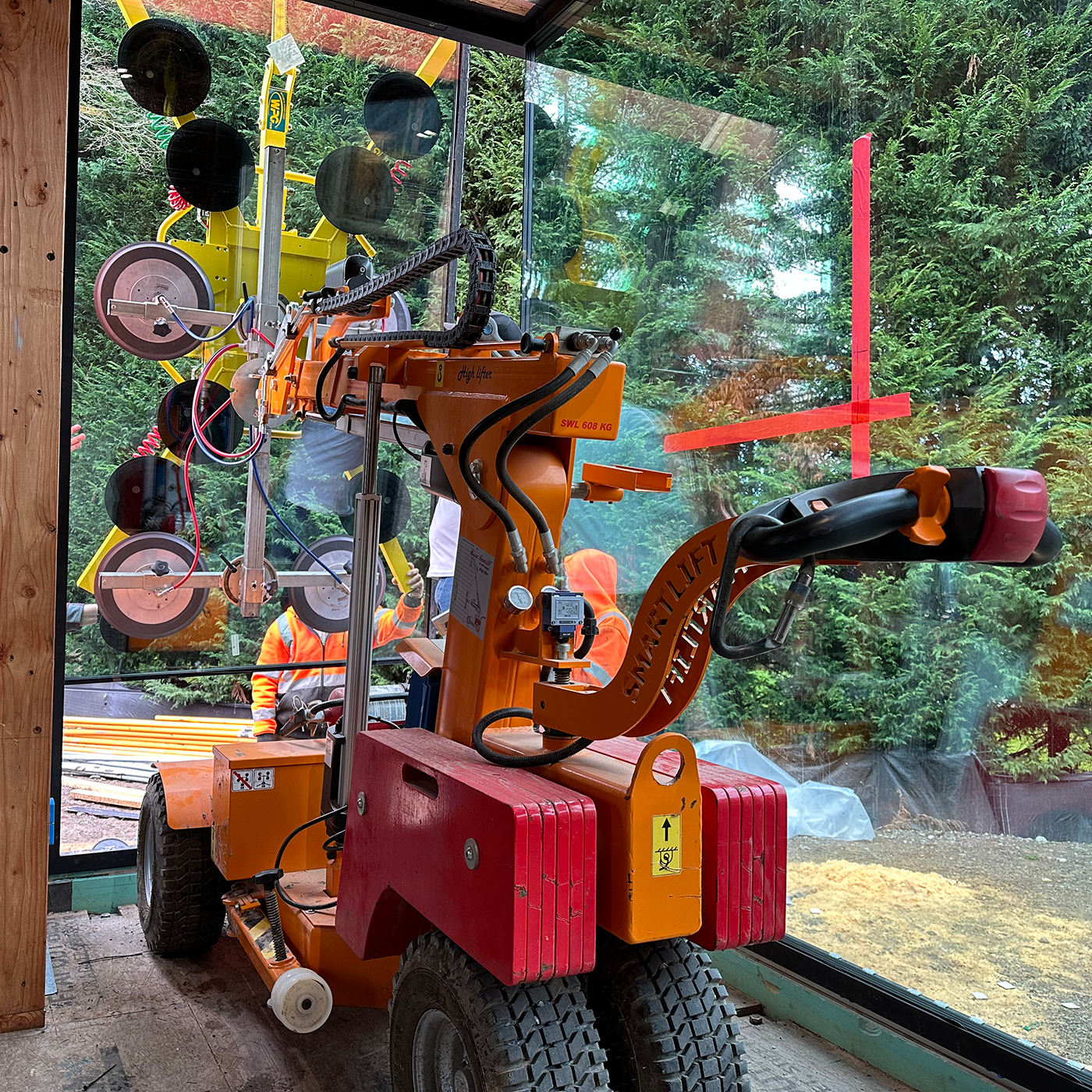
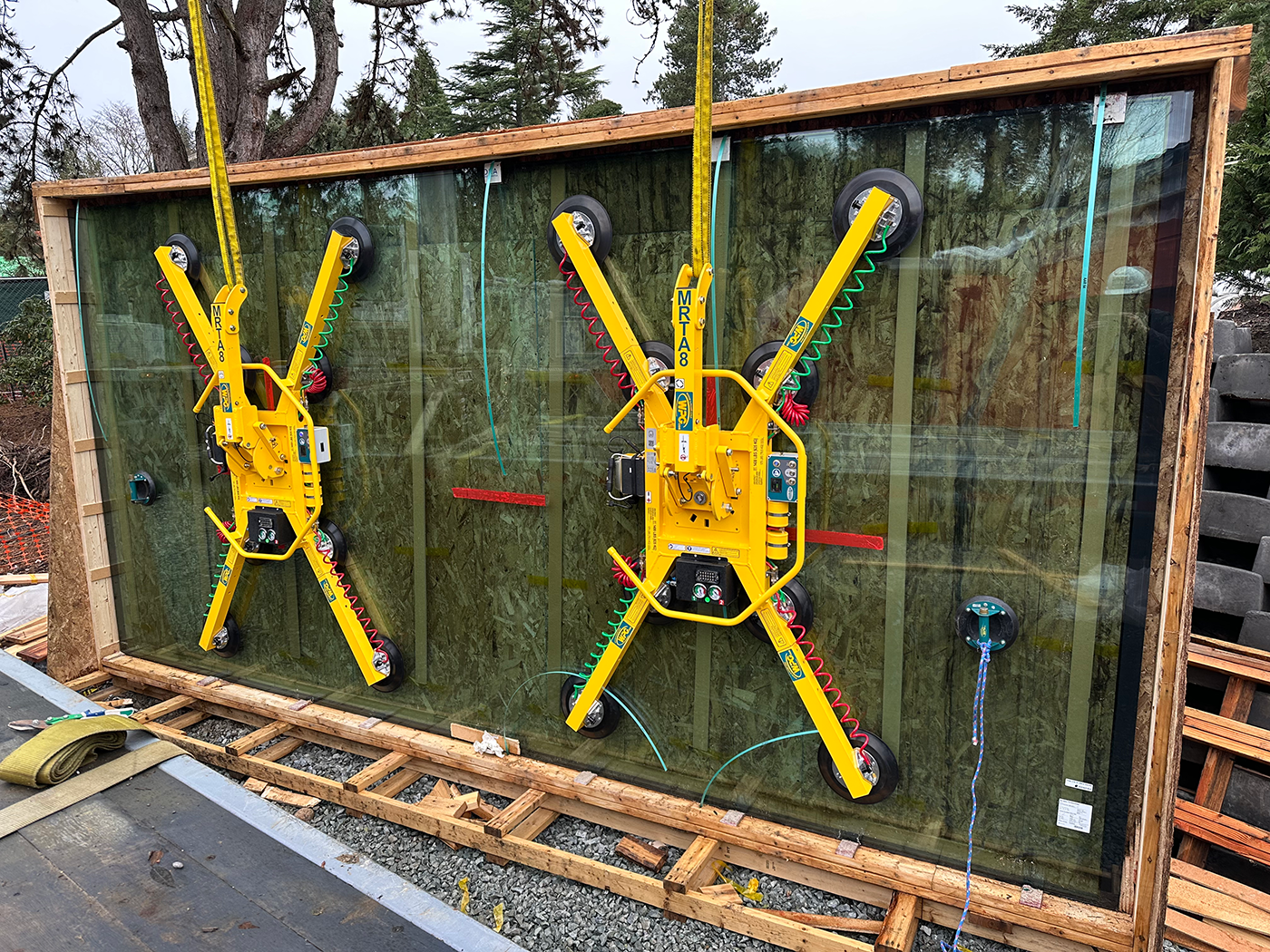
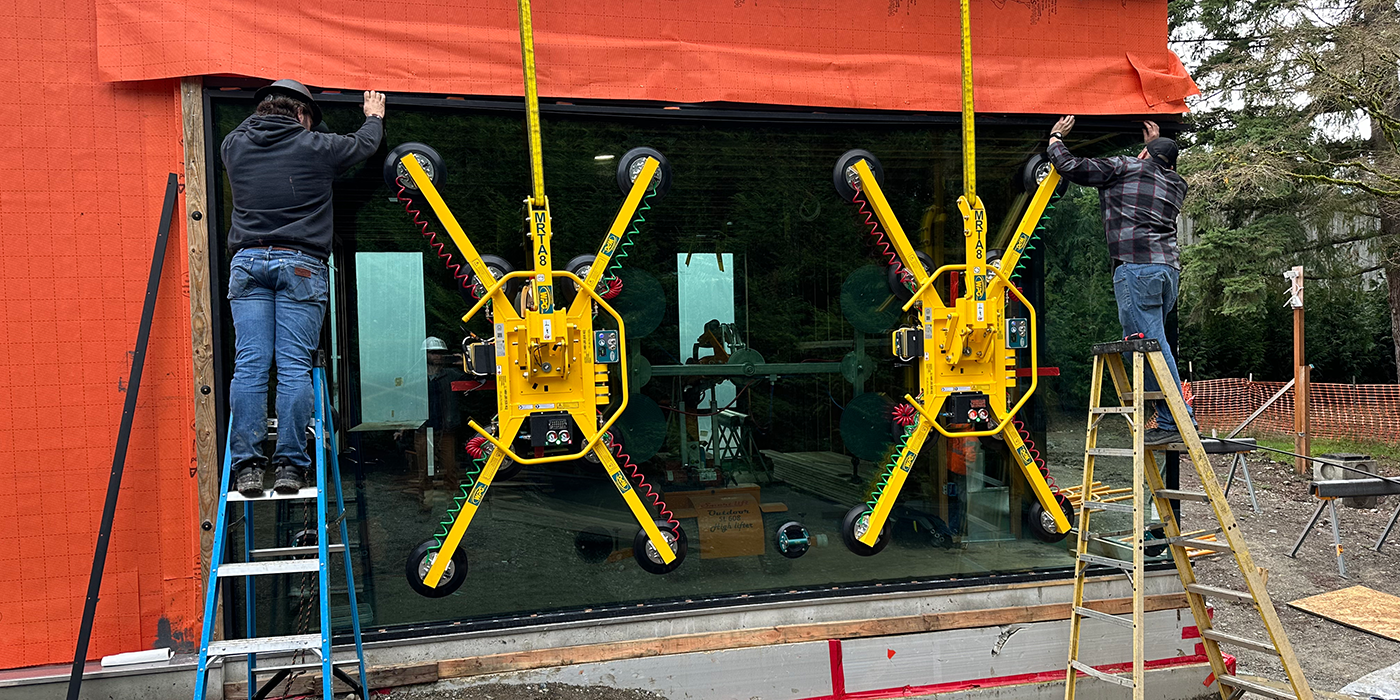
The panels have gotten so heavy. These glass panels are 800 to 1,000 pounds. I think we did one that’s 2,500 pounds, and you’re not going to carry that by hand. We’ve gotten very creative with how we can get to the back of the house, because that’s where most of these are installed.
We’ve invested in a lot of equipment. We’ve got a piece of equipment that will move up to 1,500 pounds; it just kind of grabs it and walks behind it like you would a forklift. It’s made just for glass. We’ve got suction cups that hang from cranes so we can move panels. And that’s really become, honestly, 50 percent of the job, just getting these things to the location.
Helm:
Yes, think about a 3,000-pound piece of glass, or even a 600-pound piece of glass, that’s got to go up two or three stories.
How can automated doors help people who don’t necessarily have a lot of money?
Kiesler:
We really do get to help architects and their clients envision what they want. How does this work for what their needs are? Do they have little children? Do they want it to function so their little children can open the door? Are they elderly? Do they need accessibility? Is it a small house with a big backyard?
Most of these are in the upper level of home building, but we’re starting to see a lot of these trickle down into more traditional houses as well. Maybe the doors aren’t as big or as massive, but the desire for automation is there. Can you automate the bedroom door? Can I have a small door that can be automated so my dog can go outside, or I’m in a wheelchair and I can go outside?
These now emerge into the markets, where before it was unobtainable.
I look at my parents and they’ve got two dogs, and they’re both in their late 70s. And those dogs want to go out and in about every five minutes. My mom is sitting there opening and closing it constantly. And she can do it, but there’s going to be a point where that becomes challenging for her. I said, “Well, you know, why don’t we automate your door?” And so we’re looking into automating hers, on a much smaller scale, so she can literally be in the kitchen and just push a button and it lets the dog out.
Tell me about your time at WSU. How did you meet and remain friends?
Helm:
I grew up in Pullman since my parents were in the Fine Arts Department [Robert and Tamara Helm]. It was kind of weird going to college there, because I had spent so much time on campus. We met at Tau Kappa Epsilon fraternity.
We were working on separate sides of the country. Darren would come back and visit family in Seattle, so we’d get together and definitely stay in touch.
Kiesler:
I spent three full summers in Pullman from 2000 to 2004. I moved to Spokane for the last year, and then came back for six months to Pullman to finish up some things before graduation. Boone was in Pullman for a couple years after graduation, working for the museum.
We both love hiking and climbing. Boone’s climbed many, many mountains, and I usually just tag along for the ride. Always on these mountain trips, I remember saying, we should start this. We should do this. There was this passion to do something for ourselves.
I was in Arizona, driving back from a conference, and Boone called me out of the blue, and I kind of pitched this idea to him. You bring this to the table. I bring this to the table. They’re very opposite ends of the spectrum, and they merge so well. And you know, we’ve been friends for 25 years. There was never a question of it not working.