
College students were asked whether they ate less or skipped meals due to costs. They also disclosed whether they could afford to eat balanced meals or buy more food when hungry.
Their answers were sobering.
One in three college students in Washington state experiences food insecurity, according to a recent survey developed on behalf of the Washington Student Achievement Council.
Western Washington University sent the voluntary survey in autumn 2022 to students at 39 two- and four-year colleges and universities across the Evergreen State, including all six Washington State University campuses: Pullman, Spokane, Tri-Cities, Vancouver, Everett, and Global.
Findings, published in early 2023, showed 38 percent of students overall experienced food insecurity in the past month.
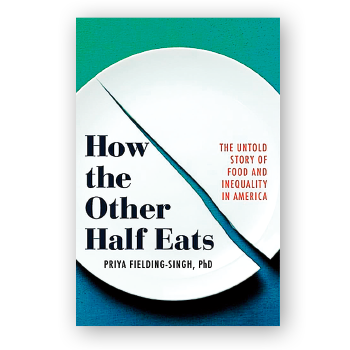
These results are part of the reason WSU chose to read How the Other Half Eats: The Untold Story of Food and Inequality in America (Little, Brown Spark, 2021) by sociologist and ethnographer Priya Fielding-Singh as the WSU Common Reading selection for the 2024–2025 academic year.
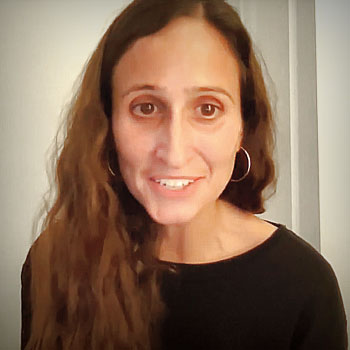
An assistant professor in the Department of Family and Consumer Studies at the University of Utah, Fielding-Singh ventures into the kitchens of dozens of families from varied backgrounds to examine dietary differences along class lines. Her research explores how and why people eat the way they do—and how inequality starts on the dinner plate. Her book is providing the basis for academic discussions and other activities to engage WSU students, faculty, staff, and community members all year.
“The selection committee liked that the book was based on the stories of families that we could all relate to in different ways,” says Karen Weathermon (’89 MA, ’99 PhD English), director of First-Year Programs in the Division of Academic Engagement and Student Achievement. She developed and leads the WSU Common Reading Program, now in its eighteenth year.
“In one of the early years of the Common Reading Program we had used Michael Pollan’s The Omnivore’s Dilemma, which focused on food production; in contrast, this book is much more about the sociologic, cultural, familial meaning of food—with all its pleasures and anxieties,” Weathermon says. “We also appreciated the focus on food insecurity and on the systemic inequalities that underlie that insecurity. The book straddles both the day-to-day and hour-to-hour decisions we all make about food and the very big issues of poverty and inequality on a local, regional, national, and global level.”
Books were provided free to first-year students at the WSU Pullman, Vancouver, Tri-Cities, and Global campuses, thanks to support from the WSU provost’s office. This is the first year since 2010 that the university has purchased paperback copies for all first-year students on the Pullman campus, and it’s also the first time ever that first-year students across the system are being provided with copies.
Activities scheduled around How the Other Half Eats include a series of faculty book discussions, meet-and-greet and lecture by the author, pop-up community market, moderated discussion on food insecurity among college students, weekly service-learning opportunities related to food and food insecurity, documentary film screenings, talks by other authors and experts who write about or study food and food-related subjects, workshops on healthful eating on a tight budget, and more.
There are several special exhibitions, including The Art of Food: From the Collections of Jordan D. Schnitzer and His Family Foundation, which features more than 100 works at the Jordan Schnitzer Museum of Art WSU.
“Food is, of course, a foundational area of research and education from the very founding of WSU to the present,” Weathermon says. “We hope students gain a better awareness of the diversity and importance of that work.”
Pointing to the 2022 survey, she says, “I believe this book offers a very important lens through which all of us who work at WSU can better understand the gaps in basic needs that an alarming number of our students face. There are important conversations for us to have with our students, and among ourselves, to better understand those gaps, the resources available, and the resources that are needed.”
In response to the survey, the state is funding a two-year pilot program, established by 2023’s Student Basic Needs Act in postsecondary institutions, to help extend meal plans for low-income, first-year students experiencing food insecurity. WSU, one of two four-year public universities to participate, received $480,000 to aid eligible students who can apply to receive up to $500 in dining dollars per semester.
Students tend to run short on meal plan funds near the end of the semester, when exams and high-stakes assignments are due.
“You can’t do your best work when you’re hungry,” says Heather Case, assistant dean of students. “These students’ most fundamental needs are not being met at a time when we are demanding the most from them.”
You can help
Support efforts to reduce food insecurity on WSU campuses:
WSU Everett Cougar Food Pantry
WSU Pullman Cougs Feeding Cougs
WSU Spokane Campus Food Pantry
WSU Vancouver Cougar Food Pantry
WSU Tri-Cities Cougar Cupboard (sponsored by Lamb Weston)
Read about WSU work on fighting food insecurity
“Hungry” article and info on food security at WSU (Washington State Magazine, 2018)