
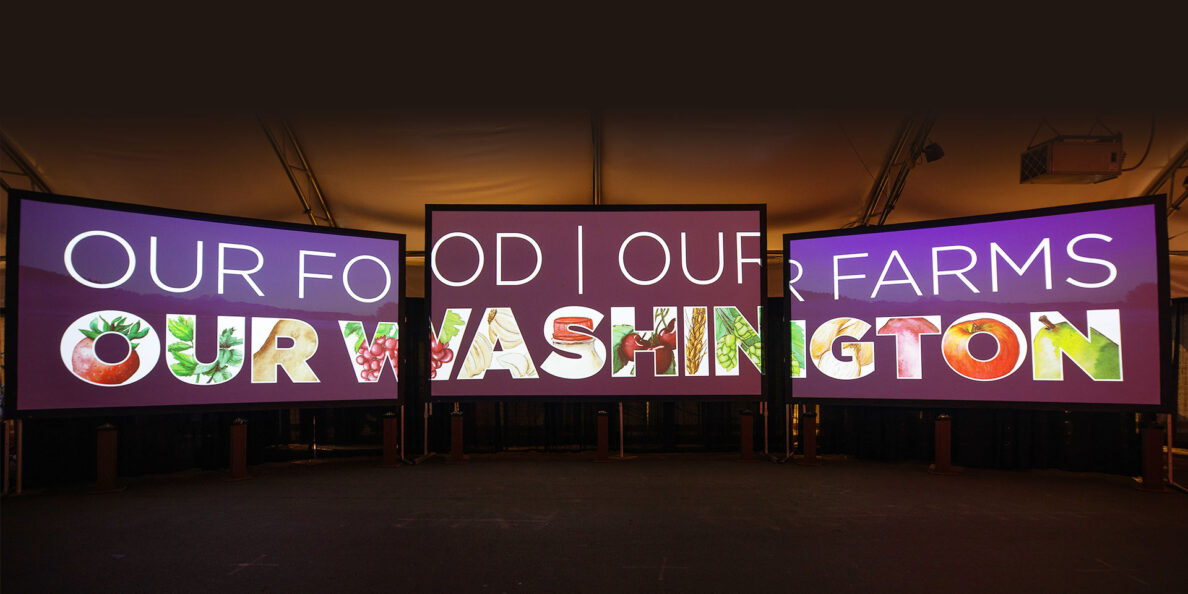
Last year, more than 85,000 people visited the “Our Food, Our Farms, Our Washington” exhibit in its first year at the Washington State Fair in Puyallup. The exhibit is expanding this year, as is Washington State University’s role in the display.
“Our goal is to tell the story of the importance of Washington agriculture,” says Renee McClain, CEO of the Washington State Fair Event Center. “We want to make people aware of how agriculture impacts their lives every day. WSU plays an important role in that story.”
The focus of WSU’s role in this year’s exhibit is technology and how it is helping the agriculture industry and the food people eat.
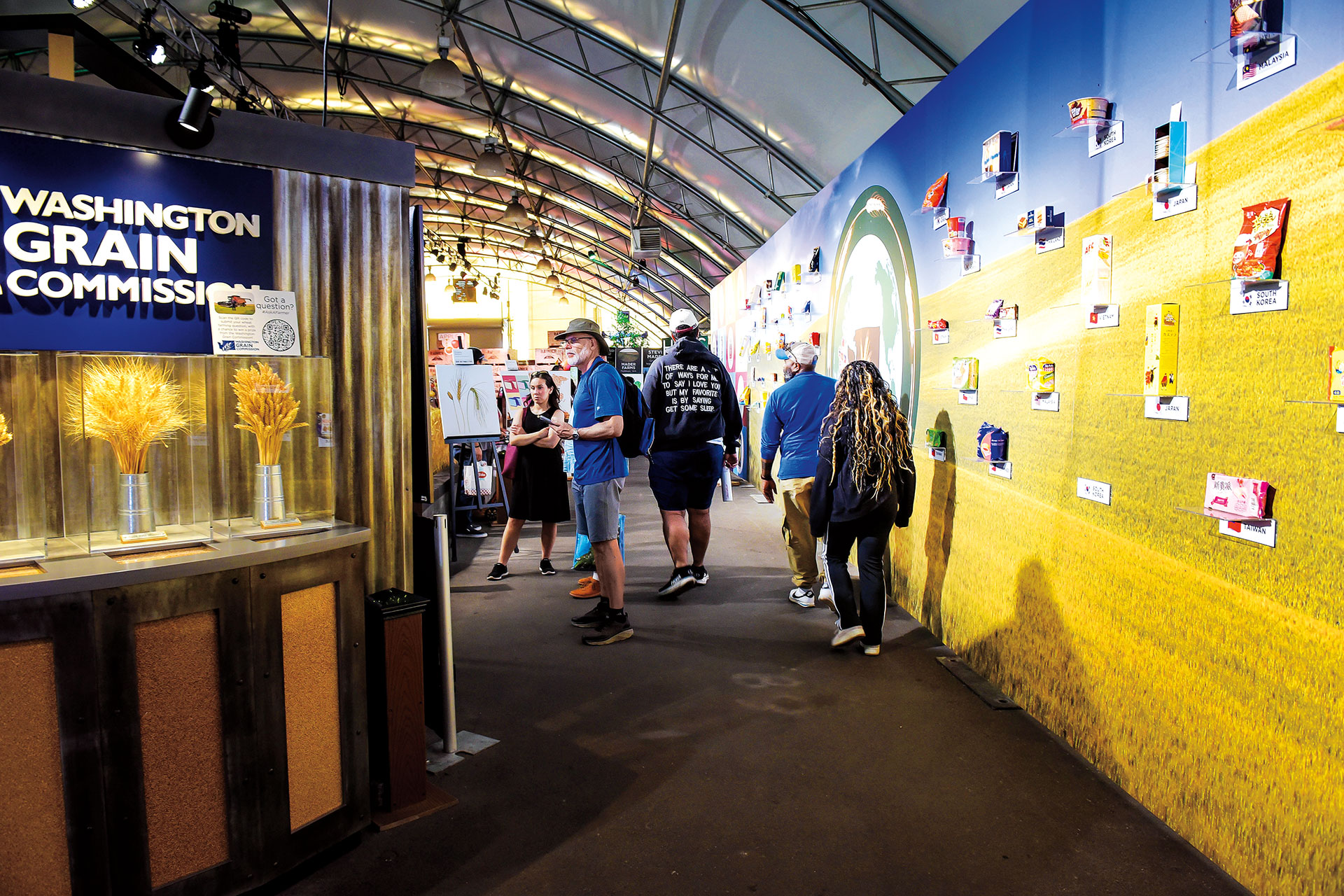
“This exhibit is a powerful platform to celebrate our farmers and demonstrate the critical work WSU does to support them and strengthen our food systems,” says Raj Khosla, Cashup Davis Family Endowed Dean of WSU’s College of Agricultural, Human, and Natural Resource Sciences. “I’m excited for fairgoers to experience this information in a way that is both meaningful and easy to understand.”
WSU’s placement is growing in the exhibit’s second year.
“We featured WSU research and education last year with a dedicated display in the exhibit,” says Andrea Thayer (’99 Busi.), chief experience officer of the Washington State Fair Event Center. “This year, we’re incorporating WSU’s work throughout, connecting how they work with commodities and aspects of the agriculture industry across the state.”
The exhibit, near a main fair entrance, is a natural attraction for guests.
Displays also feature work to bolster livestock from the WSU College of Veterinary Medicine, and AgAID, whose mission is to build and foster partnerships between AI and ag communities.
“We are so excited about the chance to demonstrate the impact WSU has on agriculture in so many different ways to so many people,” says Katie Gziryan, director of public affairs for WSU Government Relations. “Farmers are working 365 days a year to make sure the world has the food it needs. This exhibit will help honor that work in a compelling and educational way.”
In addition to widely known Washington commodities, like tree fruit or grains, the fair is adding features this year on other products like berries and timber. According to the Washington State Department of Agriculture, the state is the country’s number one producer of blueberries and number two raspberry producer. The state is the second-largest producer of softwood timber in the United States, according to the Washington State Department of Commerce.
“We need people who are agriculturally literate,” Thayer says. “That aligns with WSU’s mission of advancing agriculture through technology and research while also educating students. WSU is preparing the people who will lead the agriculture industry in the future, and we hope this exhibit opens more people up to those potential careers.”
Exhibit makers also work with commodity groups, like the Washington Grain Commission and Washington State Mint Commission.
“Our partnership with WSU has opened doors to deepening relationships with other groups,” Thayer says. “We’re so excited to work with WSU, WSDA, and industry leaders to promote agriculture and move the whole state forward.”
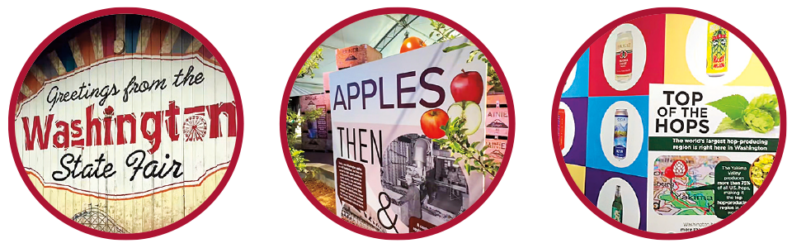 “Our Food, Our Farms, Our Washington” is near the Gold Gate entrance of the Washington State Fair. Displays represent over 300 different crops grown in Washington state.
(Video frames courtesy Kaitlyn Thornton ’23/TikTok)
The land-grant mission is alive… (Essay from Raj Khosla, Cashup Davis Family Endowed Dean of WSU’s College of Agricultural, Human, and Natural Resource Sciences)