
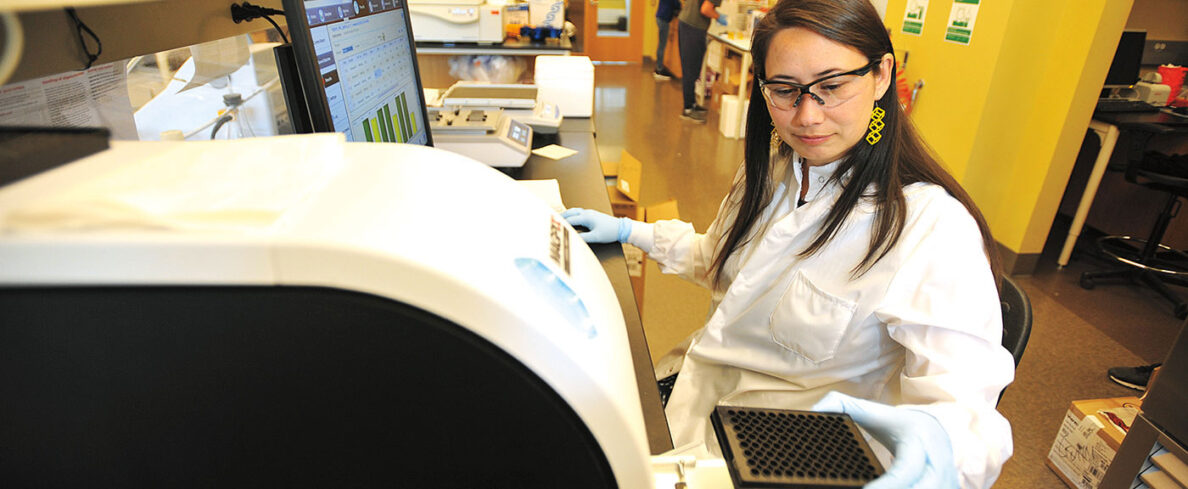
Crucial work by Washington State University researchers could identify animal diseases that might lead to another pandemic.
In central Uganda, researchers at Washington State University’s Paul G. Allen School for Global Health are tracking survivors of a 2022 Ebola outbreak to learn more about a rarer variant of the disease.
In Puyallup and Pullman, WSU scientists at the Washington Animal Disease Diagnostic Laboratory work with state and federal agencies to diagnose and monitor outbreaks of the highly pathogenic avian influenza virus (H5N1) in wild birds, domestic poultry, and other animals.
And at WSU Pullman laboratories, researchers are using lab tools and machine learning to identify which viruses infecting animals could reproduce in human cells.
Their work in zoonotic diseases is helping prepare for the next pandemic.
March 11, 2025, marks the five-year anniversary of the World Health Organization declaring COVID-19 a global pandemic. The novel coronavirus infected more than 770 million people over a three-year span, killing nearly 7 million and disrupting daily life virtually everywhere on the planet.
Future pandemics are inevitable, according to infectious disease experts. While predictions vary on the next pandemic’s timing and severity, the pathogen responsible will likely spread to us from animals, they say.
More than 60 percent of the emerging infectious diseases are zoonotic in nature, originating in animals and spilling over to people. Scientists think COVID-19 was a classic case.
The pandemic’s initial outbreak was traced to workers at a wholesale seafood market in Wuhan, China, that also sold exotic wildlife such as raccoon dogs and bamboo rats. There’s a high likelihood the coronavirus spread from the market’s animals to its employees on the way to becoming a global health emergency, according to the US Centers for Disease Control and Prevention.
Conditions in Asia’s wet markets, like the one in Wuhan, allow pathogens to jump between species, says Felix Lankester, a veterinarian at the Allen School for Global Health. Wildlife are kept in close proximity to livestock and other domestic animals. Workers may be butchering animals on-site without protective equipment. And lax sanitary controls can spread effluent to water sources used for drinking, bathing, and cooking.
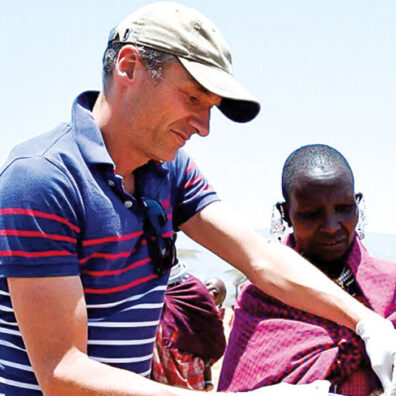
“Whenever you have different species interacting, you have an opportunity for pathogen transfer,” says Lankester, who specializes in epidemiology, disease surveillance, and wild animal health. “When animals are stressed—like caged wildlife or livestock confined before slaughter—the likelihood of viral shedding and transmission increases.”
The markets are just one example of risky scenarios. Lankester is based in Tanzania, and in parts of Africa, sales of bushmeat—or wild game—are a potential spreader of infectious disease. In the western United States, deer mice commonly found in outbuildings can be carriers of hantaviruses, which can infect people. And highly pathogenic avian flu moved from migrating birds into domestic poultry and cattle. More than 60 US residents have been sickened by it as of December 2024, primarily agricultural workers.
Zoonotic disease outbreaks have increased over the past century, and the upward trajectory is expected to continue. Population growth, land development, climate change, wildlife trafficking, and even international tourism are bringing wild animals, livestock, and people into closer proximity.
Pathogens can jump between several species before infecting humans. Sometimes, human infections result in a dead end: people get sick but don’t spread the disease.
In more dangerous scenarios, viruses reproduce in human cells and spread through person-to-person contact. In the age of global travel, a novel pathogen from one village or neighborhood can spread to major cities on six continents within a few days, according to the CDC.
But which viruses are likely to cause outbreaks in people? What animals are most likely to spread disease? And how do environmental factors contribute to outbreaks? Those are questions WSU researchers are working to answer.
Michael Letko studies coronaviruses to identify which pose potential threats to human populations. He’s a molecular virologist and assistant professor in the Allen School for Global Health.
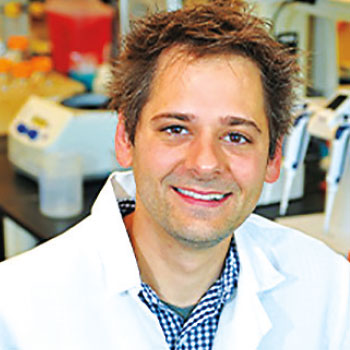
Through advances in genetic sequencing, genomic data is available for thousands of coronaviruses, which are common in warm-blooded animals. Letko and his team use sophisticated laboratory methods and machine learning to test 30 to 40 coronavirus fragments at a time.
“We’ve built a system where we can safely test components from dozens of viruses representative of the thousands of viruses that exist in nature,” says Letko, who runs WSU’s Laboratory of Functional Viromics. “It identifies which viruses are capable of infecting human cells—and it does it at scale.”
Letko’s work targets the sarbeco and merbeco coronaviruses that caused the SARS-CoV-1 outbreak in 2002, MERS-CoV in 2012, and SARS-CoV-2, responsible for the COVID-19 pandemic.
“Those two branches of the coronavirus tree seem to pose a high threat to humans,” he says. “Every 10 years or so, we get a new emergence that causes an outbreak.”
Until SARS-CoV-1, coronaviruses were mostly associated with seasonal colds. But in 2002, a new respiratory disease emerged in China’s Guangdong Province. SARS-CoV-1 spread to 29 countries with more than 8,400 cases and a fatality rate around 10 percent.
“There was a big hunt to figure out where SARS-CoV-1 came from,” Letko says. “Researchers found the virus in several wild animal species and a bunch of related viruses in bats. The discovery of so many SARS-like viruses in bats was a bit shocking to the research community.”
Ten years later, the Middle Eastern Respiratory Syndrome, or MERS, was detected in Saudi Arabia. Camels spread the virus to people, and the fatality rate is about 35 percent.
Letko and his team use “little pieces of viruses” for their work, a practice called synthetic biology. The fragments predict what the virus will do, but there’s no risk of disease spread.
“We can download every variation of this one gene on the viruses that we think is important for its ability to infect its host and transmit between species,” Letko says. “It’s the spike gene we hear about with COVID-19 vaccines. It allows us to look at the viruses’ compatibility with human cells and receptors.”
His work led to the 2020 discovery of how SARS-CoV-2 infects cells. Two years later, his team found that a sarbeco virus in Russian bats could infect human cells in the lab. The virus wasn’t previously viewed as a potential threat for spillover to people.
In their research, Letko and his team collaborate with other universities, including scientists working on a broad-scale vaccine that would protect against multiple coronaviruses.
“A single coronavirus vaccine is like the Holy Grail,” Letko says. “The data we’re going after—how does this virus infect the cell—is such a fundamental part of virology. It’s information we need for an effective vaccine or anti-viral drug.”
In Northern Kenya, where rainfall is sporadic, herders drive their flocks of camels across the sub-Saharan landscape in search of pasture and forage. The single-hump dromedary camels are adapted to the harsh environment.
“Camels are a source of milk and meat. Sometimes they are pets,” says Carolyne Nasimiyu, a medical epidemiologist and program manager for the Allen School for Global Health’s Center for Research in Emerging Infectious Diseases in East and Central Africa (CREID-ECA). “The relationship between the camels and their owners is a close one. If the camel is sick, the owner will probably catch it.”

CREID-ECA works with a cohort of camel owners to test their animals for MERS-CoV every couple of weeks. The monitoring is representative of the center’s mission. WSU works closely with other universities and health organizations on infectious disease research, prevention, and control through CREID-ECA, which is part of a global network funded by the National Institutes of Health.
In the Democratic Republic of Congo, CREID-ECA also tests for Rift Valley Fever in slaughterhouses. The viral disease is spread to cattle and other livestock primarily by mosquitoes. People can contract Rift Valley Fever through handling infected meat and other animal products.
In parts of Uganda and Kenya, CREID-ECA recently worked with hospitals to screen patients early for Rift Valley Fever. Since the initial symptoms are similar to malaria, some patients aren’t diagnosed until they develop life-threatening complications, Nasimiyu says.
Rift Valley Fever has no documented cases of person-to-person spread, and most people catch MERS from direct contact with camels. But for both viruses, the ease of spread from animals to people is a concern. Each new variant could be the one that reproduces in human cells.
In related research, CREID-ECA is working with 87 people in Uganda who survived an outbreak of the Sudan Ebola virus variant. “Because this Ebola variant has not caused a lot of outbreaks, not much is known about it, including the immunology of how the body responds,” Nasimiyu says. Some patients are still shedding the virus. Others have chronic fatigue and other “long Ebola” complications.
The source of the 2022 outbreak also remains a mystery. Scientists think that African fruit bats are reservoir hosts for ebolaviruses, which can spread to other animals and people. CREID-ECA is working on developing health research protocol agreements with central and east African nations, with the goal of gaining earlier access to patients during outbreaks.
The outbreak was first detected in a 26-year-old man, who died before testing confirmed he had Ebola. He had been in a village that experienced a rash of unexplained deaths, Nasimiyu says. But it was too late to trace who was sickened first and what interactions they had with wildlife.
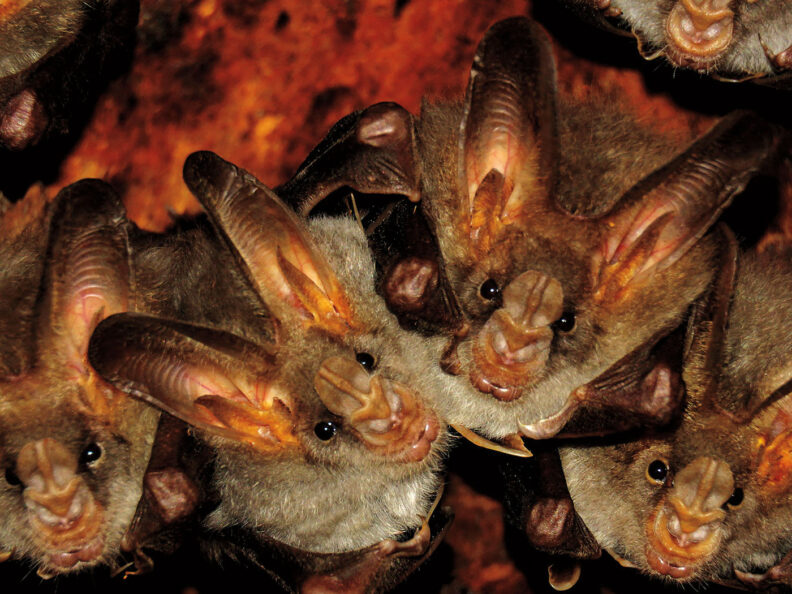
Bats and rodents are hosts for many types of viruses. That makes them ideal for Stephanie Seifert’s research, which focuses on the molecular interactions that contribute to viruses’ ability to jump between species.
“Bats and rodents are extremely diverse, with lots of different species and viral diversity,” says Seifert, an assistant professor in the Allen School for Global Health at WSU Pullman. “Not all bat or rodent species live amongst humans, but many do. When we sample bats in Kenya, some are roosting in pit toilets or mines. Sometimes we sample bats that are roosting in homes.”

Bats are particularly intriguing because they can host “the most virulent viruses” without getting sick, Seifert says. Rabies is one example, and bats are also probable hosts for the Ebola and Marburg viruses, which can cause fatal hemorrhaging in people.
“We don’t really understand why these highly virulent diseases are coming from bats,” she says. “We have this idea that bats can tolerate viral infections in ways that we can’t. Some have an expanded immune mechanism.”
Australian researchers have documented that a bat species called flying foxes shed viral pathogens during stressful times such as heat waves, reproduction, and deforestation, Seifert notes. “With climate change, I think our understanding of disease risk is going to change.”
Since Rift Valley Fever viruses spread to cattle through mosquito bites, more frequent periods of heavy rainfall and flooding will increase outbreaks.
And knowing when African fruit bats are shedding high loads of pathogens would help with risk modeling for ebolaviruses, Seifert says. Communities could be alerted, so people could take extra precautions at high-risk times.
As humans, we have many interactions with animals—whether that’s pets, livestock, or wildlife.
“This isn’t just a problem in other countries,” Seifert says. “If something like MERS had emerged from horses, I would be at high risk as a horse owner.”
Proximity to animals, evolution of viruses, and socioeconomic vulnerability are all risk factors for zoonotic disease outbreaks, she says. “Whether we are prepared for inevitable spillovers is up to us.”