
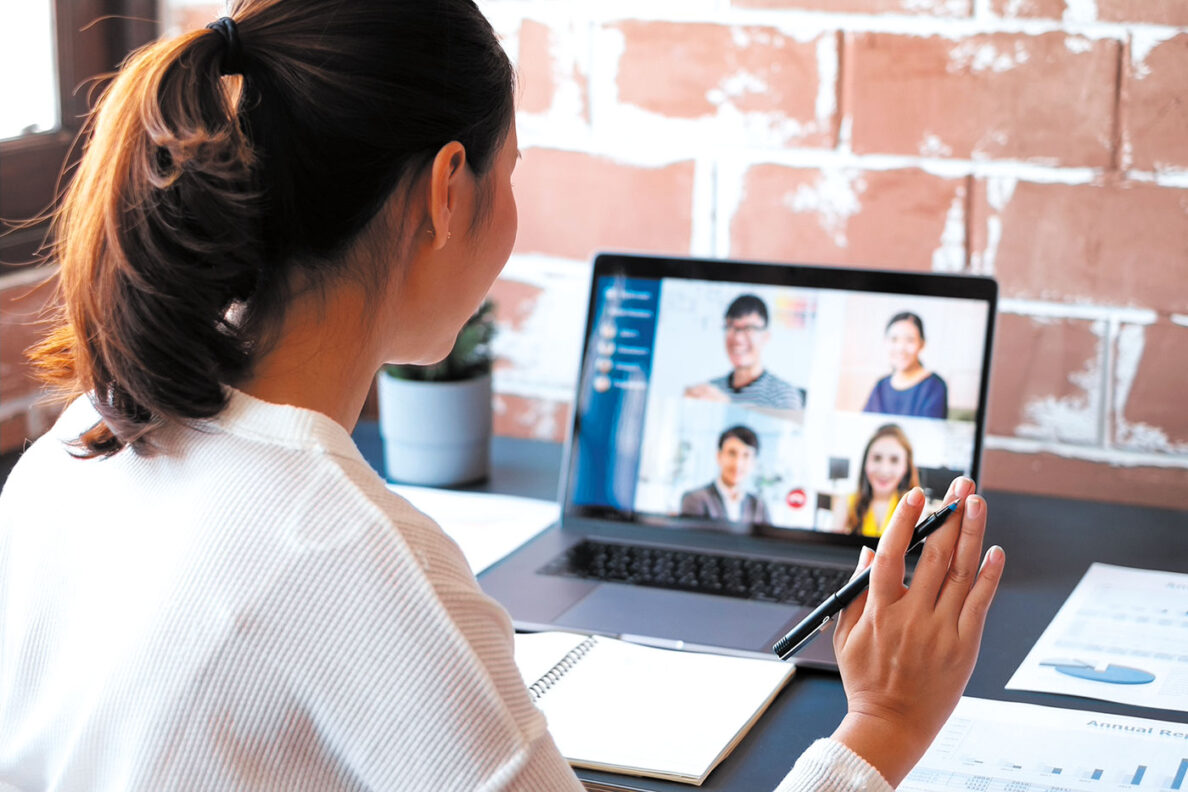
If you worked in an office at the start of the COVID-19 pandemic, you likely know the exact date you left there to work from home. Nearly 50 million people in the United States did.
Five years on, that exodus brought about workplace changes that are among the pandemic’s most consequential effects.
The “work from home” revolution changed commuting patterns and office occupancy rates. It negatively affected the service businesses that support office workers, but boosted the fortunes of virtual technology companies like Zoom and Slack. It added new acronyms to the workplace lexicon: WFH (work from home) and RTO (return to office).
Mostly though, it ushered in a more flexible way of thinking about work.
Employees who were working from home discovered that it was easier to balance their personal lives with their work. They got back time previously spent commuting. Job satisfaction rose and turnover declined. And productivity was almost unchanged, says Kristine Kuhn, an associate professor in the Carson College of Business at Washington State University.

(Courtesy Carson College of Business)
As a result, “hybrid” has also become a common term in the working world. Workweeks of a few days in the office and a couple of days at home have become commonplace in some professions. Millions of people still work exclusively at home, though those fully remote positions are declining.
Even before the pandemic there had been movement toward a more flexible approach in jobs where remote work is an option, Kuhn says. “A results-only work environment gives people flexibility over their work schedule and measures performance based on results, not how much time you’re in the office,” she says. But technological and cultural barriers prevented all but a small percentage of workers from taking advantage of that approach.
Those barriers crumbled by necessity, seemingly overnight.
The number of Zoom, Slack, and Teams users skyrocketed, and that change has lasted, Kuhn says. She cites a recent study that found workers are still using electronic messaging and video conferencing even when they’re working in the office.
“Forced into familiarity with these tools, some people now prefer them,” she says.
Another change is a reimagining of the workweek, the same study found. In-office days are for things that are best accomplished in-person, like meetings, trainings, and mentoring. Work-from-home days are used for more solitary pursuits like writing or coding.
Some companies have benefited from a much wider talent pool by offering work-from-home positions, Kuhn says. About 2 million more people who have a disability are working now compared to pre-pandemic days, with the increase mostly occurring in occupations suited for work from home.
Still, the work landscape is not settled. Some companies are mandating that employees return to the office full-time, arguing that innovation suffers without in-person collaboration. Managers say remote and hybrid schedules make their jobs harder. And Kuhn says there’s strong consensus that onboarding new employees or recent graduates is more difficult in a hybrid or remote environment.
And, of course, remote work is not and never was available for a majority of American employees.
Still, Kuhn believes some pandemic workplace changes are going to stick: “I’m not going to say there aren’t challenges, but my general take is that hybrid working, at least for a lot of professional and white-collar workers, is going to continue.”