
The dozen bright orange instruments resemble, from certain angles, oversized foghorns or perhaps abstract flower petals.
Move through the gallery to set off their sounds.
The strategically arranged motion-responsive resonator horns, suspended from the ceiling and tuned to 432 Hz, are “played” by patrons moving through the otherwise sparsely decorated space. Studies have shown that the frequency shown helps calm anxiety, decreases heart rate and blood pressure, and generally has a soothing effect. And it helps set the tone for a visit, says Ryan Hardesty, director of the Jordan Schnitzer Museum of Art WSU.
The museum commemorated 50 years at the end of September. The kinetic sound sculpture Ambiente432, commissioned by the museum and specifically designed for the Pavilion located just to the right of its main entrance, is part of its permanent collection.
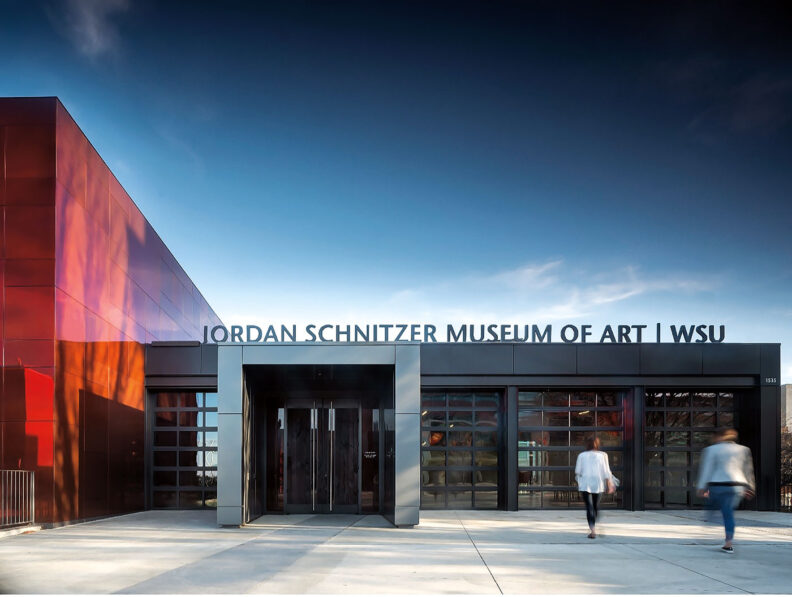 Photo Nic Lehoux
“We’ve always strived to be a cultural beacon, showcasing art that challenges, inspires, and reflects the diversity of human expression,” Hardesty says. “Our fiftieth anniversary is a testament to the enduring power of art to unite and educate.”
Established in 1974 within the Fine Arts Center, the museum has become a cornerstone of academic and cultural life in Pullman. Through the decades, the museum has amassed a permanent collection of more than 4,000 works spanning diverse genres and eras—from the 1700s to contemporary masterpieces, such as Ambiente432, created by the Seattle sound artist known simply as Trimpin.
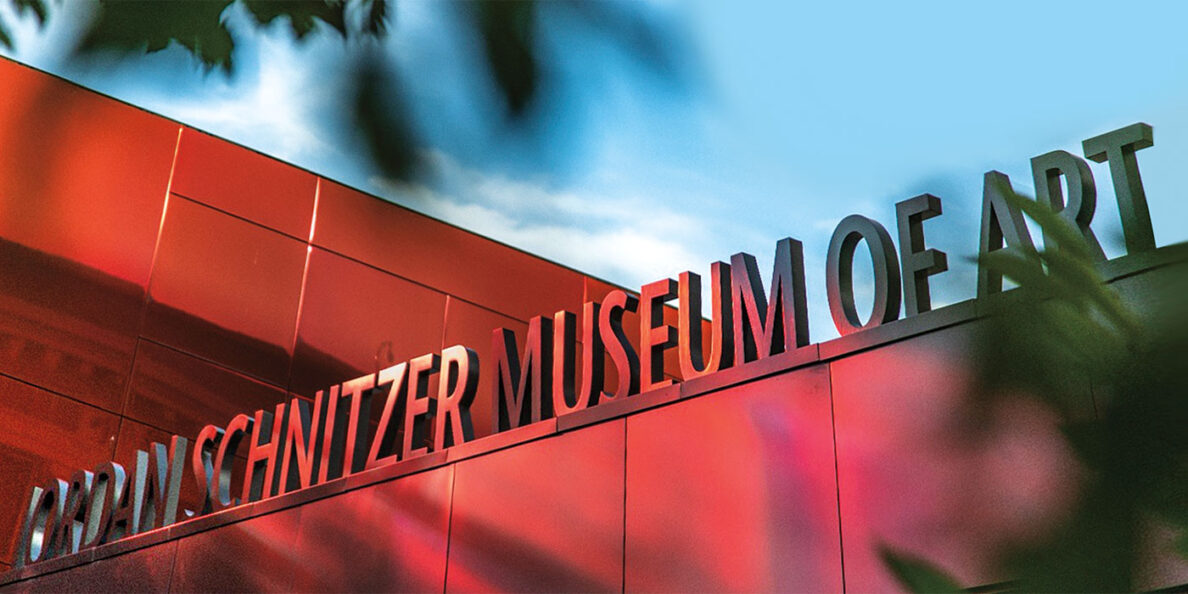
The museum, originally occupying a single gallery of 4,000 square feet, was the brainchild of the late Harvey West (’62 Fine Arts), an assistant professor of painting at WSU. Its current building, inaugurated in 2018 and known as the Crimson Cube for its reflective red exterior, encompasses six galleries and 10,000 square feet.
The Crimson Cube, Hardesty says, “affords a range of exhibition possibilities, including full-fledged retrospectives and surveys to more intimate, project-based presentations. Above all, the benefit goes directly to our audiences as our program expands alongside this stunning building.”
The museum was renamed after receiving a historic $5 million gift—the largest ever made to the arts at WSU—by prominent art patron Jordan D. Schnitzer.
“Many people view museums as a place for some elitist few. I firmly believe that art is for everyone! I am trying to tear down those perceived walls. A university campus is just the place to start. The arts are the highest ideals of every society. They are the ultimate legacy we leave for future generations,” Schnitzer says.
He notes the WSU art museum “reaches out to every student on campus, every adult within hundreds of miles—providing activities that will enrich their hearts, minds, and souls.”
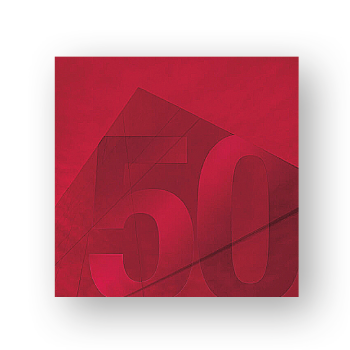
A new book, Reflecting Fifty Years, explores five decades of artistic innovation and cultural enrichment at the museum, honoring the voices that shaped its history through special exhibitions, significant acquisitions, and more. Hardesty edited the book, which was co-published by WSU Press and the museum.