
Writer and wheat farmer Gary Bye (’71 Ag., ’74 Voc. Tech. Ed.) of Pomeroy juxtaposes metropolitan and rural life and values in his award-winning small-town football novel Glory Grove.
Here, he discusses his inspiration, writing process, and more.
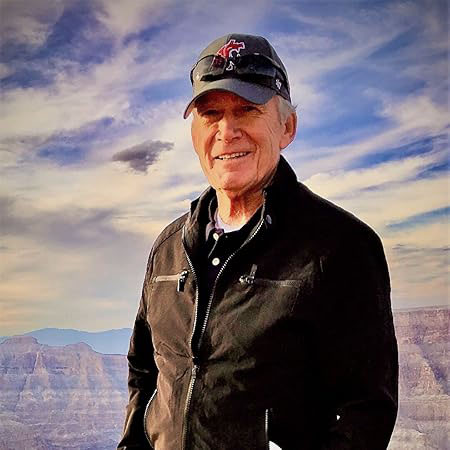 Courtesy Gary Bye
What inspired you to write Glory Grove?
I had worked as a magazine editor for several years as well as written freelance for a number of well-known agricultural magazines. I suspended my writing for several years when I returned to the family farm and began raising a family and growing the business. When my son began taking over the farm, I found the desire to write returned. But what? I wanted to try something outside my usual path. Writing a novel was the challenge I chose to pursue. “Write what you know” is the phrase writing coaches use. Thus, the novel is about a small-town boy who moves away, becomes a man, makes a name for himself in the big world, and returns to his roots. I’m fascinated by the complexities of small-town life and the interactions of its residents. I tried to shine a light on the passions and emotions that are hidden by the veneer of peace and tranquility of life in these little towns.
How long did it take, and what was your writing process like?
I’m a fairly fast writer. But, with my work on the farm, I found most of my writing took place during the winter months. I write best in the morning, but my schedule doesn’t have to be structured. If I have a scene in mind, I can flesh it out quickly and often stumble over myself trying to get it on paper. However, the editing and polishing of a manuscript can be laborious. Glory Grove came to me quickly, and I didn’t plot out the story or work from an outline. But, as I work on the sequel, I find it keeps the plot line moving along logically. I’m still learning what works.
How much did you draw from your own life? How did your own experiences influence your writing?
Much of what I write about comes from my own experiences. I grew up in a small town, moved away, found a profession I could succeed in, and then moved home to help my mother who was terminally ill with cancer. The protagonist and I share similar experiences, tendencies, and emotions. But Glory Grove isn’t a memoir. I read an author once who said writing a novel is combining experience with imagination, and that is what I did.
What similarities do you share with your protagonist Brock Gallagher?
I do share some similarities with Brock, although he was a professional football player. I wasn’t. And he is ruggedly handsome. I’m not. But he is a teacher and coach, which I was for a short time. And he lost his father at a young age, as I did. The greatest similarity comes from the compassion he has for his football players and the deep love he has for his family, friends, and neighbors. Ironically, as I examined where the story took me, I discovered that Brock and I share a very strong desire to do the right thing, even when obstacles are thrown in front of us. I attempted to make Brock Gallagher his own man, but have to admit we are more alike than I would like to admit.
What similarities does Pomeroy share with the fictional town of Glory Grove?
Some of my Pomeroy readers work hard to find the similarities between the real town and the fictional one. They look for the nuggets of truth which maybe even I don’t see. Of course, the landscape of the country, the layout of the community, and the attitude of the people is very much the same. Small farm towns, as a rule, are struggling to hold on to their populations and businesses. That is true of Pomeroy and Glory Grove. But both towns try hard to maintain their pride. They respond to Brock and his ability to fashion a successful football program much as they do with successful programs in Pomeroy. Much of it has to do with the personalities running those programs. Many of the characters in the two towns share similar personalities. But I never intentionally based a character on someone I knew or have known. In reality, all small farm towns have people like those in Pomeroy or Glory Grove. It is how they interact that makes the story come to life.
What do you love about small-town life, including high school football?
It is particularly easy to love small town life being from Pomeroy. People have a genuine fondness for one another. They rally to help whenever anyone is hurting or in need. Our number of small churches provide a family atmosphere for anyone who wishes to join. Our streets are safe. Crime is nearly nonexistent, and young people still respect the elders of the community. Newcomers are welcomed with sincere acceptance. Those are the attributes that keep people wanting to stay in our town despite the lack of extra conveniences offered by the cities.
My love of high school football is natural to me. I loved my time on the gridiron. I enjoyed every minute I was able to watch my three sons compete. Two went on to play small college football, and one is a successful high school coach. Before writing Glory Grove, I spent several years compiling the 100-year history of football in Pomeroy and released it as a two-volume set. Nearly 100 locals showed up for the book signing. However, the real attraction to high school football is the drama that comes with the game. Emotions are raw. Winning is glorious. Losing is heartbreaking. The game must be played with courage and passion. There is risk of injury. Yet, high school players are still treated with a certain amount of celebrity and awe from their admirers. More than any other sport, football, in a way, reflects real life.
Talk about your writing career.
In the 1970s, after a short career as a high school agricultural teacher and administrative intern in the Office of the Superintendent of Public Instruction, I was hired as associate editor of the National Future Farmer Magazine, headquartered in Alexandria, Virginia. The magazine was delivered to the homes of over 400,000 FFA members. I was tasked with providing most of the content for the publication and also wrote and edited a newsletter sent to the nation’s agricultural instructors. To collect stories for the magazine I visited nearly all 50 states and Puerto Rico. I also accompanied a group of members on a European visit. I did almost all of the photography for the magazine and, in 1976, was named Photographer of the Year by the American Agricultural Editors Association.
I left that job to return home to our family farm. I continued to write freelance and was a frequent contributor to The Furrow (John Deere’s monthly magazine), Country Magazine, AgriEducator, Farm Forum, and numerous other agricultural magazines. During that time, I was chosen as a photographer for a project capturing American agriculture in one 24-hour period. It was called “24 Hours in Rural America.” I also served for a decade as the lead photographer for the National FFA Convention, putting together the final evening’s “Convention in Review” slide show. I stepped away from my writing and photography career to focus on building up our grain and cattle farm and returned to writing only after my three sons graduated from high school.
How challenging was it to convert from nonfiction to fiction, magazine length to book length?
It was a bit of a challenge. Pounding out 100,000 words for a fictional novel is completely different than writing short, concise articles full of facts for a magazine. Way more fun, in some ways. Developing a story line, creating scenes, and bringing to life believable characters is a hard task. But, in the end, it can be pretty exciting, especially when readers react as if the characters really exist. It’s freeing to let your mind wander into what could happen in an imaginary place with the people you’ve chosen.
How much time each day do you dedicate to writing?
It really depends—because we are farmers—on the weather. If I’m on the tractor working a field, I can put my mind to work developing the next step in a story or thinking through a character. Later, I can put it to words. If I’m really writing hard, I can work three or four hours before my mind cries “uncle.” If I can get 1,000 words written in a day, I’m pretty happy.
What tips do you have for would-be novelists?
The advice I was given when I began writing novels was “Don’t quit your day job.” That is sound advice. It’s a competitive world, now even more so with artificial intelligence. You might have the Great American Novel in your fingers. But chances are it’ll be a long, hard journey. Write because you love to write. Let your imagination lead you into interesting places where you’ll meet fascinating people. Then, as you create enough of a manuscript to share, enlist honest people to judge your work. Harsh criticism will come from honest people. It might hurt, but don’t give up. It takes time. The only one who really needs to love your work is you.
How many more Glory Grove books can readers expect?
A sequel to Glory Grove is in the final stages. The Winds of Glory should be available for purchase by early November. Hopefully, I will have the third in the trilogy done in a year or so. I have some other writing projects I would like to pursue. And, of course, there are the cows and the fields and the grandkids to focus on as well.
Read a review of Glory Grove.