
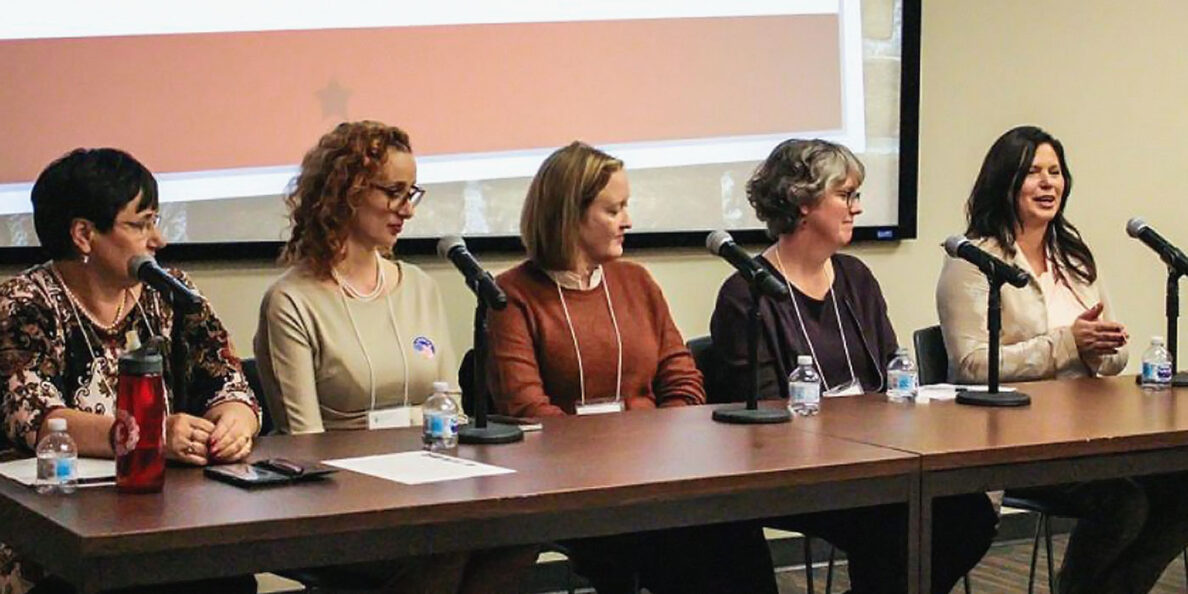
The Association for Faculty Women at Washington State University turns 50 this year. To celebrate, Washington State Magazine asked longtime members to reflect on the organization and this important milestone. Here are their reflections.
Sue Durrant
Former WSU women’s basketball and volleyball coach
Sue Durrant (’62 MS Phys. Ed.) was the first recipient of the AFW’s Samuel H. Smith Leadership Award. She joined the faculty in Women’s Physical Education the same year she earned her master’s degree from WSU. She taught courses in the teacher preparation program in addition to serving as head coach for women’s volleyball from 1962 to 1975, the instructor for the Fish Fans synchronized swim group from 1962 to 1968, and head coach for women’s basketball from 1971 to 1982. She received her doctorate from Ohio State University in 1976.
“I came here as a graduate student in 1961. A position opened, so I thought I might stay a couple of more years. It ended up being a lot more than a couple of years,” she says. “The school was much smaller at that time. Some faculty women started getting together informally about once a month in the mid to late 1960s. It was a way of talking about the issues and major concerns that affected faculty women. Other than Home Economics—which was a separate college in those days—and Women’s Physical Education, the WSU faculty was male dominated. Even the student body was primarily male at the time.”
The WSU Commission on the Status of Women was established in 1971 with the aim of creating and maintaining a safe and equitable institutional environment for women at WSU. The WSU Women’s Center launched in 1974. The AFW, in fall 1975. “There was some overlap with the women’s commission and women’s center and AFW,” Durrant says.
In 1972, the Washington legislature added an equal rights amendment to the state constitution. The same year, Title IX, a federal law mandating gender equity for any educational program or activity that received federal financial support, was also enacted. Both stated women deserved an equal share of public resources, including funding and access to facilities.
Educational institutions had to evaluate their campuses. At WSU, “There were men and women on the various subcommittees. In the athletic subcommittee, we developed ways to phase in things to improve gender equity. When this report didn’t seem to be going anywhere, we felt like we didn’t have any options left.
“President Glenn Terrell could probably argue he didn’t say it, but I remember him telling the Board of Regents, ‘I know we are discriminating against women, but there isn’t anything we can do about it,’ and I thought, ‘Well, I guess this means we are going to have to go the legal route,’” Durrant recalls. “I was so disappointed in the university. We were willing to do the work to move forward, only to find nothing was going to be changing unless they were legally forced to do it.”
Initially, the female athletes filed a complaint with the Office of Civil Rights, and the coaches filed a complaint with the Equal Employment Opportunity Commission. The problem was, Durrant says, “Nothing happened, so the athletes found a law firm that was willing to take their case.”
In 1979, female athletes filed a lawsuit against WSU, and the coaches of women’s sports decided to merge their efforts with those of the athletes. Some of the male coaches didn’t agree with the move, accusing those involved of wanting to eliminate men’s sports. “We weren’t trying to eliminate men’s sports. We wanted the opportunity for women to compete.”
During this time, the Men’s Physical Education and the Women’s Physical Education Departments were forced to merge. “It was not a happy merger. Some of the male faculty devalued the efforts of the women who were involved with the athletic equity lawsuit. They just didn’t view athletics as something that should include women. Women’s traditional roles were emphasized.”
Durrant was teaching parttime and coaching parttime. For several years, she was coaching two women’s sports at the same time. “It was nothing like coaching is today, with fulltime head coaches and several assistant coaches.”
Back then, AFW met in members’ homes. “We had meals catered in. There was a social hour ahead of the meeting. We spent a lot of time talking about the issues women were facing. There was a lot of talk about promotion and tenure and mentoring younger women as they were going through the tenure and promotion process.”
Samuel H. Smith, WSU president from 1985 to 2000, ushered in a new climate for women at the university. He was, Durrant says, “interested in finding solutions.” And he turned to the women of the AFW for help.
Though she is two decades past retirement, Durrant still attends AFW gatherings when she’s able. “There’s still a need for understanding and for getting to know people outside of your academic area,” she says. “I think there’s value in expanding your reach.”
To her, the 50-year milestone means the need remains. “I think its longevity indicates that there’s still a need to address issues that affect women in the university system. It’s not just about identifying the issues, you’ve got to find possible ways to solve them. You can’t just discuss what’s wrong but you need to identify what you can do to make it better.”
There are still more milestones to reach. “We’ll see who the next university president will be. It would be nice if it was a woman.”
Alice Schroeder
Professor emerita of genetics and cell biology, now part of the School of Molecular Biosciences
Alice Schroeder came to WSU with her husband, Paul C. Schroeder, who landed a job as an assistant professor of zoology in 1968. They met at Stanford University in 1964 and married in 1966, just before he received his doctoral degree. She finished her dissertation for her own doctoral degree in genetics from Stanford in 1970.
She did postdoctoral work at WSU for a year, funded by a National Institutes of Health grant. Then she worked on a National Science Foundation grant. “I was hired in fall 1975 at one-eighth time,” Schroeder recalls. “It was a temporary position. I was teaching a genetics lab that met twice a week. It was two credits. It was fun to teach. I got to create some of my own experiments. And, at some point, it became half time.”
She credits Robert “Bob” Nilan, chair of the department of Crop and Soil Sciences in the College of Agricultural, Human and Natural Resource Sciences, for giving her a chance. He later became dean of the College of Science. She went on to become an associate professor of genetics and cell biology.
Nilan, she says, “was really wonderful. He didn’t want to see a Stanford PhD wasted. He would see professors leave because their partners couldn’t get jobs. There were men who saw what was happening and said, ‘No, this isn’t right,’ and he was one of them. I was an experiment: part-time tenure track. I was always part time. I probably worked 40 hours a week instead of the 60 hours my husband (who was full time) was working.”
She was on sabbatical during the 1974-1975 academic year, after adopting two girls from Korea. “So I wasn’t involved in any of the planning for AFW,” she says. “But I attended the first meetings in fall 1975.”
Schroeder served as secretary and helped coordinate refreshments for meetings. At one point, she was asked to be AFW president but declined, she says, “because you don’t want a half-time associate professor to be president of AFW.” It was important, she says, that the president be a full-time faculty member.
In its early days, AFW met in women’s homes. The group numbered, Schroeder recalls, “about 25 to 35 women.”
Back then, “The genetics department had several young faculty men about my age. There were 13 of us. I was the only woman. Everybody would let me on the elevators first, and then they would try to let me out first. It just didn’t work. It was sort of funny, and it’s just one of those things that happened because of the unevenness of so many men and so few women.”
She became and remained involved with AFW for the same reason: “to be able to talk to other women as academics. It was great because I got to talk to people I wouldn’t normally talk to, people I wouldn’t normally meet—librarians and women in home economics and women’s athletics. At that time, women were mostly concentrated in a few departments, and the others were quite spread out. There were five women in science, and we were all spread out. We were academic women who were hungry to talk to other academic women. Through AFW we got to see each other and talk about common problems. It was a chance to feel you were helping get some of these things resolved because you were a member of the organization. There’s strength in numbers.”
Some of the areas she worked on included better pay and recognition for the adjunct faculty. “I supported the effort to get women on various committees, especially when it came to choosing administrators,” she says.
She remained part of AFW through her 2001 retirement and still attends AFW social events. “AFW is really important to me,” she says. “It helped me be a better faculty member because I had the support and camaraderie of other women in the organization.”
Today, the environment for women on campus “is a lot better than it was,” she says. “It has become more diverse and more open.”
Recently, she notes, “the main thing that struck me is younger women don’t feel the need for AFW like we did because there are more women. You can accommodate things like having a family and still doing really good work.”
But, she says, “we still have plenty of childcare, equality, and equivalent-salary issues. I think a lot still needs to be done for women and men in terms of balance. People do need to have time with their children and yet have careers. We really need to keep working on that. And there are things that will always be there: What’s the best approach for getting tenure? What are the best approaches if you feel you’re not being treated fairly? It’s nice to have other women who have been through these things to give you some advice.”
For example, she says, “you have to learn to say no, especially being asked to serve on every committee in the department because you’re the only woman.”
What does it mean to her that AFW is turning 50? “It’s pretty amazing. It’s always good when a group does survive that long and is still active and, as it does now, seems to have enthusiastic officers. It’s not going away. We’re going to keep fighting for the needs of women.”
Carolyn “Carol” Clark
Professor emerita of economics
Carolyn “Carol” Clark was an AFW member from the start and an active member through the 1990s. She served as president of AFW from 1981-1982 and sat on two ad-hoc committees during the same decade. From 1993-1994, she was the first woman to chair the Faculty Senate. In 1995, she became the faculty representative in Olympia. In 1999, she became an administrator in Spokane. She won the Samuel H. Smith Leadership Award in 2003 and retired in 2005.
In its early days, AFW “provided an opportunity for networking,” she says. “Women from across campus shared info—sometimes early warnings—about university-wide changes and opportunities.”
More importantly, she notes, AFW offered women fellowship in departments and areas with few other women. The first meetings were held in local restaurants. Soon the group switched to members’ homes with catered food. A refreshments’ box was moved from house to house. Membership was restricted to faculty women.
In the early to mid ’80s, ad-hoc committees, appointed by the president, gained backing for AFW initiatives from, first, Provost John Slaughter, and, later, President Sam Smith. The provost agreed to an important faculty salary equity review and, when finished, negotiations with Executive Vice President Wallis Beasley. In 1985, within months of Smith’s arrival, a second ad-hoc committee took up Smith’s invitation to do something, rather than just complain, about faculty women’s problems on campus.
“Our proposal to encourage the hiring and promotion of women needed an Implementation Committee of campus leaders, and the ad-hoc group presented him with a list of men we privately described as a ‘Who’s Who of Misogynists.’ A series of three seminars, led by outside experts, followed. Deans and department chairs in academic areas were invited and expected to attend. This was one of Smith’s first campus-wide initiatives, and he later described the work in meetings with other land-grant university presidents. Afterward, there were gains in both objectives, but we heard repeatedly of problems due to ‘too few women in the pipeline.'”
Diane Gillespie
Professor emerita of English
Diane Gillespie came to WSU in 1975, the year AFW was founded. “In my department back then,” she says, “there was an older woman poet and, if I recall correctly, only two tenure-track women. There were a few other women and some faculty wives, who were teaching introductory courses.”
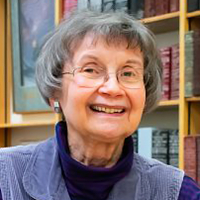
She had recently earned her doctorate and was looking forward to starting her career. “I didn’t know about AFW when I got here. Once I found out, I became involved immediately,” she says. “I was very pleased to find out there was an Association for Faculty Women. It was a way to meet women from other departments and to find out what was going in the university as a whole.”
Gillespie became a life member of AFW in 2000, retired in 2001, remains in Pullman, and still occasionally attends AFW events. “AFW has been a consistent, positive part of my career at WSU,” reflects Gillespie, who served in the 1980s as president and as program chair.
Back then, she says, “one of the most important topics was salary equity. I was told that if I wanted to challenge my salary I had to find a male colleague who I thought was equal in teaching experience and publications and ask to be compared. I did that and was successful. Salary equity was important to me and AFW continues to keep track of it.”
She credits former WSU President Samuel H. Smith for working to foster a more supportive climate for women on campus. In 2000, AFW honored Smith’s work in advancing the roles of women by establishing the Samuel H. Smith Leadership Award.
“He did workshops with different departments on treating women as academic equals,” Gillespie says. “Attitudes toward and treatment of women were very important because tenure and promotion depended on male colleagues’ votes. Women felt nervous about how objectively they would be evaluated. There were departments with only one or two women in them and, through AFW, I knew a woman who felt her tenure was wrongly denied. The case was examined at the dean’s level because of the known hostile attitude of some men in the department. I was OK. There was some blowback about my advocacy of gender-neutral language in department documents and about my teaching and research on women writers, but I did the teaching, publishing, and committee work that got me tenure and promotions on schedule. To advance my research, I applied for and got every sabbatical for which I was eligible. Throughout I felt supported by AFW.”
Today, Gillespie says, “AFW is well-known on campus for continuing to follow and advocate for the recruitment, retention, tenure, and promotion of women. This is good. If no one is watching, backsliding happens. It’s a slow process. You can make steps forward, but then there’s a step back. Still, you keep going and you keep going and you keep going. It’s a necessity and a fifty-year achievement for AFW! “
Barbara Hammond
Former director of Counseling and Testing Services in Student Affairs
Barbara Hammond came to WSU in 1983 as psychologist in counseling and testing services and an adjunct faculty member in counseling and psychology. A past president and program chair of AFW, she retired in 2009 after 20 years as the director of counseling and testing services and 25 years in all at WSU.
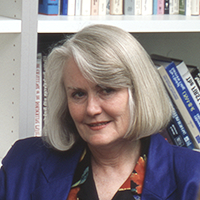
“When I started in psychology it was a male-dominated field. But by the time I retired it was mostly female. When I became the director, I was the first woman to ever have been in that role at WSU,” she says. “I didn’t really experience many gender issues in my career—something would pop up now and again—but I was really lucky that way. That doesn’t mean it wasn’t super exhilarating to have contact with women from all of these other fields, and AFW helped professionally, too. Knowing people in other departments and having these shared experiences through AFW made it really easy to call people if you needed help with something.”
Hammond doesn’t remember who invited her, “but I started going to AFW soon after I was hired,” she says. “One of the things that I tried to focus when I was president and program chair was moving us around the campus a little more and including administrative professionals more.”
An example, she notes, is holding a meeting at the art museum and involving the museum staff. Another is supporting women’s athletics by organizing AFW outings to women’s basketball and volleyball games, and hosting talks about Title IX.
Officers met at each other’s homes. “It was a real bonding thing for us,” she says. “There are people that I still run into today that I never would have known if it weren’t for AFW and because we were officers at the same time. It’s absolutely women supporting women, but it’s not adversarial. It’s not angry women. It’s women recognizing that we want to support each other and promote each other. The focus is not just on educational programming but actually trying to develop policies that enhanced women’s personal as well as academic lives. Policies have changed as a result of the input we have shared.”
But the work isn’t done. When asked whether AFW is still needed on campus, she responds with an emphatic single word: “Yes.”
Reaching the 50-year milestone is a triumph. And, she says, “I can’t see any reason why it isn’t going to go 50 more. I just think it’s been such a good thing.”
Julia Pomerenk
Former WSU Registrar
Current University of Oregon Registrar and associate vice president for student services and enrollment management; American Association of Registrars and Admissions Officers vice president for records and academic services
Julia Pomerenk worked at WSU twice—first from 1989 to 1998, and again from 2003 to 2017. Her first role was assistant registrar. Her second time around she was the university registrar. Today, she holds a similar position at the University of Oregon. She’s a past president as well as past treasurer of AFW. She’s also the 2016 recipient of the AFW’s Samuel H. Smith Leadership Award.
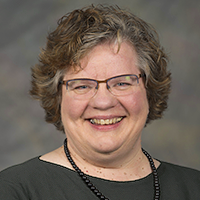
“My years at WSU and my career would have been different without AFW,” Pomerenk says. “It was very important to me to be in the company of faculty women without being a faculty woman. It helped make me a good citizen of the university to be connection with faculty women. The U of O doesn’t have AFW or an organization like it, and I really miss it. AFW creates that space and place for a big cross-section of women to get together and support each other and make good things happen. Those connections were powerful. It’s a loss not to have it where I am now.”
Pomerenk got involved with AFW when she first came to WSU, and “stayed connected the whole time. I loved the connections and getting to know people. It provided such a great way, as an administrator, to connect with faculty women. It was a personal way of making connections between faculty and administration, where sometimes there can be separation. It is for faculty women, but it isn’t all faculty women and I really loved that. There were potluck dinners at people’s houses. We had great conversations. There were people all around you who were absolute experts in things they had worked on their entire lives. It was fabulous.”
Once a month, AFW officers met with administration. “It was typically someone in the provost’s office. Sometimes, it was the provost. Sometimes, it was the president. And that was very, very useful. That made our conversations feel impactful, that we had connection at that level with administration.”
Topics included the availability of childcare on campus and representation of women on search committees, especially for high-level administrators.
“Another great connection is that every year members from the Board of Regents came and talked to us. I think they probably learned some things, and we certainly learned some things.”
Even though she’s no longer at WSU, she’s “pleased that (AFW) continues. A grassroots group of faculty women created AFW 50 years ago to have a voice and to have a community,” Pomerenk says. “Any grassroots group with changing leadership that lasts for 50 years is an accomplishment to be applauded.”
KNona Liddell
Professor emerita of engineering; 2004 recipient of the Samuel H. Smith Leadership Award; past president of AFW
“From its inception, AFW was characterized by a collaborative culture. Most meetings opened with ‘AFW updates,’ in which members shared information on such things as high-level searches, policy initiatives by the central administration, Faculty Senate, or Commission on the Status of Women, and developments in Olympia. Regularly attending AFW meetings was by far the best way to stay informed on a wide range of things affecting budgets and employees across the university. AFW members often knew more, sooner, than our colleagues.
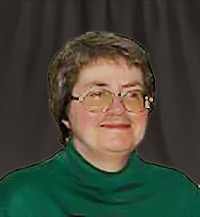
“Starting in the late ’80s, AFW was routinely invited to send representatives to candidates’ interviews for deans, VPs and provost positions. And, according to a member of President Sam Smith’s inner circle, our opinions mattered in these and other instances.
“AFW used a number of task forces or ad hoc committees to work on a range of campus wide issues. An effort from 1993 was fairly typical. By the late ’80s, the central administration had clearly committed to hiring more female faculty. However, almost all vacancies were for junior faculty; in many departments, there were almost no senior women who could provide mentorship or support; the number of female chairs, never significant to begin with, had declined even further; across the board, faculty salaries were not competitive with those of peer institutions; there was a big retention problem. AFW organized an evening of workshops on the topics of enhancing the success rate of junior faculty with a focus on their first three years, administrative accountability, developing administrative skills, and self-perceptions and public perceptions of faculty. Each workshop group met for about an hour with a central administrator to brainstorm solutions to problems in each of these areas, then presented a summary to the entire group. A week later there was a follow-up brown bag to chart a path forward on each topic.
“The topic of developing administrative skills was split in two, and coordinators were chosen to direct the work on each of the now-five topics. Donna Randall, chair of management and systems, directed the group working on accountability and liaised with Sally Savage, general counsel in the president’s office. Donna’s group began work immediately, met frequently and regularly over the next two months, and prepared a detailed proposal to present to the administration. In early summer, Sally sent the initial proposal to all AFW members asking for their feedback on the administrative accountability recommendations; the document was then quickly expanded to include sections on student affairs faculty. A survey intended to get faculty feedback on their chairs and deans was also added. Despite AFW’s close working relationship with the central administration, the notion of holding administrators accountable for the well-being and professional development of faculty in their units apparently did not find favor with all of the deans.”
Rebecca M. Craft
Professor emerita of psychology
Rebecca M. Craft came to WSU in 1993 and immediately got involved with AFW. “Fran McSweeney was chair of my department, and she invited me to come to my first meeting, and to join the organization. She suggested I would probably find it very interesting and supportive and useful. And I did. It was everything Fran said it would be,” says Craft, who worked at WSU until 2022 when she retired to Arizona.
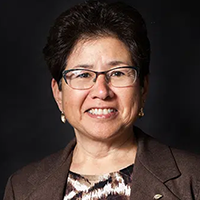
From 2007 to 2011, Craft served as director of the doctoral program in experimental psychology. She was chair of the department of psychology from 2011 to 2015. From 2014 to 2017, she was associate dean for faculty development in the College of Arts and Sciences, where she also served as associate dean for research and graduate education from 2017 to 2018.
“I was in a male-dominated department—at least beyond the assistant professor level—and I was able to get a lot of support and important professional information through AFW,” Craft says. “There were lots of workshops and formal kinds of programming that were helpful to me as a newer faculty member and that continued to be helpful to me through the tenure process and beyond. I also made a lot of friends from other departments and have stayed friends with them for 30 years. I think the tendency when you’re a new professor is to understandably be so focused on your productivity and your own unit that you often don’t meet anyone in other units across the institution. It was really exciting to befriend these other women who were in similar developmental stages professionally. Over the years, they became sources of invaluable information. It was really useful for me in terms of my professional development.”
During her time in Pullman, the biggest change at AFW was, Craft says, “from my perspective, switching from a tenure-track faculty-only organization to a tenure-, career-, and research-track faculty-and-administrative professional organization. I think it was really useful to do that, but I remember it was somewhat contentious at the time. There were some senior faculty who argued that there were enough issues specific to tenure-track faculty women that we needed to focus on. I think it’s been a really productive move. I think there’s been a lot more networking across professional trajectories no matter what role women are in or which job title they have.”
Craft worked on various AFW committees, served as AFW president, helped with recruitment, and led workshops on gender differences in communication styles in the workplace as well as on career development. “My experience as a faculty member and also as a chair is that men and women can communicate rather differently in the workplace. There are certainly male leaders at the university whose communication styles work really well for women faculty and vice versa. But traditionally, universities have a history of being all-male or male-dominated, and some departments still are that way. Women can feel very isolated, lonely and misunderstood; they are sometimes unsure how to make their voices heard in a clear, productive way so that they are not ignored or condescended to. More than once I managed to shut down the conversation in a room full of male colleagues because I didn’t understand how, for example, expression of emotion would be perceived. Over time I learned how to adjust my communication to be more effective for all kinds of audiences, including all—or mostly—male ones.”
During recruitment of new AFW members, most responses were positive. But, Craft recalls, one still stands out in her memory for its negative perspective. “When I had been at WSU 10 or 15 years, we were doing our fall recruitment of new faculty women. I got a response to my invitation email that sounded angry. This new faculty member said she didn’t think a group like this should exist. She argued that singling women out was counterproductive and that she would never join such a group. I thought about what would cause someone to respond in that way. If she was 15 or 20 years younger than me and if she had never experienced gender discrimination, then that’s great. Maybe things had really started to shift. Even when I started, the gender discrimination was much more subtle—except for salaries—than it had been for the generation of women faculty before me. But I definitely had some experiences of men talking over me, or not listening to what I had to say and then five minutes later saying the same thing I said, and all sorts of condescension. So I thought about what she said, and I decided to write back to her. I said if you have never experienced gender discrimination in the workplace that is wonderful to hear and I hope you never do, but I can assure you that salary inequality exists at this institution and nationwide, and there are subtler ways in which women do not gain access to the same resources, such as lab space. It’s certainly more equitable now than it was then. But there is still a need for organizations like AFW. This is a sisterhood.”
Read more about AFW in “Celebrating the returns on equity.”