
My two partners and I eagerly huddled around our yellow envelope. As we tore it open, we saw “Newport” in large font on the top of the page, and I felt a hint of excitement.
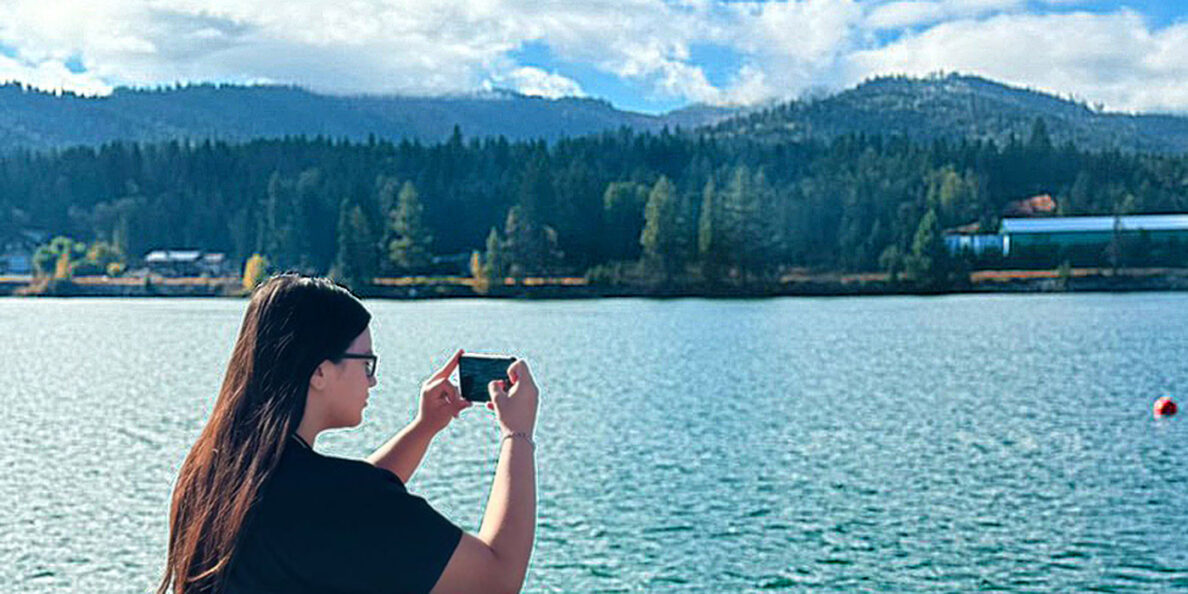
I had never heard of Newport but, after a quick Google search, learned that the city of about 2,200 people sits on the Washington-Idaho border just west of the Pend Oreille River. It’s a two-hour and 20-minute drive north from Pullman, and my team was ready to get on the road.
We were among 36 Washington State University students to participate in last fall’s 2024 Rural Reporting Plunge. This Edward R. Murrow College of Communication program gives students the chance to gain first-hand reporting experience while visiting small towns in Washington and Idaho that they may never have heard of, let alone seen.
Developed by associate professor Lisa Waananen Jones (’08 Comm.) and Ben Shors, chair of the Department of Journalism and Media Production, the Rural Reporting Plunge has been “a tremendous success,” says Bruce Pinkleton, dean of Murrow College. “I absolutely love this program, and the fact that we can offer it free to students makes it that much better. It reflects the heart and soul of land-grant education.”
The program is slated to expand into Oregon this year, with the help of assistant professor Wendy Raney. She will coordinate with University of Oregon faculty members to plan a spring event.
Funded through grant money and donors’ support, the Rural Reporting Plunge allows students to have an all-expenses-paid learning opportunity. Started in 2018 with a grant from the Online News Association, the weekend-long program was created to help break the myth that journalists must work in big cities to have successful careers. It focuses on community engagement and helping students learn more about communities that are often underrepresented in the news.
More than 200 students have participated in the Rural Reporting Plunge. Waananen Jones hopes they gain interviewing experience, confidence, and new or strengthened relationships. To make it easier for students to connect with the community, she scouts locations that have a public library, high school, or festivals.
“We’ve seen that students who participate in the Rural Reporting Plunge are more likely later on to join clubs, go on study abroad trips, and go out reporting independently when breaking news happens in our community. Now, that might be about students’ personalities and not necessarily a result of participating in the plunge, but we know anecdotally that some students have become a lot more involved as a result,” says Waananen Jones, noting 2024 saw the Rural Reporting Plunge’s highest number of freshmen and sophomores, including me.
My group, nervous but excited, gathered with nine other teams in Goertzen Hall to receive our personalized Rural Reporting Plunge packets. “Go out, have a good time, and get those stories!” the dean encouraged us.
I sat in the back seat during the drive, reading our packet. It included fun activities for the weekend, such as a photo or video scavenger hunt that asked students to document something new about the town, a town sign, and more. Students could also create a photo feature or video documenting 24 hours in town or the entire adventure. The beauty of this program is students have complete creative freedom.
The packet also listed rules such as “be respectful and courteous” and “don’t accept gifts or free things offered because of your position as a journalist.”
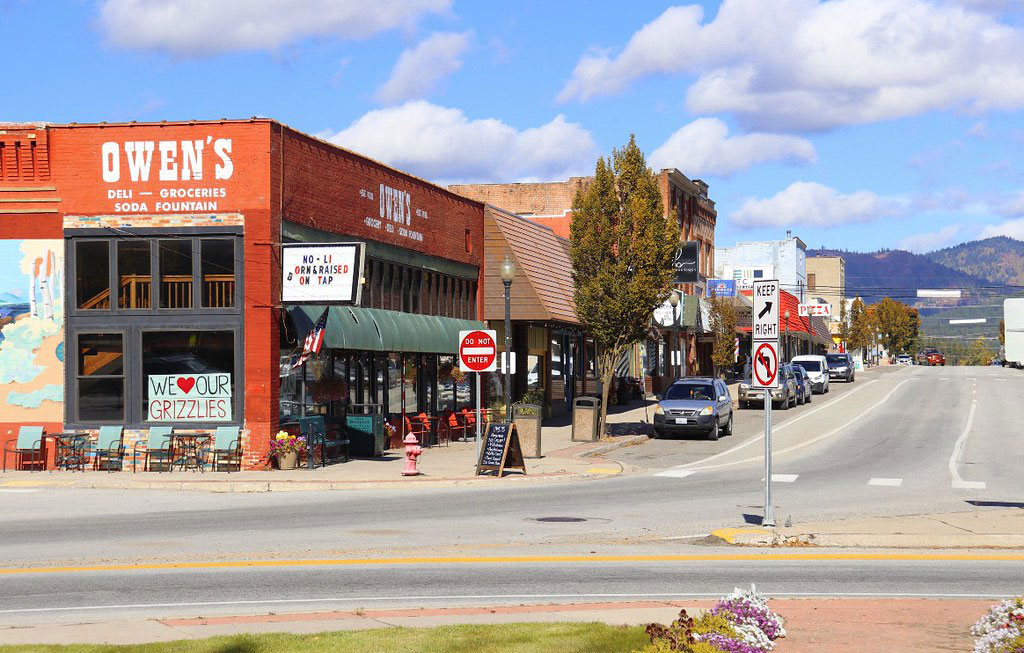
Our first stop was Golden Spur Motor Inn, our home for the night. After settling in, we had dinner at Kelly’s Bar and Grill in the oldest building in town, then visited Newport High School, home of the Grizzlies, for a football game.
The next morning, we woke up bright and early, grabbed breakfast at the Village Kitchen Restaurant 12 miles away in Priest River, Idaho, then explored Priest Lake State Park before heading back to Newport to check out the farmers market. We met many community members, such as Shelby Harrison of Shelby’s Scented Soap, Newport High School choir teacher and director Nina Pletsch, and artist Leta Garis.
Community members all seemed to hold a special place in their hearts for Newport. The way they talked about the town expressed just how much they care about it. We found the town to be tight-knit. Everyone seemed to know everyone, and they all appeared to have an equal love for Newport.
We browsed the Treasures A-Z vintage shop, then visited the museum, learning that the town was founded by brothers Warren and Charles Talmadge. It gained its name in 1890 after being chosen as a landing site for the first steamboat on the Pend Oreille River. It incorporated April 13, 1903, with a population of more than 200. On the way out of town, we stopped at the local cemetery to see if we could find the graves of anyone we learned about at the museum.
Overall, says my teammate, freshman multimedia journalism and broadcast news major Lucille Stutesman, “It was so fun, and it was a great learning experience. It was really interesting to learn how the people in a small town like Newport think.”
My other teammate, junior broadcast news major Macy Hardin, says she learned that small towns have a lot more to them than meets the eye. “I would recommend the experience because you have nothing to lose and everything to gain,” she says. “I would go again. I think it was very beneficial and something I will always remember in years to come.”
And I agree with both of them. It was a wonderful experience that I would 110% recommend. In fact, I hope to attend the Rural Reporting Plunge again this year.
Olivia Soliz is a sophomore from San Jose, California, majoring in broadcast news and broadcast production.