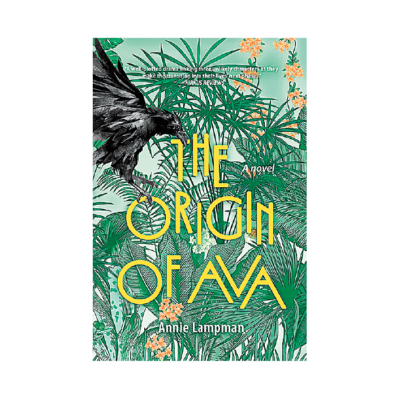
The Origin of Ava (2026, Torrey House Press) features a trio of unlikely but compelling characters who are linked by their losses. They flee in order to face and heal from their trauma. Their carefully crafted story offers commentary on the climate crisis as well as the current state of higher education while, most of all, examining the human condition.
Native American mythology—specifically surrounding the revered Raven, creator and cunning trickster—threads through the entire tale along with bits and pieces of Pacific Northwest history and vivid description of remote landscapes recognized by those who have spent time exploring the Palouse and the regions around it.
Here, Washington State Magazine catches up with author Annie Lampman, a clinical associate professor of creative writing at Washington State University Honors College.
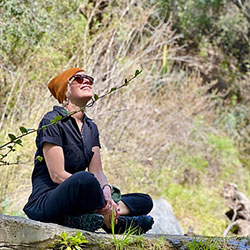
(Courtesy Torrey House Press)
What inspired you to write this particular story? Was there a specific moment or image that sparked this work?
I grew up in Headquarters, Idaho, spending my summers on the North Fork of the Clearwater River, and this book is essentially my love letter to that most sacred of family places, along with the high country that surrounds it. But perhaps the most important real-life event that formed The Origin of Ava was the Steep Corner Wildfire on August 12, 2012, that tragically killed a 20-year-old female wildland firefighter.
That day, my family and I were returning from a backpacking trip into Goat Lake, driving along the North Fork of the Clearwater River, when my wildland firefighter husband, Steve, and I spotted a huge mushroom cloud of wildfire smoke billowing ahead. We knew immediately it was bad, but then when one after another emergency vehicle passed us on the isolated backroad, lights and sirens blasting, we knew with sinking hearts it was worse than bad.
At the time, we’d moved out of the Headquarters backwoods to the college town of Moscow, Idaho, for my MFA in creative writing at the University of Idaho, and once we were home, we found out the firefighter who’d been killed was a Moscow local and a UI student, and the agency that had been in charge of the fire was my husband’s former employer. We, like everyone else, were devastated by the news.
A few years later, two of our sons ended up working on the same wildland fire crew as the fallen firefighter and were tasked with establishing and upkeeping a woodland sanctuary dedicated to her. It was all very poignant, connected to our whole life in that place and its human/environmental experience, and it’s never left me, eventually turning into a Dogwood Fiction Award-winning short story, Whom the Lion Seeks, judged by Phil Klay, and then into The Origin of Ava, serving as the hub around which the whole novel circles.
It’s easy to imagine you imagining Greer and Ava. Where did Ezra come from? Who or what inspired his character?
Ezra, like most characters, is a compilation of real people and his own distinct fictional person born on the page. He was inspired by my own family of men: my father, brother, husband, and three sons. Namely, he has parts of both my father and husband’s upbringings; my husband and sons were wildland firefighters and occasionally oversaw or worked with inmate fire crews; and my brother spent three decades incarcerated, so creating a character by combining all those worlds came naturally.
Which character was the hardest to write, and which do you relate to most?
Ava was the most challenging character to write, Greer the easiest (also my favorite and the one I related to the most), and Ezra somewhere in between. Beginning the novel with Ava taking action commonly perceived in a negative light—leaving a devoted partner, good life, and promising career behind, suddenly, without warning—asked a lot from readers and demanded that they invest in a somewhat “unlikable” character right at the outset. I had to work hard to hone Ava so that she and her actions captured the complexity of what it means to be human, both bad and good, as well as the unpredictability of grief and the zig-zag journey of healing after loss.
Talk about the important of place in a novel, this novel, or place almost like another character in the book. So much of the work is set in familiar places: Moscow, Pullman, western Idaho. How does writing about place anchor a story?
Having grown up in a remote and forgotten place surrounded by uninhabited forest wilderness punctuated by lawlessness and constantly-looming human and environmental threat, I find myself always writing about settings where the natural world is a driving force, inhabiting the story as much as the characters, shaping the story’s emotional tenor, functioning as its beating heart. Remote settings and their related flora, fauna, and natural phenomena often demonstrate both intense beauty and intense hardship, highlighting everything in society over which I celebrate or despair. The places that inhabit my work have everything to do with who the characters are and what the characters do. I can’t even conceptualize a story without knowing, intimately and personally, its place of being, so I typically write about places I know, places that I’ve experienced in some way personally. This is how the story of my characters arrives—their story in the midst of their place. Whether a micro focus or a macro focus, landscapes can inhabit the world of fiction in a way that not only enriches the story itself, but also readers’ experience of that story: its particular world, its characterizations, its emotions, and its movements both large and small. That’s what I strive for in my own work—nature/place functioning as a main force in and of itself, even as a main character. Therefore, I have to deeply know it, understand it, and love it—its flora, fauna, natural phenomena, histories, and dramas. And, luckily, the Palouse and its surrounding areas are full of dramas, from the prairie’s skies, fields, and winds to the mountain’s forests, peaks, and wild waters, to all the human histories, both triumphant and tragic. There’s no end to the drama wherever you look, and as a novelist, drama is part and parcel of the gig!
Have you ever been to Ecuador?
My family and I lived in Puerto Cayo, Ecuador, for a short time and that experience was a large part of the inspiration for this novel. I kept detailed notes when there, and those details are present throughout the Ecuador sections of the novel and often represent real-life experiences we had: the Lada Niva, the blue-footed boobies, the dogs, beaches, boats, the casa and finca, the towns and billboards and drives, the flora and fauna. The rest of the details are based on research and imagination, but having spent a good amount of time in Ecuador in person was critical to my sense of place—its daily movements, the feel of the air and water, the smells and tastes and sounds.
How long did this project take, start to finish? When did you first get the idea, and when did you turn in the final draft?
The Origin of Ava came fast and furious compared to my debut novel, Sins of the Bees—about a year and a half to complete rather than fifteen! However, that only reflects one part of the process. The Origin of Ava was really born about a decade before its publication with two short stories, published as Whom the Lion Seeks and Birds of the Land, which are now respectively Ezra’s first chapter and Ava’s first Ecuador chapter in the novel. Once I “finished” The Origin of Ava and it was accepted for publication, the editorial revision process took a few more years and several more drafts to complete. The final, final draft of the manuscript was just submitted late last fall before this spring’s publication date!
Talk more about the writing process. Where and when do you write? How detailed is your outline? Do you write character sketches?
I don’t use outlines nor character sketches. Instead, my novels and short stories always begin with two critical components: the place of their being and the characters who inhabit the story, even though I seldom know what the story actually is or its respective plot points for a long time. Figuring out those critical components are the most challenging part of my writing process and takes much psychoanalysis of both the characters and myself—trying to define what it is I’m really trying to say or speak to. Or as I pose to my students: What is the story about on the surface? What is it really about? The second question is the secret to where everything powerful lies, but the first question gets all the attention!
However, returning to my basic nut-and-bolts writing process: I keep an “extras” document open alongside the primary manuscript document for any material I might use but which doesn’t yet have a place—random research, copy-paste selections—as well as a list of character names, general plot points, and what I think might be the “big idea” of the novel. I also use my phone’s “Notes” app for research and novel ideas that strike suddenly in inopportune places—the middle of a dog walk poop-scoop, the middle of dinner, the middle of the night, the middle of painting the house or planting a tree or watching a movie. Otherwise, it’s just the regular old basic thing: sitting at my desk in my home office, key-board tapping away, trying to maintain good ergonomic posture so I don’t end up crippled at the end of the day. I usually get my chores and activities done in the morning, then write afterwards for as many hours as I can eke out until dinnertime. One surprising thing about writing? It’s both mentally and physically quite taxing, especially in a work’s early creation. Often after a good writing day my body aches like I’ve just gone twelve rounds in the ring with a worthy opponent. You have to love it!
What kind of research did you do for this narrative?
I love novel research, and I do a lot of it—from hard science to social science, arts, and culture. Specifically my research for The Origin of Ava focused on ornithology, biology, geography, place-specific flora/fauna (from the Palouse, north central Idaho, central Ecuadorian coast, and Galapagos Islands), wildfire behavior, wildfire-fighting practices, prison systems, container ship schematics, shipping terminology, ethnography, world mythology, visual art and literature, Nez Perce language, and regional customs and histories of the Pacific Northwest and Ecuador. In other words, my research spans a wide swath and is both driven by and inspires the specific world of the novel.
How do you balance your writing life with the rest of your life?
When I really started writing, I was an undergrad creative-writing major and a young mother of three children under the age of four, so I had no choice but to figure out how to balance writing with the rest of my life’s demands—as in fight for every tiny moment I could spare. Twenty-six years later, life hasn’t altered that much: now I’m a professor of creative writing and have three young grandchildren. However, through the years of life and writing, I have gained experience enough that I really do “trust the process” and can recognize and accept the ebb and flow of a project without panicking—the dead zones, the frenetic spans, the slogs and sprints. But this is always the constant: it’s really hard to make time for writing, to devote yourself to such a long, difficult, and solitary pursuit. You have to love it, to nurture it, to give yourself over to it completely when life demands you do everything but that. And even after decades of practice, of failure and success, of knowing better, I still often think, quite convincingly, well, maybe I just don’t have it in me. Then that spark fires, and I cup the flame and blow.
What advice do you have for student or aspiring writers?
The advice never changes; it is exactly what my writing professors and mentors told me and theirs told them and so on all the way back to the beginning: Writers write. Keep your ass in the seat. Don’t trust the Muse; she has a lousy work ethic. Read, read, read. Write, write, write. Finish the scene. Write another scene. Write what you know. Make shit up. All stories have already been written. Your story is the only one there is.
But I’ll end with “my” personal advice: Observe life—minutely. Everything is right in front of you. What brings you joy, what brings you sorrow, is everything you need to know. Imagine life in every way you can, and above all else: have fun with it!