
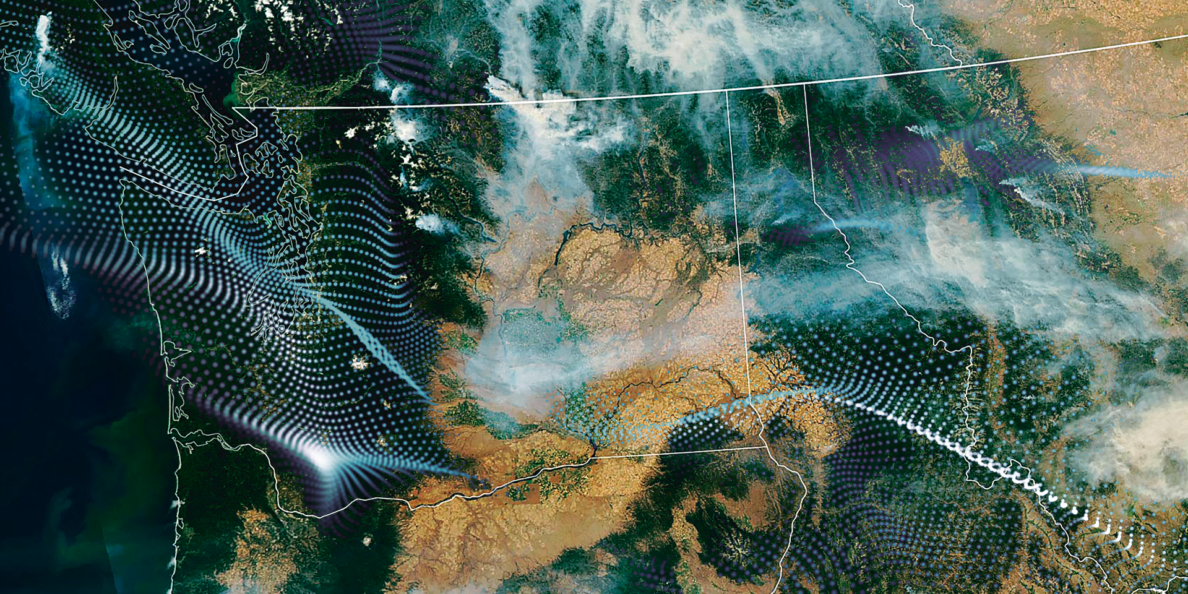
Almost any conversation with a farmer will include the weather. Crops thrive or struggle based on rain, heat, or one of many other environmental shifts that affect plants.
Fortunately for farmers, orchardists, and ranchers in Washington state, robust monitoring from Washington State University has helped—and it’s getting supercharged.
(Courtesy AgWeatherNet)
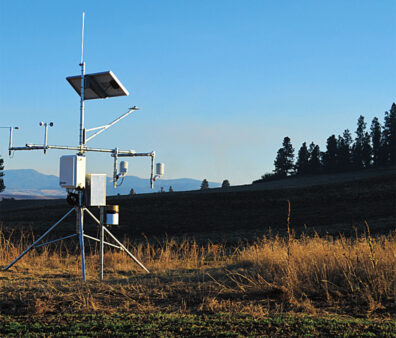
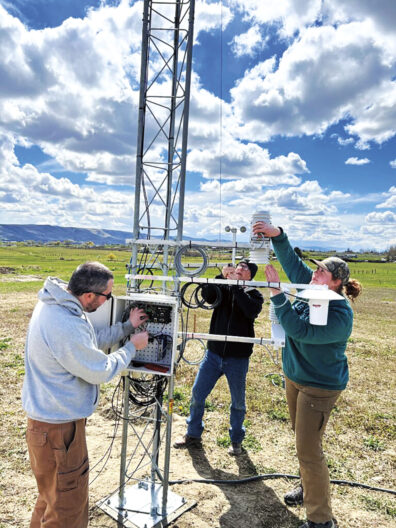
WSU’s AgWeatherNet is the nation’s oldest and largest system of its kind, used by farmers and ranchers to track heat and cold, wind and moisture. It’s a valuable asset for a major industry in the state.
Now, artificial intelligence and machine learning will use the trove of real-time data collected by the system’s nearly 370 weather stations to create more effective tools and computer models. Producers are already able to make improved farm-specific decisions about crops, livestock, and human health using the system.
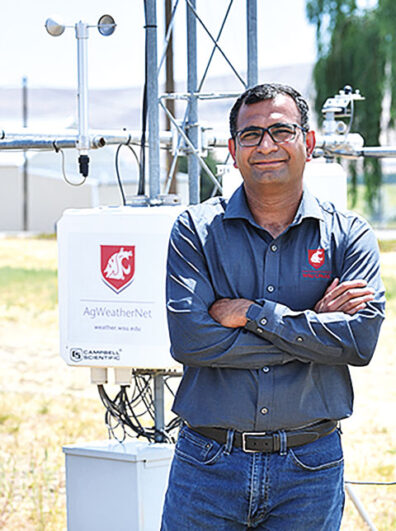
“It is happening now and we are improving it further,” says Lav Khot, director of AgWeatherNet and professor of precision agriculture at WSU. “That’s where AI comes in: How can we mine the information from this data and make better management decisions? It’s really changing the game.”
AgWeatherNet stations measure air temperature, relative humidity, soil temperature, rainfall, wind speed, wind direction, and solar radiation. Recently the stations were upgraded to also monitor air quality, which has become an important element of agricultural work during wildfire season. Measurements are done every five minutes.
Models combine this information with data from the National Weather Service and historic trends for location-specific forecasts. This helps growers decide when to plant, whether they need to plan ahead for frost or heat, and how much to water.
Data from AgWeatherNet also feeds into WSU’s Decision Aid System, which helps growers decide when they should spray pesticides. The Potato Decision Aid System was launched in 2021 and is already saving the industry in Washington nearly $10 million each year. It’s a version of a similar tool used in the tree fruit industry for decades. Other agricultural producers are looking at the Decision Aid System for their crops, too.
In recent years AgWeatherNet began integrating growers’ own weather stations and plant and soil sensors into the system, making it available to that grower via the AWN Smart Farms platform. Aside from monitoring conditions and aiding decision-making, the sensors help trigger automated overhead cooling and irrigation.
Khot’s team is also testing AI-enabled insect traps that would identify and count insects and send the information to the grower in time to get ahead of a potential infestation.
WSU’s role at the forefront of AI in agriculture is reflected in its leadership of AgAID, a $20 million institute established with funding from the US Department of Agriculture. The institute combines the efforts of multiple research institutions, industry, and government partners to address agricultural challenges in the Pacific Northwest.
Julie Tarara, research program manager for the Washington State Wine Commission, says growers are dependent on AgWeatherNet and are looking forward to more AI-powered tools from WSU that use its data.
She says, “I would say that all growers are using AgWeatherNet without exception. It is so incredibly valuable.”
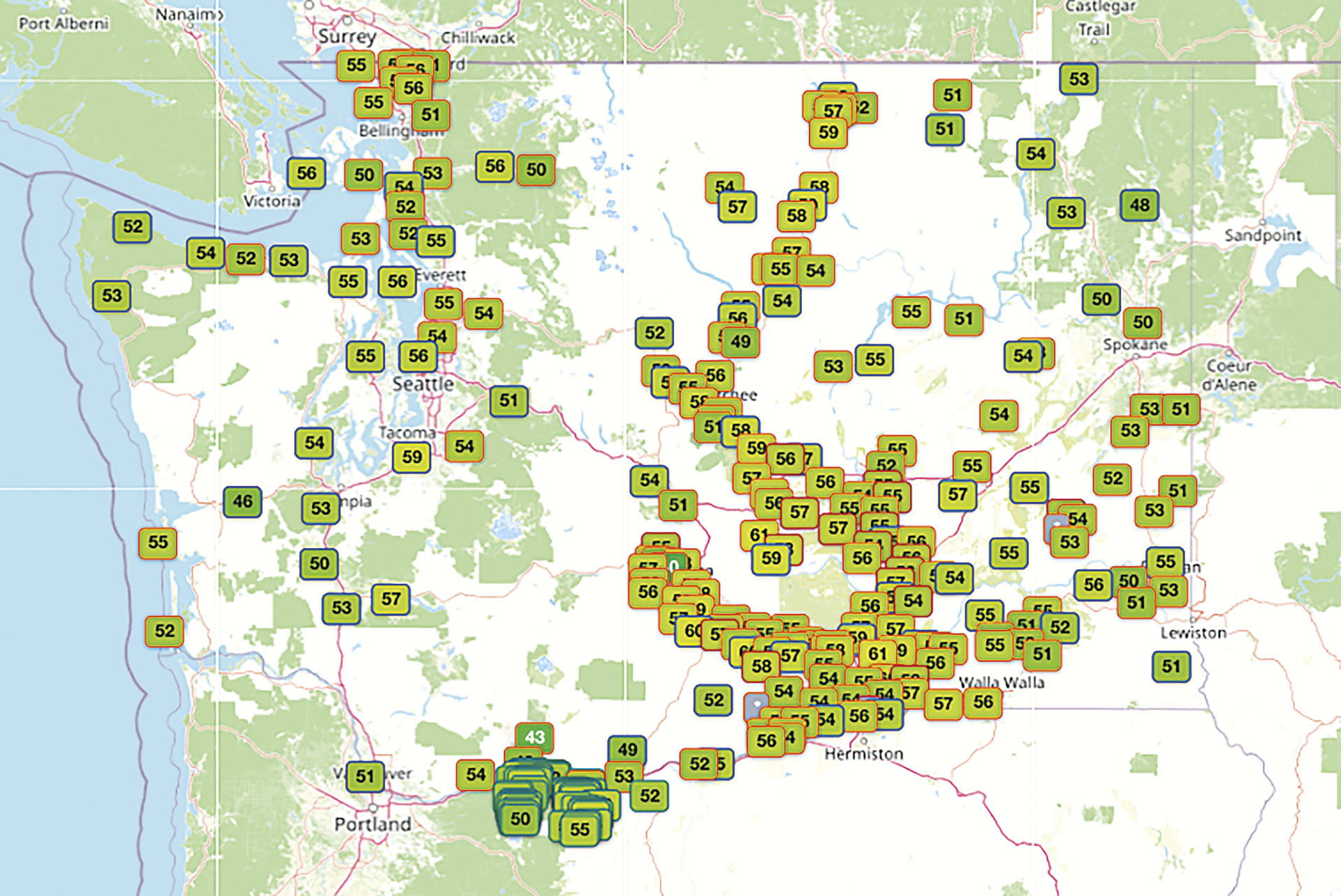 Locations of AWN active stations (Courtesy AgWeatherNet)
Shawn Vestal of WSU News contributed to this story.
Learn more about the app and sign up for free at AgWeatherNet.