

Blue Star Coffee Roasters in Twisp is hopping on a weekday morning. Cars and trucks line the parking lot, while customers gather for mid-morning coffee klatches. The aroma of roasting coffee beans wafts in from the back of the shop, where a specialty dark roast is underway for a New York client.
“Our motto is coffee for coffee lovers,” says co-owner Meg Donohue as she surveys the crowd. “We have a wide and deep customer base.”
Donohue and her husband, Dan, built a thriving roasting business in this former timber town in the Methow Valley. While they sell coffee in Twisp, the bulk of their sales are to retail and wholesale clients in the Pacific Northwest and beyond. The couple credits the Methow Investment Network—a “neighbor-to-neighbor” style lending program that Washington State University Extension supports in rural communities—for helping fuel the company’s growth.
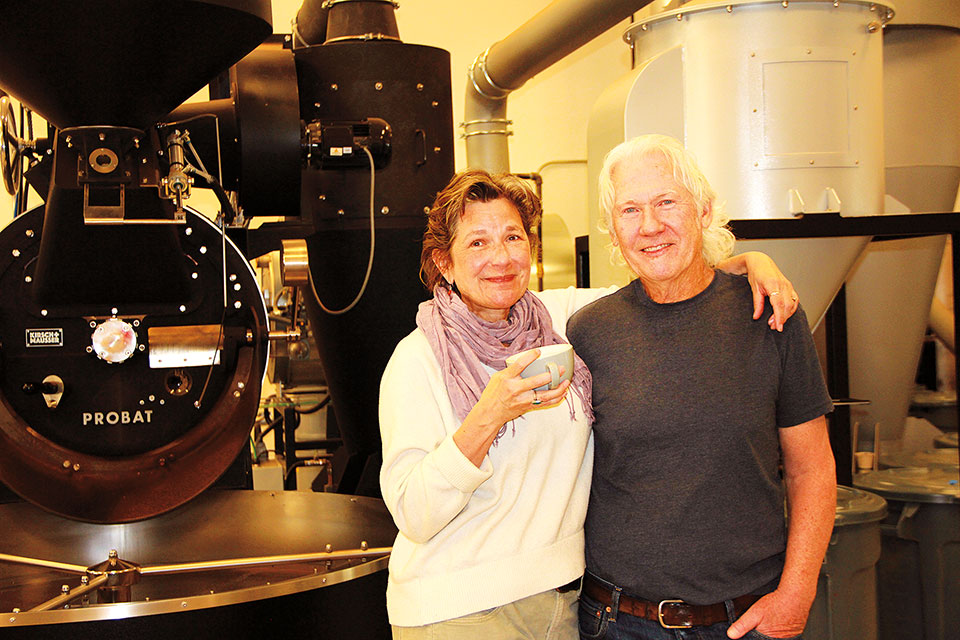
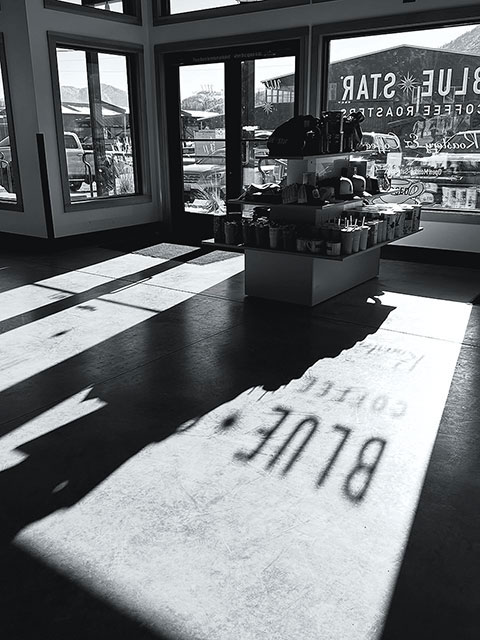
When Blue Star Coffee outgrew its leased quarters, the Donohues bought a former automotive shop in 2019 to expand their roasting capacity and local coffee shop. They purchased the building with conventional bank financing, but they turned to the Methow Investment Network to raise about $500,000 for renovations.
“Getting a loan for capital improvements is tough,” Meg Donohue says. “It’s one of the biggest hurdles small businesses face, and one of the reasons they don’t flourish.”
After the Donohues made a Shark Tank style pitch about their company at a Methow Investment Network forum, a dozen local investors stepped up to negotiate a business loan at advantageous terms for the couple. The loan jumpstarted the renovations on Blue Star Coffee’s current location—now a bright, modern facility that employs 14 people in the coffee shop and production side.
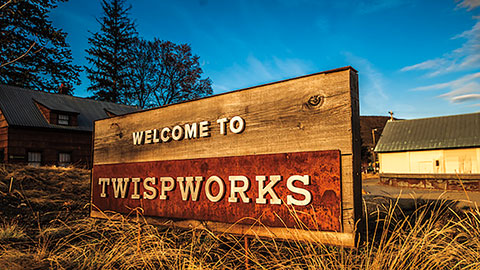
The Methow Investment Network is run by TwispWorks, a local nonprofit, with WSU Extension officials providing technical assistance to the program. Since 2017, the network has generated $3.5 million in investments for more than 35 Methow Valley companies. Instead of flowing out of the area, that money gets invested at home.
The Methow Investment Network acts like a matchmaker, says Patrick Law, TwispWorks’ economic program director. “We bring together local entrepreneurs and local investors.”
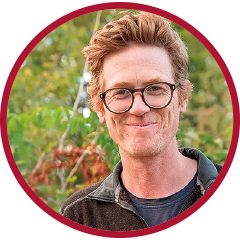 Patrick Law, TwispWorks economic program director (Courtesy TwispWorks)
People interested in starting or expanding a company can get help with their pitch and business plans. At the network’s “pitch nights,” business owners present their ideas to an audience of prospective investors. Then it’s up to individual businesses and investors to decide whether they can make a deal and agree on loan terms, Law says.
WSU Extension also works with other local investment networks in Washington, but the Methow network is among the most active. Statewide, more than 150 community investors have made nearly 300 loans totaling over $8 million during the past decade, creating or retaining at least 178 jobs.
WSU Extension got involved with local investment networks after seeing a successful example on the Olympic Peninsula. Port Townsend’s historic Aldrich’s grocery store was at risk of closing in 2008 when community investors stepped up to support the new owners. They launched a Jefferson County investment network that continues today. Extension officials studied it and developed a program that could be replicated in other communities.
“Jefferson County really helped us lay the framework for an Extension-based approach to local investment networks,” says Trevor Lane, a former WSU associate professor and Extension specialist. “We bring a lot of trust to these small business ecosystems, because the WSU brand is very familiar to them.”
Local investment networks have a lot to offer communities, says Anthony Gromko, an assistant professor of community and economic development. By investing capital locally, residents help build community wealth.
 Local Investment Networks project lead Anthony Gromko
(Courtesy WSU Extension—Government Studies and Services)
Supporting local entrepreneurs also helps small towns retain essential services like mechanics, hairdressers, and arborists.
“Often, it starts with a group of community members who say, ‘We love where we live. There’s something special here. We want to support our local businesses because this is home for us,’” Gromko says.
A “how-to” guidebook written by Gromko and Lane helps communities set up and run local investment networks. Among other things, the guide covers compliance with federal securities law—a section reviewed by the state Attorney General’s Office. Legal requirements are met when the investment network hosts public gatherings that allow businesses and prospective investors to meet.
“You bring people together in good faith,” Lane says. “Once they know each other and that relationship is established, it’s their own business how they structure their deals.”
The guide also notes that private financial transactions carry risks, and due diligence is up to the investors. The investments tend to be longer term, without an easy way for lenders to cash out.
The Donohues can’t say enough about their experience with the Methow Investment Network. The former Seattleites started Blue Star Coffee in Twisp in 2007, drawing on Dan’s background in the coffee industry and Meg’s experience in the arts community and startups.
“People thought we were nuts to start our company in this little town of 900,” Meg Donohue says. “But we chose it intentionally. We knew that we needed to ship our product to succeed. And we had Seattle in our backyard.”
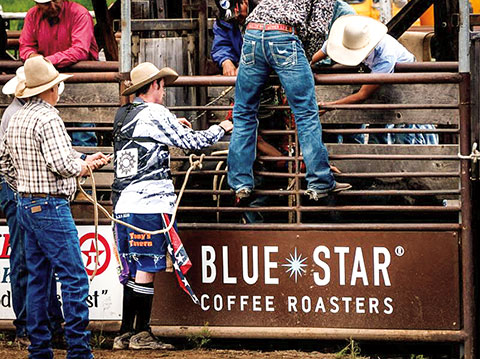 Courtesy Blue Star Coffee Roasters
Twisp’s civic identity carries over into its support for local businesses, Donohue says. The couple worked with a TwispWorks’ volunteer to prepare their pitch and financial statements. His background in tech industry mergers and acquisitions helped them understand what investors were looking for.
The Donohues also credit the local investors for working with them during the pandemic.
“When COVID hit, it was terrible,” she says. “We’re part of the food industry, and no one knew what would happen. We immediately went to our investor group and asked for a six-month pause in loan payments.”
The investors not only agreed, they suspended the interest accruing on the loan. Blue Star Coffee weathered the pandemic disruption through a shift to retail sales and lots of hard work, Donohue says. As the company’s wholesale business declined during COVID, the cost of building renovations rose.
But by the fall of 2022, Blue Star Coffee moved into its new space. The Donohues paid back the local investors after they consolidated the company’s debt through a Small Business Administration loan.
“The support of our community and the Methow Investment Network were key to our ability to survive that time. We’ll forever be grateful,” Donohue says. “These are our neighbors, our customers, the people who volunteer with us. What a difference that makes.”
 Courtesy Scenic Washington
Local Investing with Headwaters Tree Service
Will Nielsen runs Headwaters Tree Service in Winthrop.
He used the Methow Investment Network to purchase a portable sawmill as a sideline to his work as an arborist.
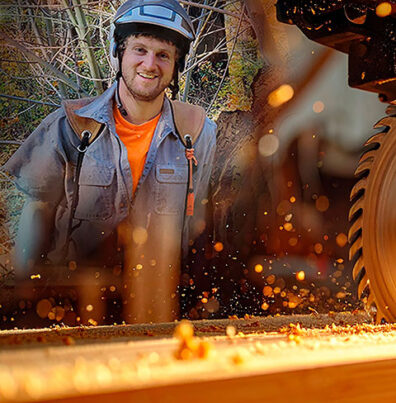
“I was getting paid to take trees out for people who wanted them hauled off,” Nielsen says. “Instead of chopping them up for firewood, I figured I’d turn them into lumber for a higher profit.”
Nielsen had previous experience with small sawmill operations, and he could show prospective investors that his tree business was profitable. At the Methow Investment Network pitch night, about 40 local residents showed up to listen Nielsen talk about his company and financing needs.
Several investors were interested in making a business loan. He accepted an offer and purchased the portable sawmill in 2024.
When Nielsen takes down trees for property owners, he can mill them on site. The pine and fir boards get used for sheds, saunas, and other outbuildings.
“I like the full circle nature of it,” Nielsen says. “These trees are coming down for fire prevention or just regular tree work. I’m able to turn them into a product that builders and contractors are lining up to buy.”