
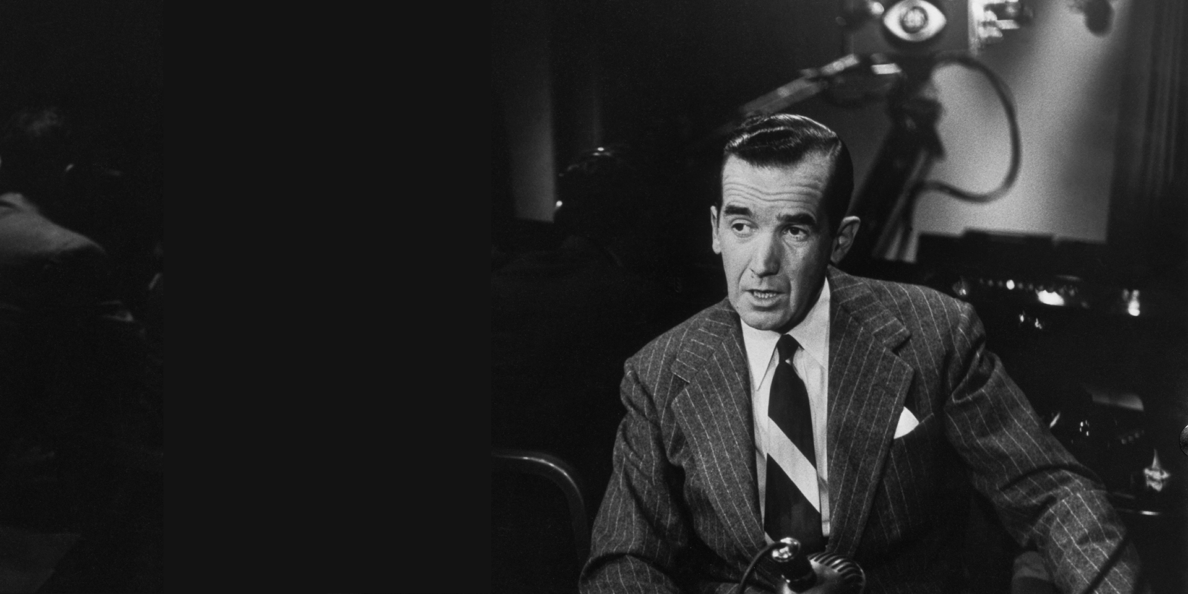
Almost every spring, the WSU Edward R. Murrow College of Communication hosts its Murrow Symposium, bringing prominent media figures to the Pullman campus to discuss current issues facing communication professions.
Bruce Pinkleton compares Murrow Symposium to the Super Bowl—and beyond.
“It’s our Academy Awards, our Emmys Awards, our Super Bowl, all rolled into one big event,” says Pinkleton, dean of the Edward R. Murrow College of Communication at Washington State University. “If you go, you can’t help but be inspired.”
This year marked an important milestone in the ever-growing legacy of legendary broadcast journalist Edward R. Murrow. Murrow College celebrated its 50th Murrow Symposium in April. The theme: “The Murrow Standard. Built on Legacy. Defining the Future.”
Says Pinkleton, “It’s a tremendous, active, living legacy that Edward R. Murrow has and that we have by extension. We at Murrow College view Murrow Symposium as a means by which to further teach students about that legacy.”
A pioneering radio and TV journalist, Murrow (’30 Speech) defined ethical standards of broadcast reporting. He gained fame for his vivid radio reports from London during the Blitz and for challenging Joseph McCarthy, a Republican senator from Wisconsin who spearheaded an intensive anti-communist crusade during the Cold War.
“We talk about Murrow in all our classes. Our students understand from day one that Murrow College is different, and it’s the Murrow legacy and standards we uphold that make it that way,” Pinkleton says.
Since 1973, the almost-annual Murrow Symposium has given students the opportunity to gain insights and inspiration from top national and regional communication professionals—including many Murrow alumni—through keynote speeches, panel discussions, career-coaching, résumé critiques, networking, and more.
“It’s a chance to showcase who Murrow was and what we can do as a college,” says Olivia Soliz, vice president of the Murrow Ambassadors and a junior from San Jose, California, studying broadcast journalism. “The title of Murrow graduate reflects back on the college and that reflects back on his name.”
The first Murrow Symposium, themed “Threats to the Public’s Right to Know,” included the dedication of the Edward R. Murrow Communications Center, now Jackson Hall. In attendance was Murrow’s widow, Janet, who would attend several symposiums before her death in 1998. “We are calling it the first annual Murrow Symposium because we hope to make it an annual event,” Denny Morrison, assistant to President Glenn Terrell, said in the March 29, 1973, edition of the Daily Evergreen, the student newspaper. The story also noted invitations were sent to all WSU alumni in the field of communication.
Alumni remain an integral component. “A sub-theme of Murrow Symposium is homecoming,” Pinkleton says. “It’s an opportunity for alumni to get involved, reconnect, and give back. I think they see their former selves in the students—full of energy and great ideas but maybe needing some direction.”
Alumni help provide that guidance through breakout-session talks and one-on-one coaching. “It’s really awesome that alumni want to come back and do service for younger generations who are trying to grow in the field,” Soliz says. “I know when I graduate I want to come back and help out, too.”
Attendees, including faculty and staff, make connections that they might never otherwise make, Pinkleton says. “They end up coming to guest lecture or speak at a future symposium. It spins out a lot of goodwill and follow-through that we benefit from year ’round.”
But, Pinkleton says, “First and foremost, Murrow Symposium is for students. That’s how we think of it. That’s how we plan for it. We’re constantly changing formats, topics, and themes to stay as current and as relevant as we can for students. To get this level of talent in front of students is remarkable. I don’t know of another university that gets this level of talent in front of students on a regular basis.”
Assistant professor Nicole O’Donnell (’18 PhD Comm.) has experienced the symposium as both a graduate student and a faculty member.
“As an alum, one of my favorite parts of this year’s symposium was the reunion the night before. I think it’s meaningful to reconnect with people I was a student alongside and that I worked alongside. It just shows how big our network truly is,” she says.
“As a professor, one of my favorite parts is that students have the ability to see versions of their future selves. I hope that they see themselves in speakers, especially if they are in their early careers talking about their successes.”
Apparently, no symposium occurred in 1975. And there seems to be no records for 1982. No. 39 was used for both 2014 and 2013, when the event was referred to as a “communicators’ summit.” 2020’s symposium was canceled due to the COVID-19 pandemic.
Looking ahead, Pinkleton says he hopes to grow Murrow Symposium. “Our field is constantly changing. It’s critical for us to look down the road and plan for the future,” he says.
“We start planning for the next one literally the day after it’s over. It’s something we’re proud of and work so hard on.”
The Edward R. Murrow Lifetime Achievement Award 2026
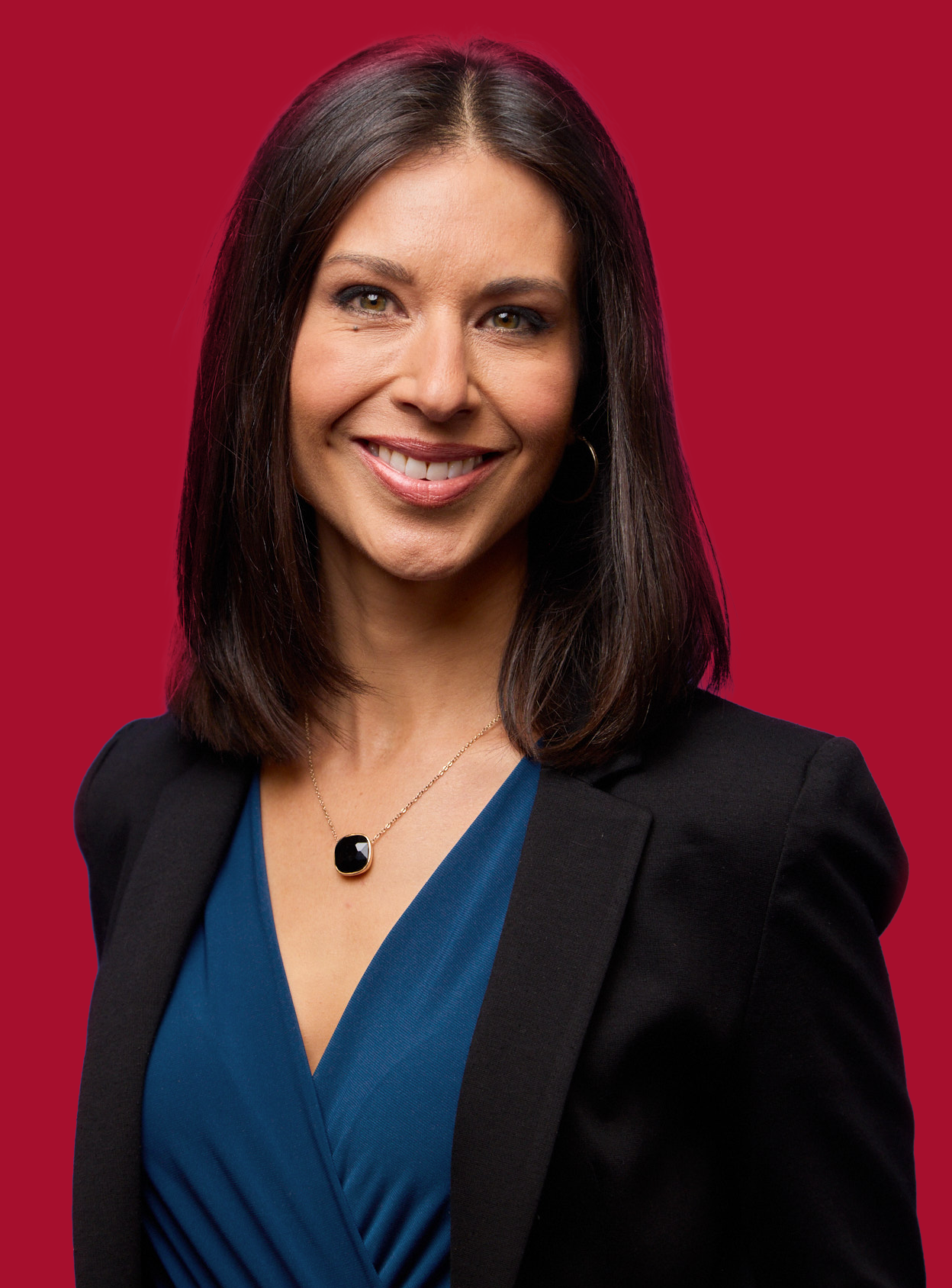
The Edward R. Murrow College of Communication presents its Edward R. Murrow Lifetime Achievement Award, established in 1997, as part of the Murrow Symposium to a journalist who has demonstrated a commitment to excellence that exemplifies the legendary broadcast journalist’s career. Walter Cronkite. Christiane Amanpour. Daniel Pearl. Peter Jennings. Tom Brokaw. Dan Rather. Helen Thomas. Judy Woodruff. Ann Curry.
Joining their ranks this year was broadcast journalist and Washington State University alumna Ana Cabrera (’04 Comm.). A CNN anchor for nearly a decade, she now works as a national news anchor for MS NOW.
“When I read the list of recipients, I’m blown away,” says Bruce Pinkleton, dean of the Murrow College. “They are the best of the best, and they reflect the tremendous respect people in the industry have for Edward R. Murrow and his ethics as a journalist. Ana embodies those ethics. She is known for her courage, and she has an outstanding reputation for dispassionate reporting of the truth.”
Web exclusives
Reflections on Fifty Years of Murrow Symposium
Hunting for Apple Stories in Vietnam (Murrow College Backpack Journalism)