
Media algorithms are designed to feed consumers information they predict they’ll like the most, with a goal of maximizing time on a site. That happens even if the news is fake or problematic.
One antidote is media literacy, which builds critical thinking skills in evaluating whether a piece of mass media is attempting to inform, persuade, or simply entertain. It enables consumers to identify the creator’s point of view and not to merely accept messages at face value.
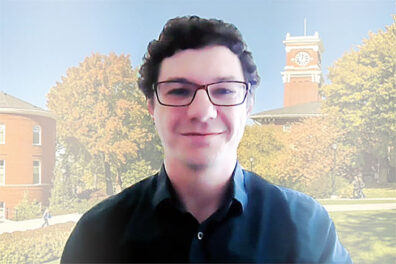
“A lot of it is about self-reflection,” says Jordan Foley, an assistant professor of journalism and media production in the Edward R. Murrow College of Communication at Washington State University. “It’s a process of self-discovery.”
Complicating that process is misinformation, or false or inaccurate information, and disinformation, or false information that’s deliberately intended to mislead.
Foley says disinformation “implies much more intentionality. It often relates to state-sponsored information,” such as propaganda for the purpose of promoting a political cause or point of view.
A lack of media literacy makes you less of an independent thinker, Foley says. “You’re more likely to glom onto and repeat the quip or phrase or soundbite from whatever news organization or personality that is most familiar to you.
“If you don’t have a framework for thinking about the information you consume, you’re at the whim of someone or an organization, and it affects your choices—who you vote for, what you advocate for. It can create this self-reinforcing bubble around yourself; it is easier to simply double-down and reject an idea than it is to admit one has been duped or deceived.”
Foley offers expert advice on becoming a savvy consumer of information:

Make time
“You have to make time to be media literate,” Foley says. “A quick step-by-step guide is the wrong approach. You have to create reflexive habits. You’re embedded in algorithms everywhere. You’re not always conscious of what you’re looking at.” For example, is the news item written or presented in such a way as to purposely evoke outrage and other strong emotions? Be skeptical, Foley advises, noting, “It’s less about making sure you know the correct answer and more about having a framework for navigating this disorganized stew of news and information without coming away disillusioned.”

Combat confirmation bias
People tend to seek news or information that confirms their existing beliefs, even if they’re unaware they’re doing so. Search terms, even ones that seem objective, reflect inherent biases. Choose carefully the keywords or phrases used to frame a search, and try searching with several different terms. Similarly, seek out a variety of sources. “You don’t have to read every news story from every news outlet,” Foley says. “But it’s not as simple as just reading CNN and Fox News and looking at ‘both sides’ of a single issue. Try to read or at least skim five or six articles on the same topic and reflect on how they differ.” And be careful: “Fake news websites use similar page layouts (as credible news outlets), which can make it harder to distinguish them.”

Look for a byline
Authorship is important, Foley says. “Ask yourself: Who’s writing this? Who’s creating this content?” Was it a public relations specialist representing a corporation or institution, a political pundit favoring a particular party, an activist fighting for a specific cause, an influencer trying to get free stuff or favors, or a journalist on staff at a news outlet? Be wary of news items without bylines or simply reference a disembodied “staff.”

Watch what you eat
Foley likens media literacy to cooking a healthful meal or adhering to a healthful diet. “Are you going to go to Jack in the Box every day or are you planning grocery trips and meals to make sure you have fresh fruit and vegetables?” he asks. When you’re consuming information, you should be in a similar mindset for a media diet, he suggests.

Decide what you need
“Ask yourself: What information would I personally need to believe this claim? What evidence do I need to accept this information and what type of evidence would change my mind? Expertise is there
for a reason. We can’t give up on expertise and evidence,” Foley says.

Check sources
How many sources are included? Does the story contain sources with varying and opposing views? What perspectives are missing? “Be able to distinguish between primary and secondary sources,” Foley advises. “Find primary sources. Are they referencing policy documents or court documents? Access the actual memo, complaint, and decision. Go to the original source. It makes it so much easier to see the bias or misinformation or disinformation in whatever news outlet you’re reading.”

Don’t share
Don’t forward or post information without independently verifying it. “The people who are spreading disinformation are very aware of how easy it is limit our ability to be skeptical about the things that matter,” Foley says. “They sow so much doubt that people can’t tell what’s true anymore and eventually give up trying to figure it out.
“Media literacy gives us tools to resist that kind of paralysis. If we stop trying, that’s them winning. It’s giving up trying to find the truth.”
Learn more
Media Literacy & Health Promotion (Edward R. Murrow College of Communication)
Center for an Informed Public (University of Washington, partner with Murrow College)
From the archives
Don’t read all about it (Spring 2024)
Slowing misinformation’s spread: Q&A with Porismita Borah (Spring 2024)
Podcast: TikTok Rx—Youth turn to social media for health advice (Spring 2024)
An epidemic of misinformation (Fall 2020)
Truth or consequences (Spring 2018)