

Shortly after she arrived at Washington State University, Scarlett Gavelovskaya realized she needed a financial game plan.
A slew of money decisions awaited the first-year student in Pullman. How much should she and her roommates spend to decorate their dorm suite? Could she accept a last-minute invitation to Silverwood Theme Park and still cover her monthly expenses? Was it time to get a credit card?
“Me being a fresh adult and new to finances, I knew I needed some kind of guidance,” says Gavelovskaya, now a sophomore. “I could see that some of my peers were handling their money responsibly, and others weren’t.”
Cougar Money Matters came to her aid. The non-credit program teaches WSU students about personal finance through online training, workshops, and peer mentoring. The practical guidance covers everything from creating a budget, understanding a financial aid package, and managing college costs to saving for big-ticket expenses after graduation, including a home and retirement.
According to the World Economic Forum, just half of US adults are financially literate. That means having the knowledge to make sound decisions about their finances, including saving and investing, understanding risk, and managing debt.
For many students, college is the first time they’re managing their own money, says Maja Gillespie, director of College Affordability Programs at WSU’s Office of Academic Engagement. It’s the ideal time to learn about finances and avoid common pitfalls, she says.
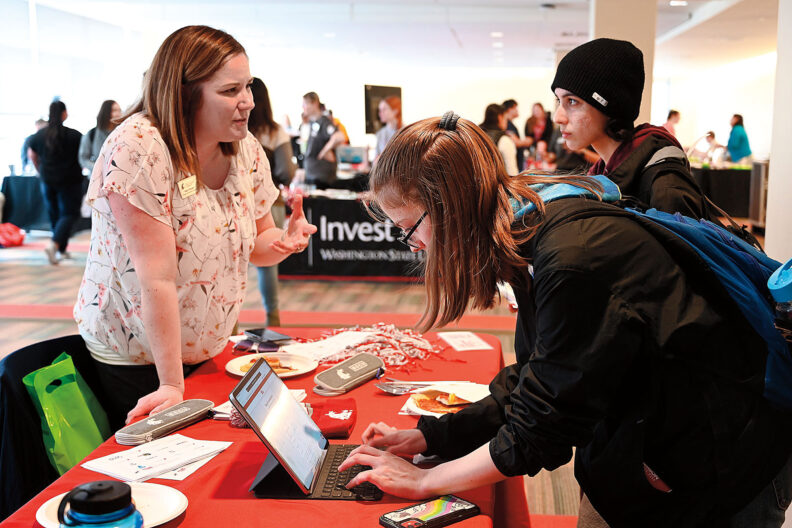
Some students have parents who modeled good budgeting habits. Others took a high school personal finance class. Gillespie even knows a few in the program who contribute to Roth IRAs. But others are fuzzy about how interest rates affect credit card balances and the consequences of missed payments.
“I want to help students avoid learning the hard way,” Gillespie says. “Improving your credit score is like losing weight. It’s easy to damage your credit and it takes a lot of work and dedication to get it back.”
More than 7,000 WSU students across all campuses have taken part in Cougar Money Matters programs. That figure includes graduate students, military veterans returning to school, and older students who are working and raising families. WSU has offered the program since 2018, with support from BECU.
“Our goal is to meet students where they are while also preparing them for the financial situations they’ll face after college,” says Michael Highfill, Office of Academic Engagement executive director. “We want students to make the most their WSU experience, where stress over tuition and finances isn’t all consuming.”
Students who take charge of their finances are more likely to do a study abroad, undergraduate research, or an internship, he says. “Those kinds of experiences are part of being a Coug.”
Gavelovskaya doesn’t want to miss out on the social side of her college years, but she watches her discretionary spending carefully. With help from financial aid and scholarships, she’s paying for most of her college costs. And she wants to attend graduate school.
To give herself flexibility, Gavelovskaya created a small budget line for outings with friends. “I decided to designate some funds for the fun side of things,” she says. It allows her to accept some invitations without blowing her budget.
Mariana Lombera heard about Cougar Money Matters during WSU orientation. “I wanted to learn how to manage my money, but I didn’t know where to start,” says Lombera, now a junior. “Money can be kind of a scary topic. If you make mistakes, they can shadow your future.”

Through the self-paced lessons, Lombera learned how to track her spending, evaluate credit card offers, and establish a credit history. Having a better grasp of her student loan’s payback terms reduced her anxiety about the debt. Cougar Money Matters also encouraged her to set long-term financial goals.
“I’ve always lived in an apartment, so buying a house is my biggest dream,” Lombera says. Saving for a future downpayment seems achievable now that she has money management strategies, she says.
Senior Alex Roaf meets with about 40 students each semester as a peer financial advisor for Cougar Money Matters. As their ability to manage money grows, he sees fellow students’ worries decrease. Roaf can relate. “I come from a low-income background, and I didn’t grow up talking too much about money with my family.”
Roaf says Cougar Money Matters taught him how to file taxes. He also credits Invest in Cougs, a companion program, for allowing him to do a summer study abroad in Greece. Students who save $1,000 in earned income can have their money matched by up to 400 percent toward educational costs at WSU.

With his graduation coming up in spring, Roaf is starting to ponder job opportunities, where he’ll live, and whether it makes sense to buy a car or lease one.
Gillespie is planning a series of workshops aimed at helping students transition from college to their first professional job.
They’ll cover things like comparing the cost-of-living in different cities, understanding health insurance benefits, and getting started on student loan repayments. The sessions will complement last year’s popular workshop on eating well on any budget.
“We want to give students the tools that will help them successfully manage their money over a lifetime,” Gillespie says. “We want them to have a strong financial future.”
Personal Finance 223
BECU also provides funding support for a personal finance class offered through the WSU Carson College of Business. Between 750 and 1,000 students of all majors take the for-credit class each year. “It’s a hands-on class focusing on real world knowledge,” says David Whidbee, Carson College’s senior associate dean for faculty affairs and research. “Many WSU students have had little financial education,” he says. “It makes it all the more important that we offer these classes to students.”
Learn more
Cougar Money Matters filmed a video based on the Cash Cab game show. Students who answered financial trivia questions correctly got a ride to class in a golf cart.
Test your financial literacy with a short quiz.
Washington ranks No. 8 among states for financial literacy, according to WalletHub.