
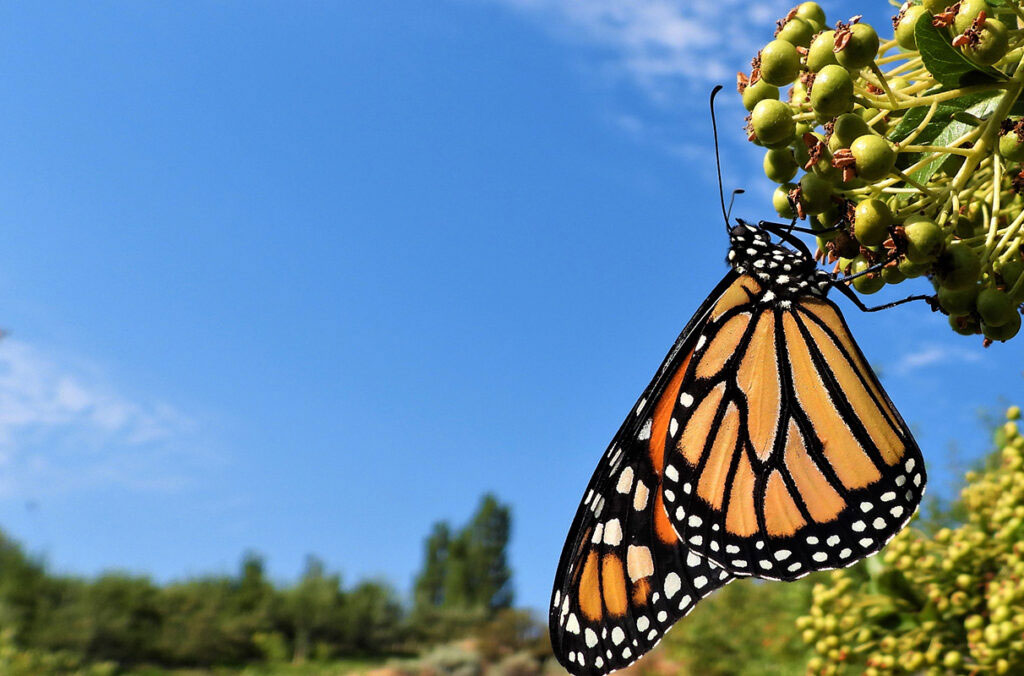
People often ask David James what they can do to help monarch butterflies. “Plant milkweed,” is his response.
Milkweed is a keystone plant, says James, associate professor of entomology at Washington State University who works at the Prosser Irrigated Agricultural Research and Extension Center.
“It’s not just monarchs you are helping by planting it, it’s pollinators generally,” he says. “Bees love it, but so do ladybugs, parasitic wasps, and other beneficial insects. We encourage farmers to leave patches of milkweed near their crops for biological pest control.”
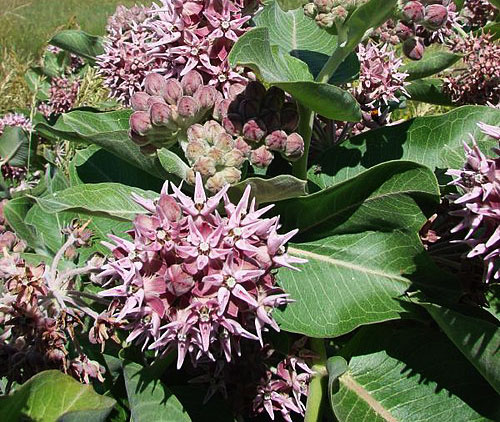
After monarchs were proposed as “threatened” under the Endangered Species Act in 2014, many gardeners stepped up to grow milkweed.
“The listing helped people realize this iconic butterfly was in trouble and we needed to do something,” James says.
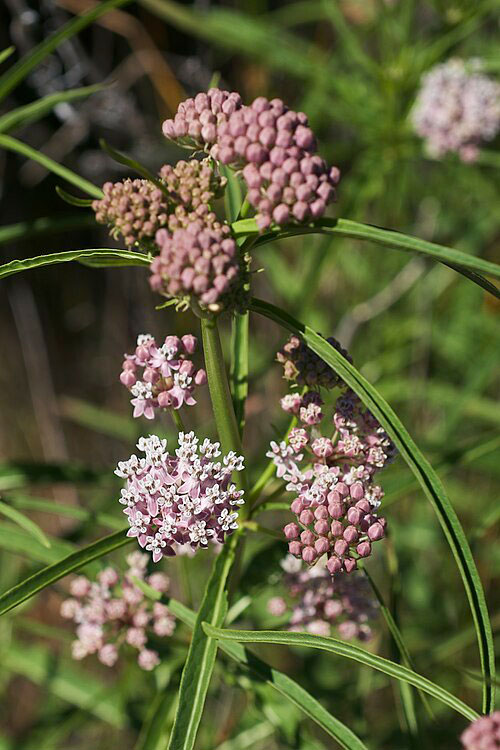
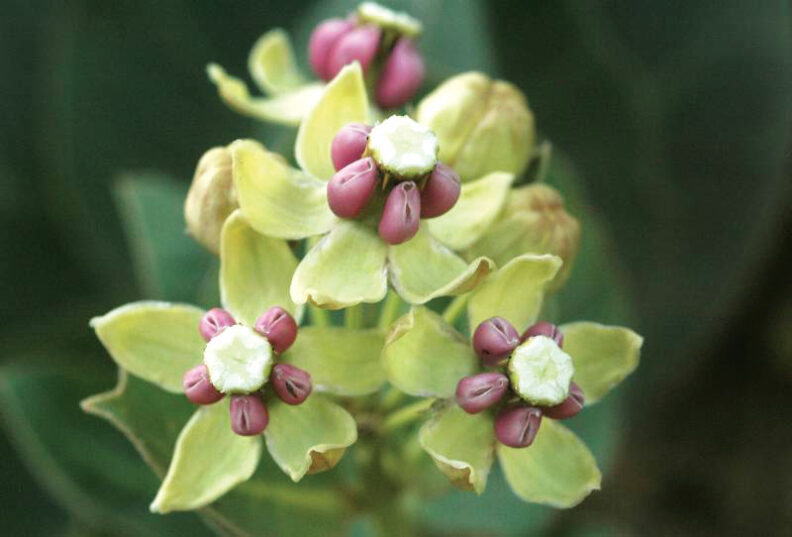
Washington has three native milkweed varieties: narrowleaf milkweed, showy milkweed, and pallid milkweed, found only in the extreme southeast corner of the state. Adult monarchs only lay their eggs on milkweed, and monarch caterpillars feed exclusively on milkweed.
Showy milkweed is the most prevalent variety, particularly east of the Cascades.
“It’s got these nice big leaves, so there’s plenty of food for caterpillars there,” James says. “But if you give the plant too much water, it can become rampant. It propagates by rhizomes, so they can pop up in your lawn.”
Reducing summer waterings helps keep showy milkweed manageable in a garden setting. After a bit of water in the spring, showy milkweed’s adaptations to dry Northwest summers help it survive on its own.
To cultivate a milkweed patch, find a seed vendor that sells native varieties. Fall is the best time for planting milkweed seeds. Over the winter, cold temperatures and moisture stimulate germination. Milkweed seeds can also be planted in the spring. But first the seeds need to be placed in moist paper towels or soil and refrigerated to simulate the effects of winter.
James’s interest in butterflies developed during his childhood in England, but he spent his early career as an agricultural entomologist testing pesticides for effectiveness.
“Now I get to work on butterflies and pollinators because conservation has become part of agriculture,” he says. “It’s cool to see how these two worlds have collided because when I started working, they were totally different.”