
Joan Burbick spent 30 years searching for her mother-in-law. The result is a spellbinding fictional memoir about sifting through family secrets and lies, unearthing the truth, and seeking justice. Erased is her second novel. Here, the retired Washington State University professor of English and American studies discusses her relentless and perhaps obsessive pursuit for answers.
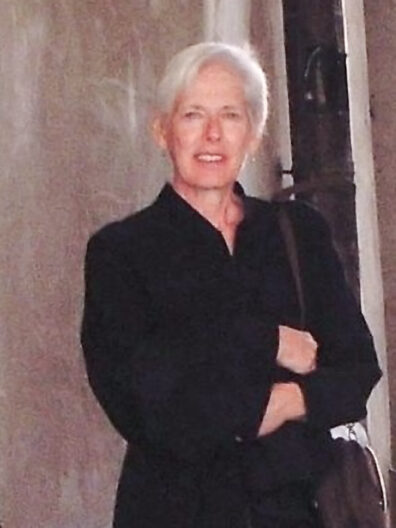
When did you decide to turn your search for answers about your mother-in-law into a book—and a fictionalized version at that? What made you want to share the story?
At first, all I wanted was answers. What happened to Katherine Lin? It wasn’t until I sensed that the search for answers, especially to family mysteries, was the story. Our life is, in an odd way, a search to understand and uncover truth. The novel offers us a way to explore this unsettling task. And I must admit, I wanted justice for Katherine. Only by sharing her story, making it public, could she become visible, her erasure undone.
Talk about the writing process. How long did you work on this book in all—research and writing? Did you work on it on and off while writing other works?
I worked on Erased for over six years, maybe longer. There were many interruptions, but not because of other writing. Writing as an elder has unique challenges. I don’t have the staying power I had before. No more writing marathons for 15 hours. And there were interruptions and dislocations, downsizing and illness in the family.
Talk about the choice to tell the story as a fictional memoir, imagining the thoughts and travels of your mother-in-law as well as other parts of the story.
I like the term fictional memoir since I believe we are constantly inventing and imagining ourselves, especially today in terms that might not reveal who we are. In fact, someone else can probably write our “memoir” better than we can. Memoirs are always fictional at some level. Why not say it?
How do you view fictional memoir as a genre? What does it allow you to explore that traditional fiction or nonfiction might not?
Americans have always loved first-person writing. The letter “I” has tremendous power in our culture. Some languages avoid or have eliminated the personal pronoun, I. We could discuss this for weeks, maybe years. I wanted to grab the genre of the memoir and reshape it for a different purpose. Language is slippery. It is mainly used to deceive. We erase people in the cleverest ways. We even erase the truth about ourselves.
How did you navigate the balance between fiction and memoir?
I had to stay true to the facts I had. No tampering. But there was a story, or more exactly, an emotion living beneath, behind, and in between the facts. That emotion was as important as any individual fact.
What were some of the most difficult considerations, choices, and challenges when writing this book?
China was a challenge. I could not expect my readers to have details about World War II in China floating around in their heads. Why should they? How to engage the historical context without flattening the narrative was a constant balancing act. I took out a ton of facts by the final version of Erased.
The idea of erasure—whether it’s of identity, history, or personal experience—is a compelling theme. What does “erasure” mean to you personally and as a writer?
Our family, our friends, our society erases. We all know this basic fact. Some people have much more power to erase than others. We live with daily injustice. Writing is a way to speak back to power.
How does Erased speak to current conversations about memory, history, and identity in an increasingly globalized world?
Hopefully, Erased speaks to both memory and history since this is the playground upon which we form our identity. I am particularly interested in how the effects of violence, particularly anger, rage, grief, and shame, abide and “haunt” memory. War is an extreme version of generational and domestic violence. The stories of refugees are at the heart of our globally dysfunctional world. We should be listening.
The novel explores the way families, especially in the context of diaspora, often silence or lose parts of their history. What do you think this means for future generations, especially as they try to connect with their cultural roots?
Connecting with your roots is important, but the story you find may not be the story you want. Too often as Emily Dickinson wrote, “The truth is bald and cold.” The diaspora is, by definition, a scattering. Some ancestors that cross oceans and borders may not want to look back. Others may not want to ever let go of where they came from even though their home world has changed completely. Because family stories disappear in a generation or two, we are left with remnants, threads, mere pieces of the past. To me, the challenge in families is to listen. Silence can be revealing.
How do you see Erased contributing to the ongoing discourse on Chinese American identity, and do you hope the book will spark further discussions about the role of historical narratives in shaping personal identity?
Since I am not Chinese American, I can’t answer this directly. But I will say that history is inescapable. We live in a bubble, if we believe otherwise. We are our past. In my family that crosses cultural and racial worlds, forgetting only reduces our lived life together.
What did you discover about your own identity and personal growth during the research and writing of the book?
I thought about my parents quite a bit while writing this novel. Our lives are so fragile. And we often recognize too late the questions we want to ask. Maybe that’s why recovering a tiny piece of the past was important for me and my family.
How do you hope readers will connect with Erased? What messages or questions did you want them to take away?
Readers find their way. I firmly believe in their utter freedom. I learned this when I was young and fancied myself a painter. I had a painting exhibited at the Rose Art Museum at Brandeis University and spent one afternoon listening to viewers’ comments about my work. Their world was intersecting with mine. My painting became their painting. It’s what art does: Opens a door.
Read a review of Erased in the Summer 2025 issue.