
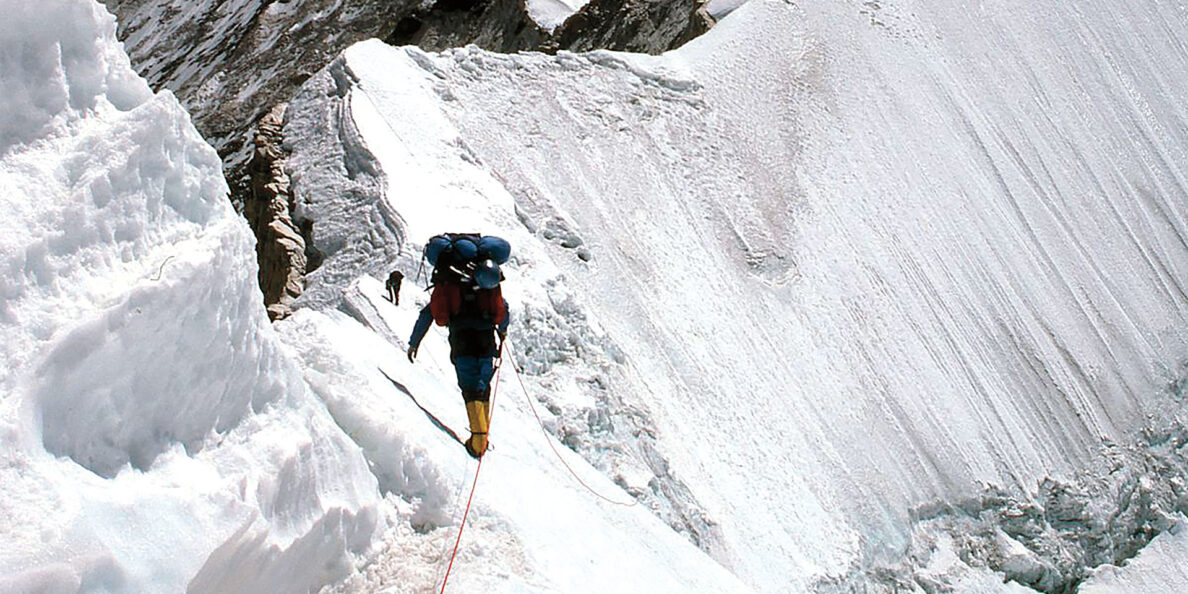
World-class climbers John Roskelley and Chris Kopczynski went to remote areas to ascend some of earth’s highest peaks. During these expeditions and other travels, they sought out new heights—and signatures.
At the request of their mentor, Joe Collins, who encouraged the pair to climb when they were teens growing up in Spokane in the 1960s, the friends and longtime climbing partners asked some of mountaineering’s most celebrated adventurers to autograph books they authored or appeared in.
“Every time we would travel, Joe would give us books to put in our packs to get signatures from all these pioneers,” Kopczynski (’71 Const. Mgmt.) says. “Now, (most of) these pioneers are gone but their signatures are still here.”
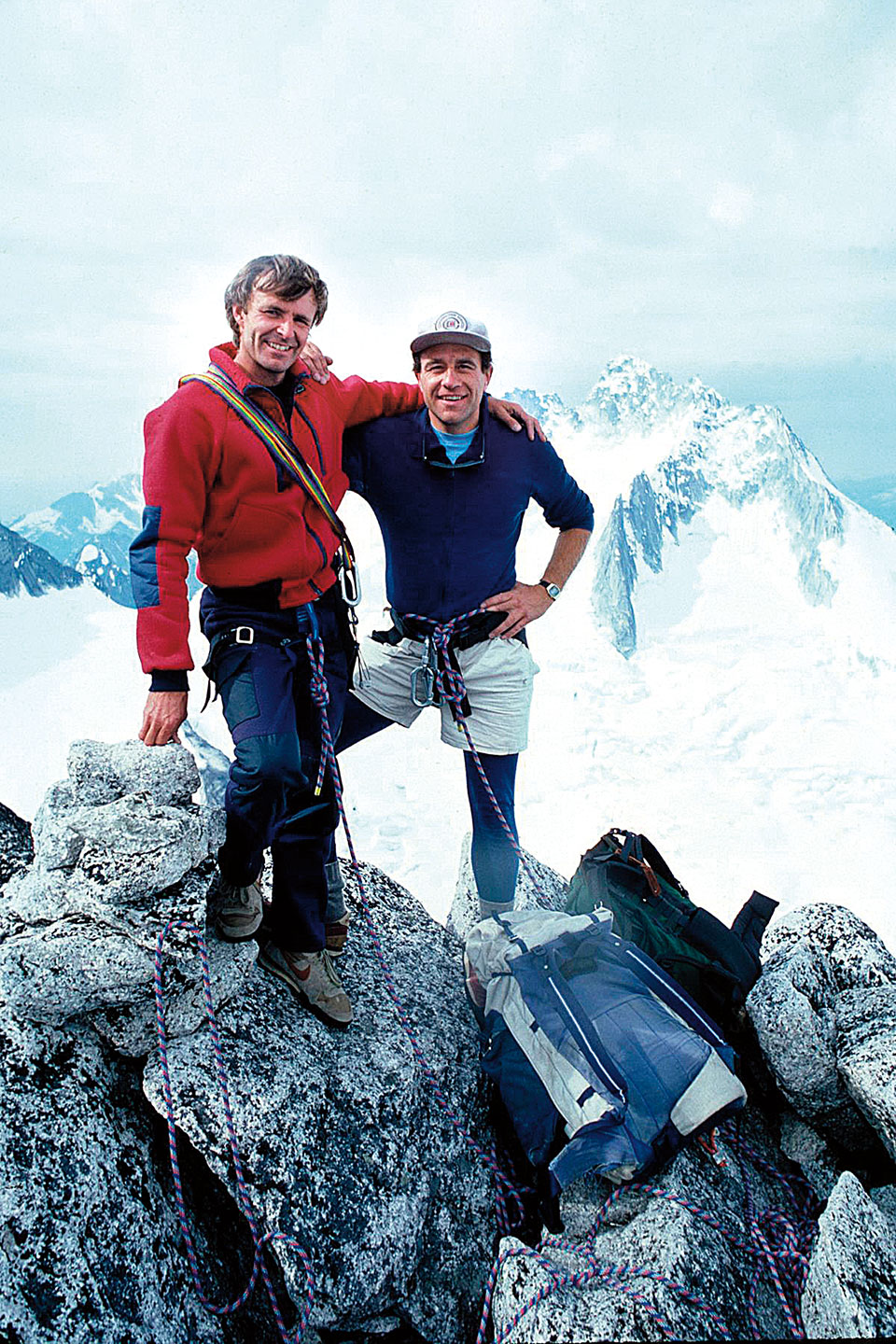
Their signatures are part of an exceptional collection of mountaineering books that Kopczynski and Roskelley (’71 Geol.) recently donated to Manuscripts, Archives, and Special Collections (MASC) at Washington State University Libraries. The books total about 350 in all, date from the 1890s to 2020s, and include titles from Roskelley’s and Kopczynski’s own personal libraries. But the bulk of the collection originally belonged to their mentor, who died at 98 in 2023.
“Joe was an extraordinary person,” Kopczynski recalls. “He completed more than 600 climbs himself. It’s what he lived for.”
Three years after their WSU graduation, the pair participated in the 1974 International Pamirs Expedition, in which Kopczynski and teammates made the first American ascent of Pik Lenin. Roskelley, along with three other Americans, made the first ascent of the north face of Peak of the Nineteenth Party Congress. Both peaks are in what was then the Soviet Union. On their way home, the pair became the first all-American team to climb the north face of the Eiger in Switzerland.
In 1980, they became the first Americans to climb the world’s fifth-highest mountain: Nepal’s Makalu. They summitted without bottled oxygen and without help from Sherpas above base camp. The feat has since been recognized by the American Alpine Club as one of the world’s most significant climbs of the twentieth century.
The following year, Kopczynski, nicknamed Kop, became the ninth American to climb Mount Everest—as well as the first American to summit both Everest and the north face of Eiger, the world’s “highest and hardest” peaks. He then set a goal of climbing the highest peak on every continent—known as the Seven Summits—and, in 1991, became the eleventh person to achieve this remarkable feat.
Some of Kopczynski’s other notable climbs include the first ascent of the Kangshung, or east face, of Everest in 1983 as well as summiting Antarctica’s Mount Vinson in 1988 and Papua New Guinea’s Carstensz Pyramid in 1994.
Roskelley completed Everest via Tibet’s north ridge in 2003 with his son, Jess, who—at 20—became the youngest American to summit the world’s highest peak.
Roskelley claimed other firsts throughout his long career: ascending the northwest face of India’s Nanda Devi in 1976, summiting Pakistan’s Great Trango Tower in 1977, topping the west face of Nepal’s Gauri Sankar in 1979, ascending the east face of Pakistan’s Uli Biaho in 1979, summiting Nepal’s Cholatse in 1982, and climbing the northeast face of Nepal’s Taboche in 1989.
 John Roskelley (Courtesy Lowa Boots)
And, in 2014, Roskelley was the sixth winner of the Piolet d’Or Lifetime Achievement Award, mountaineering’s highest honor.
In spring 2024, Roskelley’s name showed up in MASC’s voicemail. Manuscripts librarian Will Gregg, himself a climbing enthusiast who was preparing to climb North America’s highest peak, admittedly “fan-boyed” a bit when he saw the name.
“He’s a huge deal in the mountaineering world. They both are,” says Gregg, who hadn’t realized Roskelley and Kopczynski were alumni nor that they still lived in Spokane. Soon, he learned they were interested in donating an extraordinary collection of mountaineering books to their alma mater.
“Some titles aren’t that rare right now but over time will become harder and harder to get. Some are already pretty rare. And the signed editions are really, really valuable,” Gregg says. “Together, they form this big body of mountaineering literature. The collection gives the whole history of mountaineering and how it’s changed over the last 150 years. It’s a serious collection, and it’s going to have a long-term impact.”
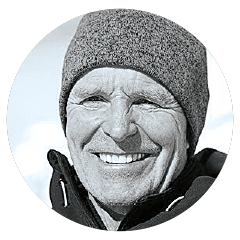 Chris Kopczynski (Courtesy Chris Kopczynski)
Collins, who accompanied Roskelley and Kopczynski on one of their early climbs—summiting Whatcom County’s Mount Shuksan—began collecting signed editions of mountaineering books more than 60 years ago.
When Roskelley and Kopczynski weren’t traveling or otherwise able to ask for autographs, Collins “would mail the books to whoever it was, then get them back with the signatures,” Roskelley recalls. “They’re in excellent shape. He wouldn’t let anybody take them and read them,” especially not the volumes signed by mountaineering greats: Reinhold Messner. Edmund Hillary. Fred Beckey. Maurice Herzog. Heinrich Harrer. Walter Bonatti. James Ramsey Ullman. Jim Whittaker.
In 1978, Whittaker guided the American expedition of K2, the world’s second-highest peak. Four members of the team, including Roskelley, reached the summit, marking the third ascent of the mountain. “I think Joe got signatures from the whole team,” Roskelley says.
Among the rarest signatures in the collection is that of Tenzing Norgay, the Nepalese-Indian Sherpa who, in 1953 along with Hillary, were the first climbers confirmed to summit Everest. While he could speak several languages, he couldn’t read or write and dictated his autobiography. “That’s the most precious to me,” says Kopczynski, who spent “a lot of time” in the WSU Libraries, poring through old copies of the American Alpine Journal.
“Now we have apps on our phones,” Roskelley says. “But back then we had magazines to find the routes that were available to us. It was quite different. I keep wondering how we got away with not having GPS.”
A few weeks after Gregg got Roskelley’s call, he drove to Spokane to see the collection in person and begin making preparations for WSU to acquire it. In early summer 2025, he packed up the precious cargo to take to Pullman.
“As a librarian and an amateur mountaineer, I was thrilled with the collection,” Gregg wrote in an essay about the donation. “It was impressive enough to stand on its own merits, but it also supplemented a body of outdoor recreation literature in the WSU Libraries that, while robust, previously contained only a few works related to climbing and mountaineering.”
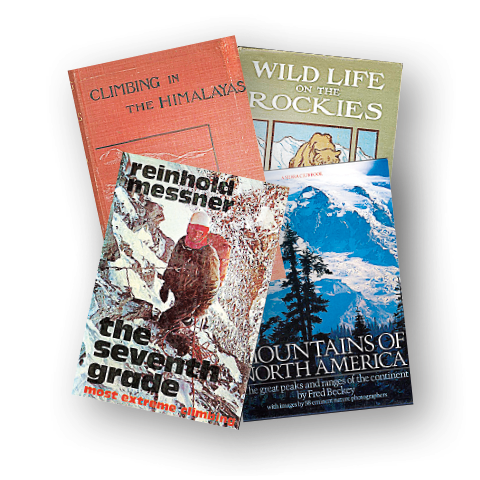
Now it includes 1892’s Travels Amongst the Great Andes of the Equator by Edward Whymper—the oldest book in the collection—as well as 1894’s Climbing in the Himalayas by W.M. Conway, 1895’s The Alps from End to End also by W.M. Conway, and 1909’s Wild Life on the Rockies by Enos Mills.
More recent titles include Messner’s 1974 first English edition of The Seventh Grade, Beckey’s 1982 Mountains of North America, Whittaker’s 1999 memoir A Life on the Edge, 2002’s Touch the Top of the World by Erik Weihenmayer, and 2018’s Alone on the Wall by Alex Honnold.
“The Pacific Northwest ones are my favorite. There’s so much local history,” Gregg says. “For me, mountaineering is more than a sport. It’s almost like space exploration. To paraphrase (author and mountaineer) Jon Krakauer, it’s pushing the limits of what’s possible. It’s pushing yourself as hard as you can within the bounds of what’s safe and reasonable. It’s a personal journey. It’s about going right up to the edge.”
Kopczynski, author of 2022’s Highest and Hardest—which was included in the donation—says, “For people who love the mountains, this collection is more than just a history of climbing. It’s priceless.”
Roskelley, the author of five books, three of which are included in the donation—1991’s Last Days, 1993’s Stories Off the Wall, and 2000’s Nanda Devi—agrees. “It’s always amazing to hear from the guys who were there before us. I think there is a great deal to be learned from them.”
Donating the collection, Gregg says, “is a significant milestone because it acknowledges everything they have accomplished but also that they are at the end of their mountaineering careers. I think they’re happy to know that the collection is going to live on as a whole and that anyone can access it here at WSU.”
And there could be more coming. “We both went down and looked at the archive collection at WSU. It was just fascinating to walk through there,” Roskelley says. Now, “we’re talking about giving WSU our slides. We want to make this an ongoing project. We want to make the collection bigger and better and maybe include photographs.”
Both he and Kopczynski began photographing their mountaineering excursions in the 1960s. “We have thousands and thousands of slides of expeditions all over the world,” Kopczynski says. “It’s a great color history.”
The books—and potentially the images—are “an opportunity to leave a legacy,” Roskelley says. “We graduated from here. We probably owe WSU a lot more than this. This is a small token of appreciation for the school and for future students.”
The collection, Kopczynski says, is “sentimental to me. These guys were heroes to me when I started climbing. In my mind, WSU now has the most unique mountain-climbing book collection in the world. Hopefully, it’ll be read and used for research for a long time.”
Save the Date
Meet the mountaineers at a free program and reception in Pullman,
September 25, 2026.
Exhibit on Mountaineering Book Collection Set to Open on September 25
(WSU Libraries, July 26, 2026)