
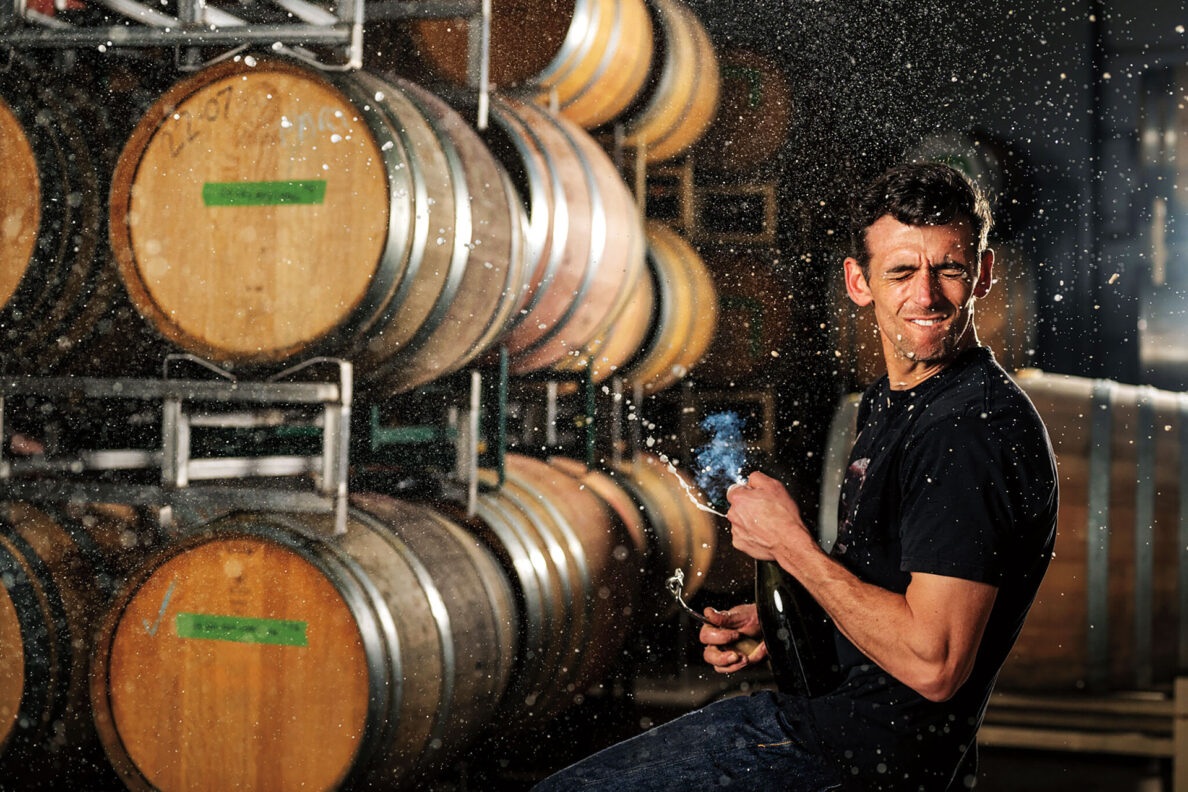
Sparkling rosé complements roast turkey on Thanksgiving. A crisp blanc de blanc or blanc de noir cuts through the fat of a rich and hearty prime rib at Christmas dinner. Of course, bubbles also make for a perfect welcome drink at a holiday party. They really sparkle at a midnight toast on New Year’s Eve or during a romantic dinner on Valentine’s Day.
But, says winemaker Kenny McMahon, bubbles “don’t always have to be pegged for a celebration. They can be on the dinner table for the main event at the holidays—or on a random Tuesday night, just because.”
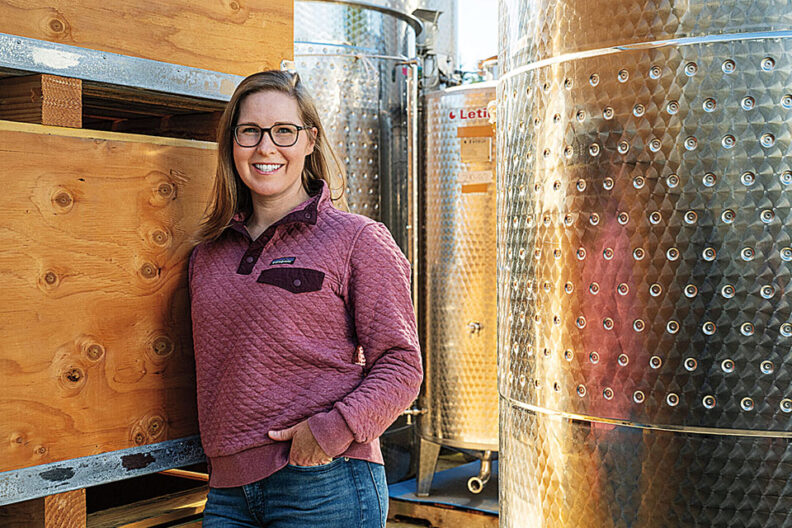
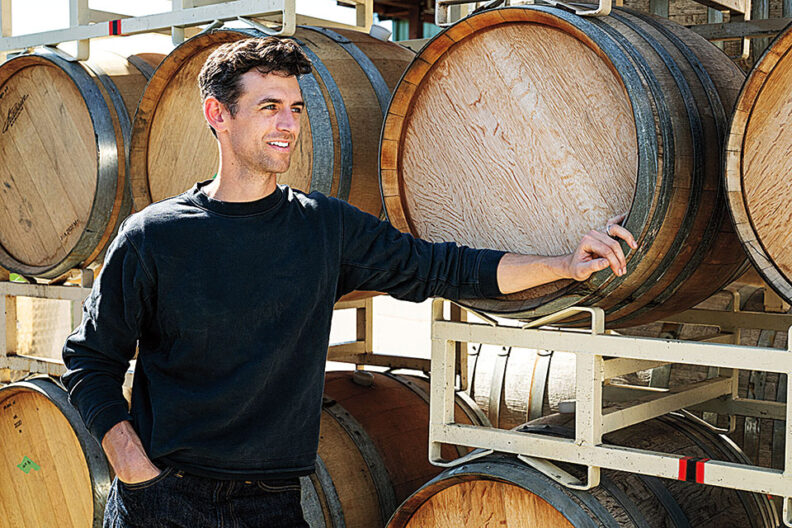
Thanks, in part, to Kenny (’16 PhD Food Sci.) and Allison (’15 PhD Food Sci.) McMahon, Oregon’s Eola-Amity Hills are really starting to sparkle.
The Eola-Amity Hills American Viticultural Area, or AVA, established in 2006, is primarily known for Pinot Noir, which accounts for nearly 80 percent of the grapes grown there. The McMahons also want the region southwest of Portland to be known for their specialty: sparkling wines made in the traditional method with modern-day science.
The husband-and-wife team make bottle-fermented sparkling wines using Pinot Noir, Pinot Blanc, Pinot Meunier, and Chardonnay grapes from Eola-Amity Hills and the nearby Willamette Valley and Columbia Gorge AVAs. There’s only a handful of wineries doing what they’re doing in the region. And, they argue, their education at Washington State University helps sets them apart on their quest to elevate Oregon’s sparkling wine industry.
“Since graduating, we’ve put both the technical and people skills we built at WSU to work—taking on winemaking in a way that really reflects how much our time there shaped us. That hands-on, innovative spirit we experienced at WSU still drives us today,” says Allison. She also notes enjoyment of sparkling wines is on the rise.
The number of people in the United States who drink sparkling wine on at least a monthly basis jumped from 56 to 72 percent between 2019 and 2022, according to a report by IWSR Drinks Market Analysis. During the same period, the total number of Americans drinking sparkling wine increased 30 percent.
“We like to say, ‘Good things happen when things go pop,’ especially at a holiday party or a friendsgiving gathering,” Kenny says. But, he also notes, “Sparkling wine pairs with a lot of things.”
Consider oysters, sushi, a simple roast chicken, Gruyère gougères, and almond-flavored madeleine cookies.
“The quality of the wine starts with the grapes,” says Allison, who grew up in the Seattle area and arrived at WSU Pullman in January 2012. Kenny, originally from Kentucky, came to campus eight months later, in August 2012. “I was one of his tour guides,” she says.
While Allison focused on Syrah, Kenny specialized in sparkling, working with Ste. Michelle Wine Estates for his dissertation and, later, Two Vintners, and Erica Orr at Orr Wines and Orr Wine Lab.
Jobs took her to Michigan, him to Kentucky, and both to Minneapolis and New Jersey, where, they say, they were using their sensory and food science knowledge but felt removed from the wine element of what they studied in school. So, in 2017, they wrote a business plan for their own winery, which, Kenny says, “was always our goal.”
So was seeking out grapes cultivated with organic and biodynamic practices for their winery, Arabilis Wines, in Amity, Oregon. The name, in Latin, means that which can be farmed or able to be plowed. (Think: arable.) “It evokes a sense of place and legacy,” Kenny says. They feel the moniker embodies their close partnerships with local farmers as well as their goal of someday owning their own vineyard.
After years of preparation and a move to Oregon, they launched their business in late 2021 with still wines from three varietals: Pinot Noir, Rosé, and Chardonnay. But, Allison says, “We always knew we would hang our hat on sparkling. Oregon’s cool climate, the soil, and the types of grapes are all very well suited for sparkling.”
Last year, they produced 1,600 cases, expanding to about 2,000 cases this year. Sparkling wines now make up about 95 percent of their production, and their wines—both still and sparkling—have received acclaim from Wine Enthusiast, Wine Spectator, and International Wine Report.
“It’s a marathon, not a sprint, with sparkling wine,” Kenny says. “There are so many steps to it, and it takes so much time. Not many people have the heart or the wherewithal.”
If others share their passion for bottle-fermented bubbly, the McMahons want to help. After purchasing specialized equipment for sparkling wine production, they began helping other wineries go “pop” through their service-focused business, The Oregon Sparkling Wine Company. Since 2023, Allison says, “We’ve made sparkling wine for other brands and helped other brands finish their products.”
There’s increasing need for support for small- and medium-sized wineries that make sparkling wine using traditional methods, she says. In the niche but growing industry, facilities are few, and most require a certain volume from clients.
“The craft element is really important to us,” Kenny says. “We’re intentional in everything we do. We seek precision, focus, freshness, and elegance. Sparkling wine is not an inexpensive product to produce, but we don’t want it to be a luxury product marketed only for the elite. It’s a special product, and it has a lot of heart and soul behind it.
“It’s not only for holidays and special occasions. It’s also for weeknights and whatever you want it to be for.”