
Brienna Hall works on machines that make advanced microchips for the smart devices we use daily—phones, watches, tablets, vehicles, and gaming consoles. Recently, her job has attracted national attention.
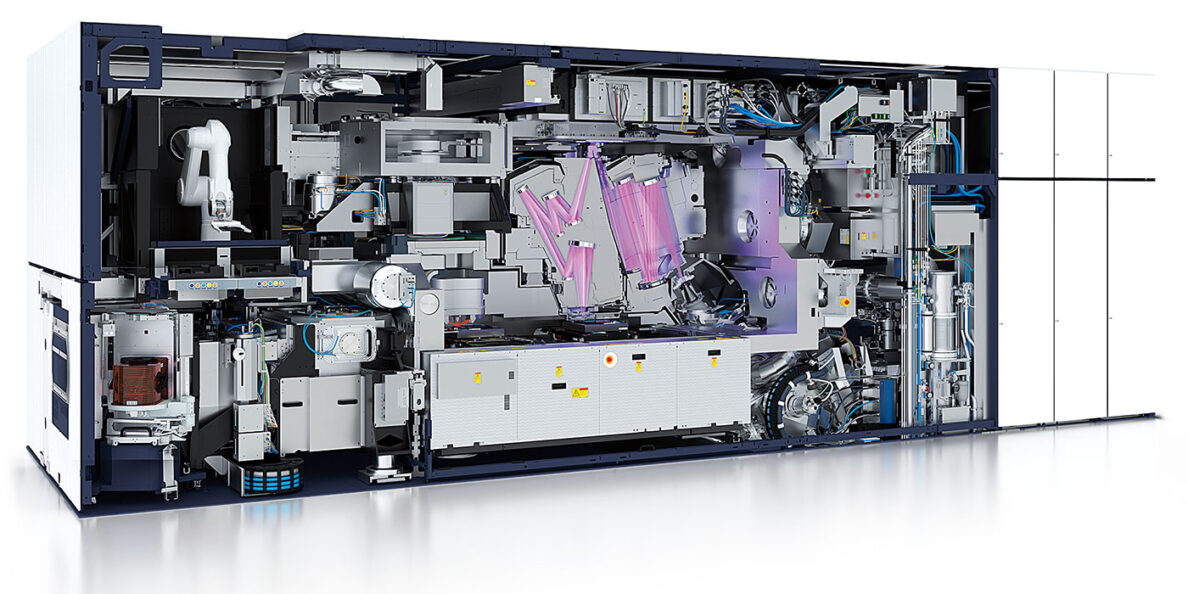
Hall (’22 Mat. Sci. & Eng.) was featured in a Wall Street Journal article about extreme ultraviolet lithography machines. Roughly the size of a bus with more than 100,000 components, they represent the latest advancements in the semiconductor industry’s efforts to pack more computing power onto each microchip, making them faster and more energy efficient.
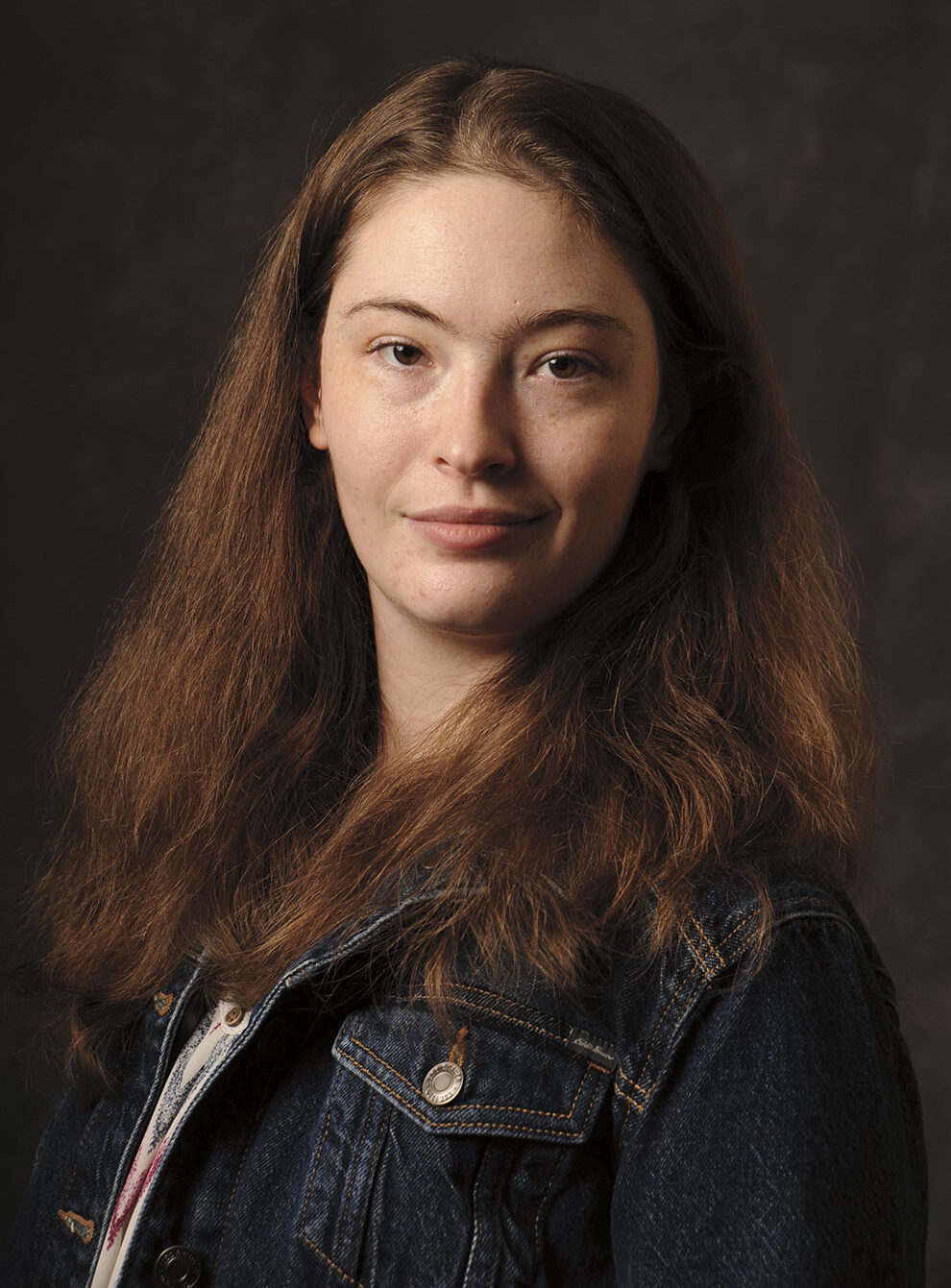
“It’s the Most Indispensable Machine in the World—and It Depends on This Woman,” proclaims the headline for the story, which describes Hall’s work as a technical support engineer for ASML. The Dutch-based manufacturer employs about 10,000 support employees for its machines worldwide.
After 20 years of research and development, ASML rolled out its EUV lithography machines in 2016. The machines use lasers, ultraviolet light, and high-tech mirrors to produce chips with billions of microscopic transistors.
Transistors act like miniature switches on chips, turning electrical current on or off. The more transistors on each chip, the more the chip can do. ASML’s breakthrough technology was harnessing shorter ultraviolet light wavelengths to fit exponentially more transistors onto each chip.
Some of the most enthusiastic reception to the WSJ article came from Hall’s teammates. “The feedback I got was, ‘Hey, thanks. Now I have a way to explain what I do to my family members,’” she says.
Hall, 30, started working for ASML about two years ago after Scott Beckman, a materials science professor at Washington State University, gave her résumé to company recruiters. “I knew she wanted to work in semiconducting technology, and she was an outstanding student,” Beckman says.
The opportunity to travel helped cinch Hall’s interest in the job. She’s based in Boise, Idaho, where she works on an EUV machine at Micron, one of ASML’s customers. But her job description specifies that she could travel up to 40 percent of the time. Since joining ASML, Hall has been to Taiwan, Europe, and other parts of the western United States.
She works 12-hour shifts, three or four days per week, as part of a 24-hour customer service team. Some of the mechanical work requires physical labor in tight spaces. Since the tiniest speck of dust can ruin a chip, EUV machines are housed in ultra-sterile fabrication rooms. The air quality is 10,000 times cleaner than outdoor air, according to ASML.
“This is a job where you have to wear a bunny suit,” says Hall, describing the coveralls she wears with a hooded face mask and shoe coverings. “That’s to keep me from contaminating the product.”
When she’s not working directly with the EUV machine, she’s monitoring its data for red flags. When EUV machines go offline unexpectedly, ASML’s clients can lose thousands of dollars of revenue per minute. “One day I might be troubleshooting laser power, another day the electrical communications or a gas leak,” she says.
Hall grew up in Seattle, tagging along when her dad worked on vehicles or house projects. She liked taking things apart and reassembling them. “Think LEGOs, puzzles, tying knots in Girl Scouts,” she says.
After high school, Hall spent four years working as nanny, then earned an associate’s of science degree at Edmonds College before transferring to WSU. She was active in WSU’s Materials Science and Engineering Club and transcribed Beckman’s notes for a quantum engineering textbook. She also worked as a peer health educator, leading workshops on topics such as life skills, healthy relationships, and gender-based violence prevention.
It was one of the best extracurricular activities she could have chosen, Hall says. “You don’t learn public speaking as an engineering major or leadership skills, or presentation writing. It gave me real-world experience in those areas.”
Hall’s materials science background deepens her understanding of chip making. But the skills she learned as a peer educator help her communicate effectively with her teammates. And when ASML’s corporate office approached her about talking to a WSJ reporter, Hall felt comfortable saying yes.
Hall would recommend working on EUV machines to others who thrive in technical, problem-solving environments—with a caveat: “You do have to be able to learn the machine.”
However, “if you own a 3D printer,” she says, “that’s a really good sign.”