
Rachel Ruggeri (’00 MBA) starts work at 4:30 a.m. when she checks the sales report and heads into the office. On the way, she gets her first Starbucks order of the day: an iced quad espresso with “extra, extra” ice.
“The sense of belonging, joy, and individual experience Starbucks strives to create for each customer resonates with me,” says Ruggeri, chief financial officer and executive vice president at Starbucks.
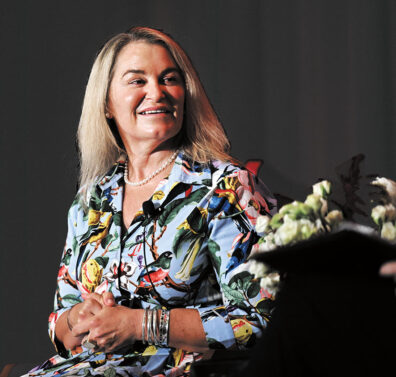
She gave the keynote address during Washington State University Carson College of Business Power Breakfast in Seattle last September, noting authenticity, resilience, and generosity drive her business and leadership philosophies.
“No one person runs a company or a college,” she says. “You have to make sure your company culture stays top of mind when organizational change occurs. Stay true to your mission.”
Ruggeri grew up in Walla Walla and began her career teaching English as a second language at a community college. She later became an accountant. In 2001, she joined Starbucks, where she’s held several finance roles.
“I said yes to everything professionally,” Ruggeri says. “I’ve always taken risks that have led to bigger and better rewards; the focus was never on achieving professional titles.”
Her effort in everything she does and knowing the value of her skills remove any self-doubt about whether she has the ability to do a job she’s been tapped for, she says.
Stopping by Starbucks stores as a customer guides her executive insights on the importance of sustaining a brand in the face of inflation, rising interest rates, recession risks, and global uncertainty. Consumers naturally think about their spending, she says.
Rapidly advancing technology trends, such as AI, can help strengthen processes, Ruggeri says, noting systemizing sales forecasting and auditing site selection as examples. “I’m excited about what we can do with AI from an energy and transportation sustainability perspective.”
Ruggeri suggests academic institutions focus on developing students’ problem-solving skills and curiosity to help them prepare for rapid technological changes.
“You have to teach them the skills and mindset behind the technology because what they learn today versus a year from now will change,” she says. “My advice is basically this: Don’t be led, lead. The rewards outweigh the risks.”