
No question, the COVID-19 pandemic was a challenge for higher education. The way we conduct research and the way we educate students changed almost overnight.
I’d like to say it was a once-in-a-lifetime event, but that’s probably not the case. With that in mind, it can help to reflect on what worked and what could be improved.
First, we were fortunate to have the Washington State University Global Campus, with its long experience delivering distance learning, help us transition to online education. Higher education has a reputation of being slow to change, and it’s somewhat earned. But with tools and training provided by Global Campus faculty and staff, we were able to competently pivot to online education within about two weeks.
However, the experience also reinforced the importance of the human element in higher ed. Before the pandemic there were predictions from time to time that all education would eventually be delivered online. I think we learned that’s not preferable for everyone. Personal interactions are an important part of both education and research.
WSU also was able to use its specialized equipment and experience to meet community needs. We embodied our land-grant mission by providing temperature-controlled storage, doing COVID-19 testing, and giving vaccinations in community clinics.
Our programs in East Africa have made WSU a center of excellence in the study of infectious diseases. During the pandemic our scientists were trusted experts who provided their knowledge and guidance to all who asked.
When it comes to lessons learned, I’d say communications is toward the top of that list. As president of a public research university with a dynamic health sciences program—and as a scientist—I was alarmed at the skepticism around COVID-19 preventative measures and vaccines. Pre-COVID, I wouldn’t have dreamed that managing that skepticism would be one of the big challenges of a pandemic. I firmly believe that a communication strategy has to be part of all science-based public health initiatives in the future.
We also need to always be looking ahead to the next challenge. With our programs and our people, we’re well-placed to do that. This year, in fact, with the support of the Washington legislature, we added a bachelor’s of science in public health to prepare students to meet evolving community health needs, particularly in underserved and rural areas.
The pandemic posed great challenges to our university, our communities, and our nation. Through common purpose we met those challenges. I have no doubt WSU will do the same the next time it’s called on.
Kirk Schulz
President, Washington State University
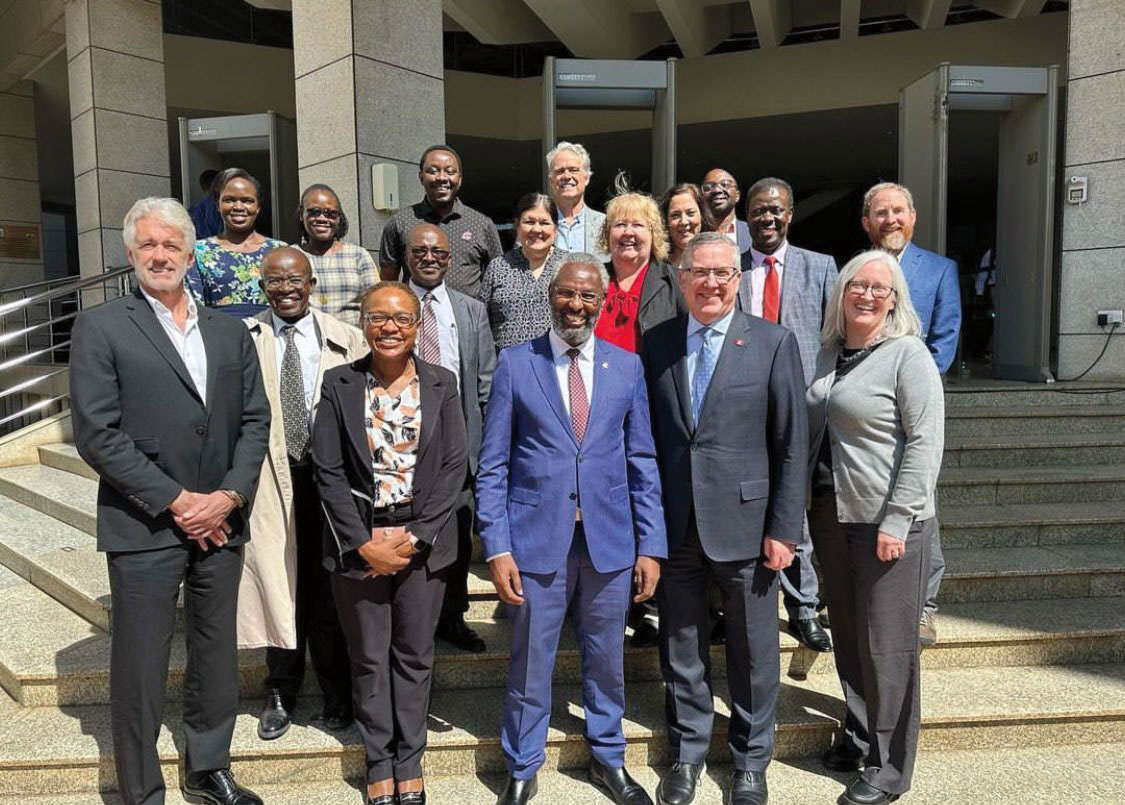
(Courtesy WSU Office of the President/X)