
Murrow Symposium marked an important milestone in 2026.
The Edward R. Murrow College of Communication celebrated its 50th Murrow Symposium in early April. The theme: “The Murrow Standard. Built on Legacy. Defining the Future.”
To celebrate, Washington State Magazine asked faculty, staff, students, alumni, and friends to reflect on the legacy of the almost-annual event, its namesake, and more.
Cara Hawkins-Jedlicka
 Cara Hawkins-Jedlicka
What does Murrow Symposium mean to you? I think it really comes down to connection and providing opportunities for students. We’re bringing these nationally and regionally recognized communicators to Pullman. You don’t have to travel to New York or DC or Seattle to hear these great speakers. Many of them are alumni or somehow have a connection to Murrow College and WSU. Being able to attend panel discussions, introduce yourself to speakers afterward, and come back to class to talk about all of it—they’re getting access and opportunities that you don’t get at every college or university. I certainly didn’t get opportunities like this as a student at a small college.
What do you hope students take from the Murrow Symposium experience? I want them to build connections. I want them to hear something on a panel and get interested in it. Maybe that ends up being their career or something else they want to get into. The timing is perfect. Murrow Symposium is right after spring break. We’re trying to get through the semester. We need a little bit of a lift in spirits and inspiration. It really does help their understanding of networking. And it just opens their minds to what’s out there and what’s going on in the industry. In class, we stick really close to the curriculum. Symposium is a chance to do deep dives into emerging topics.
Talk about how much work and planning it takes to host this iconic event every year. It is a group effort. It’s an effort by everybody. It’s every staff member. It’s our IT people. It’s faculty. The symposium is mentioned in faculty meetings a good year before it happens. Who’s going to be honored? How’s it going to work? What panels will be proposed? It’s a lot of logistics. At some point, as a faculty member, you either propose a panel or you get assigned a panel and you’re the moderator. It’s a chance for your former students who are now working in the industry to come back and serve on panels. There are so many deadlines. In class, I go over questions to ask at the panels and one-on-one. Being able to talk to people and make connections is a huge part of symposium. For a lot of students, it’s their first time going to anything like that.
Imran Haider
Director of Online Programs
 Imran Haider
What are some of your favorite Murrow Symposium moments? The panels that I created and moderated were honestly my favorite moments. They were up close and personal, and I enjoyed watching students taking notes and asking insightful questions. That’s what it’s all about: getting a new layer of information that applies to their future career field.
What does Murrow Symposium mean to you? There’s no program that I’ve taught at that has an annual event that gets students, faculty, staff, alumni, special guest speakers, and celebrities in the industry to come and have the ability to connect over a three-day process at no cost. There’s no event like it. It’s cliché to say this, but it is unique. It is special to Murrow College. I’ve taught at six institutions, and there’s nothing like it. It’s a really awesome event. It’s one of my favorite professional events to attend throughout the year, and I got to a lot of conferences.
What do you hope students take from the Murrow Symposium experience? I want them to meet new people. I want them to network with colleagues, professors, and professionals. It’s a time to connect.
Personally, I’ve met a lot of alumni who I didn’t know before symposium. They come back every year because they love Murrow. They care. And they want to give something back to their school. It’s something they block out their calendar for every year.
Who have been some of Murrow Symposium’s most inspiring speakers — keynotes or panelists? Andrea Joyce, Harry Smith, and Dean Baquet told stories about reporting on high levels. They were inspiring because of their ethics and integrity. Andrea Joyce talked about being one of the first females ever to go into an NFL locker room. That stands out as a powerful and memorable story.
Reflect on the legacy of the Murrow Symposium. What does it mean to you that it has reached the 50-year milestone? It shows that Murrow alumni care about what we do here. They come back, connect with students, and donate funds to make this happen. This is my sixth year at WSU and my fourth in-person symposium. I have felt so moved by the power of our program. Our program is rock solid. This is the most powerful alumni network I have ever experienced. The 50-year marker is a great symbol of that tradition.
How does the Murrow Symposium continue the legacy of Edward R. Murrow? Each year, there are thematic parts that apply: Ethics, integrity, honesty, truth in journalism and in life, doing the best you can, doing the right thing. That’s how, I think, we honor Murrow. It flows through the entire environment of the event. The characteristics that he lived by and how he did his job, those qualities are present at every single symposium. That’s what it’s all about.
Rebecca Cooney
 Rebecca Cooney
What are some of your favorite Murrow Symposium moments? Meeting Dan Rather. That was cool. I was brand-new faculty, teaching full time for the first time, and I was a longtime fan of 60 Minutes. I fan-girled over Dan Rather. I’m talking heart palpitations. I have a picture of me talking to him, looking up to him.
What does Murrow Symposium mean to you? To me, it is an opportunity for students and alumni and faculty to converge in one space, which in my undergrad and master’s programs never happened. I never had anything close to this as a student. No one ever gave me access to alumni like this. No one ever gave me a voice like this. Murrow College wants to elevate the voices of those that were in the seats in the classrooms and are now out in the world doing the work. To me, there is nothing in the world like symposium.
What do you hope students take from the Murrow Symposium experience? A 30-minute one-on-one with an alum can literally change their lives.
Reflect on the legacy of the Murrow Symposium. What does it mean to you that it has reached the 50-year milestone? No one ever cared about me as a student in undergrad or graduate school the way Murrow College and Murrow Symposium cares about current students and alumni. For that alone, they should be commended. For 50 years of commitment to students and alumni, they should be commended.
How does the Murrow Symposium continue the legacy of Edward R. Murrow? I’m not a journalist. From a non-journalism perspective, what I’ve understood about Edward R. Murrow and his principles of integrity, ethics, and community, Murrow College does its darndest to continue that legacy. The symposium is trying to carry it through panels, honors, discussions. We’re trying to elevate those traits.
Talk about how much work and planning it takes to host this iconic event every year. I’ve been on planning committees several times during my tenure. I takes an immense amount of work, collaboration, and cooperation to pull it off.
Nicole O’Donnell (’18 PhD Comm.)
 Nicole O’Donnell
What does Murrow Symposium mean to you? I think it’s a celebration of our fields of journalism and strategic communication, a celebration of Murrow College’s excellence, and a celebration of our training students to be creative problems-solvers and future leaders in their respective fields. I do think it’s the keystone event of our college. The coordinators put a lot of work into selecting the topics of the panels and organizing well-rounded groups of experts with varying backgrounds and opinions to give advice to students about the current state of the industry. Sometimes I think there’s fatigue and dread about going out into the workforce, but symposium gives students hope that now, more than ever, Edward R. Murrow’s legacy is important and the work we do is essential.
What do you hope students take from the Murrow Symposium experience? I want them to be inspired. I want them to realize they can take risks. Symposium has a level of prestige that encourages students to aim higher and take bigger risks. They really get broad-scale exposure to the fact that there is a place for communication in every field, and I want them to see that.
Who have been some of Murrow Symposium’s most inspiring speakers — keynotes or panelists? Melissa Barnes. Her talk was about doing the right thing and navigating the moment that will define your career. She was high-level at Twitter, vice president for Canada and Latin America, and she saw change in leadership as a reason to switch careers. Her speech was about personal ethics, and students were wildly inspired.
Reflect on the legacy of the Murrow Symposium. What does it mean to you that it has reached the 50-year milestone? I think it speaks to the relevance of our college. The fact that we have this longevity, the fact that we have a pattern of positively contributing to the communication professions, shows our institutional stability and endurance. Our field is changing. There’s emerging technology. And we are not running away from those changes. We are always ready to take on new challenges. We see that reflected in our alumni and in our students, who are the leaders of the future. They are hopeful for their future, and I think they have good reason to be.
Brianna Perry (’15 Fine Arts, Comm., ’25 MA Comm.)
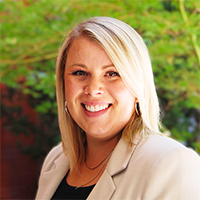 Brianna Perry
What are some of your favorite Murrow Symposium moments? As an undergrad, my favorite moments were getting to be in the presence of people I watched on the news. Seeing people I had grown up watching on TV come back and be recognized as alumni or just exceptional people modeling a certain level of prestige was invaluable to me.
What does Murrow Symposium mean to you? I graduated from Murrow in 2015 and started my career in advertising and marketing. Fast-forward to 2020 when my business partner and I decided we were going to start our own agency. We talked about what we wanted to do in the next five or 10 years. As an alum, I would jump at the chance to give back to the college in any way. And one of my very special dreams was to return to symposium as someone who could mentor students. I remember getting the email and being asked to host a panel in 2022. That was a full-circle moment for me, a dream come true. What’s special about Murrow is they care. They keep in touch with alumni and students benefit from those who came before them. Now I’m teaching at Murrow. It’s a surreal feeling. It means everything to me.
What do you hope students take from the Murrow Symposium experience? I hope that they will hear stories that inspire them or make them feel seen.
Who have been some of Murrow Symposium’s most inspiring speakers — keynotes or panelists? Melissa Barnes was really great. So were Maria Hinojosa and Dean Baquet.
Reflect on the legacy of the Murrow Symposium. What does it mean to you that it has reached the 50-year milestone? I get teary-eyed thinking about it. I think the legacy of Murrow Symposium is connecting and bringing people together. There’s an amazing network that comes from being a Coug. But I think Murrow takes that to another level. There is a legacy in the fact that we actively support one another long after graduation. If you know Murrow alumni, they are going to help you get where you want to go.
Talk about how much work and planning it takes to host this iconic event every year. Are you kidding me? As soon as it ends it begins again.
Moses Henning
President of Murrow Ambassadors
ASWSU College of Communication Senator
First-gen third-year from Dallesport, Washington
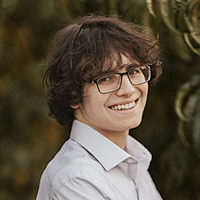 Moses Henning
What are some of your favorite Murrow Symposium moments? I’m tempted to say symposium, as a moment, is one of my favorite times of the year. Seeing everyone come together as a community, especially Murrow College because we are one of the smaller colleges on campus, is really cool.
Andrea Joyce was really cool. Being able to hear her story and how she overcame obstacles to get to the point where she’s at—that was really inspiring.
Of course, her husband, Harry Smith, was also inspiring. He talked about how you get someone to tell their story, and I think that’s something that I will be able to apply to my own career. He said listening to and understanding people are the most important things. I remember a specific story he told about a woman who survived a tornado. She was reading the Bible, and he asked, “What Bible verse were you reading?” That illustrated to me that you need to make sure you actually listen and understand, and I took that to heart.
What does Murrow Symposium mean to you? I think if you were to boil it down, it’s all about community. I really do believe that. Symposium brings the Murrow family together.
What do you hope students take from the Murrow Symposium experience? Murrow Symposium helps you gain a better understanding of your future career. No matter what you’re going into, there’s something for you. The biggest thing you can get from symposium is learning more about your trade. You’re going to have a way better understanding of your career path.
What’s some of the best advice you’ve gotten at Murrow Symposium? Imran Haider had a panel last year, and he mentioned a specific thing he does. He writes down the top 25 people he wants to keep in contact with—his top 25 connections—and then, I think, every day, he emails or texts one of the people on the list. I thought that was so profound, how analytical and strategic it was. That’s something I want to do in my future to keep my network alive.
Former ambassador Roger Nyhus (’90 Comm.) said something during his session last year that I think about all the time. It was something like the constructive feedback sandwich. You start with a compliment, then you give a piece of criticism and another compliment after that. Say what you expected and why it didn’t meet that expectation. I’m paraphrasing. But I wrote it down at the time, and it still stands out to me.
Reflect on the legacy of the Murrow Symposium. What does it mean to you and/or to the college that it has reached the 50-year milestone? I think, above all, Edward R. Murrow understood the value of integrity, and I think he understood the important role journalism serves in society. Journalism deserves to be brought to the people. Symposium really embodies that. We are carrying on this idea that journalism and other fields of communication can make a serious impact. Being able to reach the 50th landmark just goes to show the importance of communications. No matter how much society changes, how much technology changes, how much education changes, there will always be a need for communications in our society. We’re constantly doing new things at Murrow, but still holding true to the original values Edward R. Murrow embodied and that standard deserves to have resect.
Talk about how much work and planning it takes to host this iconic event every year. As one of the Murrow Ambassadors, I have a unique perspective. We’re usually assigned alumni to help when they come back to campus. We also help with advertising and trying to get as many students as we can signed up. I would encourage everyone to get involved with symposium. There’s this idea that only communication majors can benefit. I think there’s value in it for everyone. You could be a business major or an engineering major, and there will be something at symposium for you. No matter who you are or where you come from, there will be something for you at symposium.
Olivia Soliz
Vice President of Murrow Ambassadors
Third-year from San Jose, California
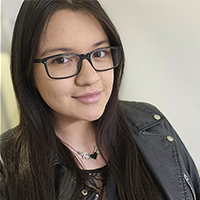 Olivia Soliz
What are some of your favorite Murrow Symposium moments? I really connected with Eric Johnson (’84 Comm.). He was on a panel where he talked about a story he did on the Tree of Life on the coast, and he turned it into something very powerful and connected it to a deeper meaning of life. I found the way he told stories to be super helpful and took notes on how to captivate a reader’s attention just like he did.
Another special moment was hearing from Jaimee L. Fox (’09 Comm.). She talked about feeling all this pressure but rising to the occasion. She was just a great public speaker and knew how to captivate an audience. I looked around, and everyone at the Murrow Ambassadors’ table was nodding their head.
What does Murrow Symposium mean to you? It’s a really nice opportunity to see alumni come back. It’s a reunion. It’s also an opportunity to get your name out there and exchange resumes. You can get internships by getting to know people on a personal level. A lot of colleges don’t have this opportunity. There’s so much planning behind it. I feel like it’s all hands on deck. There are so many incredible people working together to help Murrow students and their future careers.
What do you hope students take from the Murrow Symposium experience? I hope they find alumni that they connect with, alumni who align with their views of what they want to do when they graduate. I hope they put themselves out there and advocate for themselves. I feel like it will pay off for them tremendously in the long-term.
Who have been some of Murrow Symposium’s most inspiring speakers — keynotes or panelists? I enjoyed Andrea Joyce. She was super sweet, and she was also really funny. I enjoyed hearing her talk about being in the male-dominated world of sports. I’ve been really involved with Cable 8 with sports. I was reporting on the sidelines and listening in on press conferences. Maybe sports is a cool angle to take. I remember feeling this is so cool. She keeps breaking barriers in the field and making a name for herself. That’s such an inspiration to young people. Don’t let society stop you from doing what you want to do. That was powerful.
How does the Murrow Symposium continue the legacy of Edward R. Murrow? We highlight so many Murrow grads who have remarkable careers and exemplify the traits of Edward R. Murrow. In class and at symposium, we’re teaching students to be like him, to have the same skills and ethical concerns. Even though he is no longer with us, his influence remains. It gets passed through generations. We are still upholding his legacy.
Kendall Hoy (’20 Comm.)
Marketing Supervisor, VSP Vision
 Kendall Hoy
What are some of your favorite Murrow Symposium moments? One of my favorite moments was actually coming back as an alumni and panelist. I thought it was so fun to connect with current students and I loved their curiosity and getting a chance to share my experience.
What does Murrow Symposium mean to you? I think it’s a way for students to connect with folks actually out there in the marketing communications world and for alumni like myself to stay connected to Murrow!
What do you hope students take from the Murrow Symposium experience? I hope students are able to recognize that everyone’s journey is different, and that’s OK! We all have different paths, careers, etc., and there is no one perfect role for Murrow grad there is so much opportunity out there!
Who have been some of Murrow Symposium’s most inspiring speakers — keynotes or panelists? I loved Sarah Kneller (’07 Comm.), and hearing about her journey was so inspiring and empowering.
Reflect on the legacy of the Murrow Symposium. What does it mean to you and/or to the college that it has reached the 50-year milestone? I’m so incredibly proud to be a WSU and Murrow alum. Truly no one does it better. The opportunities, networking, and just education in general that I received have set me up for success from the start, and I’m incredibly grateful!
Chloe Houser (’21 Comm.)
Social Media Manager, Planet
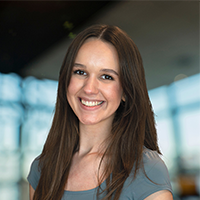 Chloe Houser
What are some of your favorite Murrow Symposium moments? I loved seeing all the speakers and getting to experience what it could be like to be a marketing professional one day!
What does Murrow Symposium mean to you? It was a place where I could actually picture myself graduating. To this day—now five years post-grad!—I am so proud to be a Coug, and it was so cool to see what you could do with your career after just being in the little town of Pullman!
What do you hope students take from the Murrow Symposium experience? I hope that people can really picture themselves and understand that college is just the beginning of their experience. I also hope they can feel connected and passionate about the future work they can do. When you love what you do, you do it better.
Reflect on the legacy of the Murrow Symposium. What does it mean to you and/or to the college that it has reached the 50-year milestone? It’s such a special experience to be a part of. Murrow College has created such a legacy, and people that were in the school carry a lot of pride. Throughout my whole career, I will always preach from the rooftops that I was a Coug and that I was in the Murrow College to make sure others can share and know that legacy.
How does the Murrow Symposium continue the legacy of Edward R. Murrow? I think Murrow Symposium does a great job of showcasing that anyone can do anything. It’s inspiring when you’re surrounded by alums and people who have walked the same walk as you.
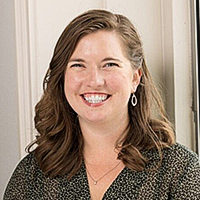
Alyssa Patrick (’13 Comm.)
 Alyssa Patrick
What are some of your favorite Murrow Symposium moments? My favorite moments have happened as an alum returning to the symposium. A professor invited me to speak on a panel, which surprised me at first as I did not think I really had enough work experience yet to have something to say. I also appreciated that this professor still thought of me so many years after graduation.
The panel experience was gratifying as it gave me a chance to reflect on and share what I have learned so far in my career, and to realize that it is helpful to hear from professionals who are at different stages. One of the other panelists, the president of TVW, made a point to introduce herself to me and connect after the symposium. She is now a new professional connection in my life, a connection that the Murrow Symposium and our shared tie to WSU made possible.
Reflect on the legacy of the Murrow Symposium. What does it mean to you that it has reached the 50-year milestone? The Murrow Symposium brings very notable journalists and communication professionals to a small college town in Eastern Washington. It celebrates journalists who are following Edward R. Murrow’s legacy, which is even more important to do at a time when much of society is devaluing journalism and subject matter expertise. As I think about 50 years of the symposium, I think about all of the connections made over those years that have ripple effects across the state and country. I am sure there are countless students who are now in careers thanks to some connection made at the symposium or who still go back to a piece of advice they heard there. The confidence instilled in young alumni who were invited to come back, to be mentors, also ripples into the influence they continue to make over their careers.
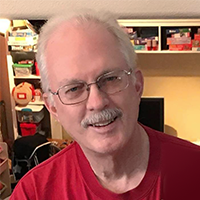
Robert Curry
KWSU-TV employee, 1976-2006
 Robert Curry
My thoughts are going to differ from those of students because I came to WSU as staff from 1976 to 2006. Having earned an MA in filmmaking from Ohio State University, and having worked at the public TV station in Cleveland, Ohio, for four years, I took the position of photographic supervisor at KWSU-TV.
This was before portable video recording existed, but I don’t remember shooting any film at the symposium. Some years, a paperback book was published of the proceedings. What I do remember is driving network executives to their motel rooms. In the early years of the symposium many in management from the three networks came and participated in the almost week-long series of talks and discussions. I remember Dick Salant, president of CBS News, being there a couple years, and got to lunch alone with him at the CUB one year.
At some point, the department started giving out the Murrow Lifetime Achievement Award, and so I got to meet and chat with Dan Rather, Tom Brokaw, Peter Jennings, Sam Donaldson, and Bob Schieffer, and others. I began to videotape the invited addresses to put on the TV show I started called WSU Presents.
After many years of taping invited lectures for many departments, it occurred to me that these would make good TV shows whereby WSU would get “more bang for their buck.” Many more would see it on TV than would be in the lecture hall.
So we would get the speaker to sign a release, letting us legally broadcast their talk. I was kind of frightened to approach Ted Turner, with his reputation of being difficult to deal with at times, but (it was) no problem. If the speaker had produced a book, I would buy it ahead of time and ask for their autograph. Have them for Rather, Brokaw, and Schieffer.
Videotaping these Murrow award winners was among the most fun, meaningful things I did for WSU.
Have a Murrow Symposium reflection to share? Email Washington State Magazine at wsm@wsu.edu for a chance to be added to this round-up.