
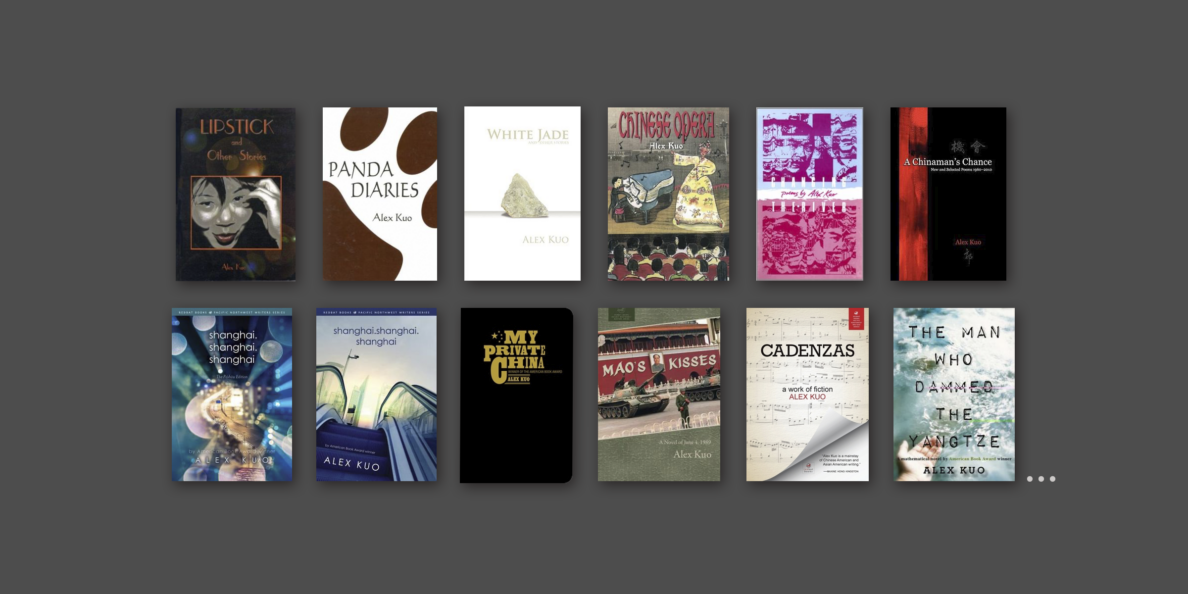
Longtime Washington State University professor Alex Kuo, a distinguished Chinese-American poet and novelist whose heritage figured prominently in many of his works, died June 11, 2025.
Here, friends and former students remember the writer.
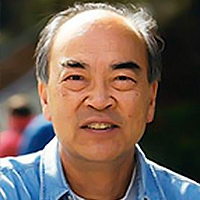
‘One-of-a-kind’
Alex was on a Fulbright in Beijing when he reached out to me and a few other former students about teaching positions at a nearby program there. His letter said something like, “Quit your job and come right away. You’ll have plenty of time to write.” I did quit my job and, within a month, was teaching English at the Beijing Forestry University. Alex was working at an adjacent program in the same university, and we saw one another every day for the two months that our positions overlapped. We’d eat dinner in the school cafeteria, then he’d read his latest short story. It seemed like he was writing a story a day. Those stories ended up in Lipstick, which won the American Book Award in 2002. My year teaching in China was one of the most interesting and important of my life. And Alex was right: In addition to everything else, I did have time to write. I was the first of many students that Alex helped land similar teaching positions in China. He went above and beyond always, as a teacher and a friend.
I had gone to WSU intending to major in communications and journalism but took one fiction writing class from Alex and changed my major to English. Then I took as many writing classes from him as I could fit into my schedule. Alex was the most influential teacher I’ve ever had and, judging from the number of former students who became his lifelong friends, I wasn’t the only one who felt that way. As a teacher he was comfortable with long pauses and silence, which felt so new, so unexpected. He took our words and our work seriously and that taught us to do the same. He set up public readings so we could share our stories with actual audiences, encouraged us to submit our work to literary magazines, and brought in visiting authors to workshop our poetry and fiction. As serious as he was about writing, he had an amazing sense of humor and a quick laugh. He met us where we were: as burgeoning writers and knucklehead kids. I think he would hate that we are all writing about him. And I think he’d love it, too. He was a one-of-a-kind teacher, writer and mentor, and I’ve been lucky to call him a friend for all these years.
Sara Nickerson (’85 English)
Through the decades
1980s—When I was the managing editor of the Idahonian and its sister paper, the Palouse Empire News, Alex contacted me. He was about to leave for a scholarly trip to the People’s Republic of China and needed a press credential. It was an odd request, but I eagerly put together an ID card and a letter of introduction. His strategy was successful, and he gained entry to several places that he wouldn’t otherwise have been admitted. After his return, he wrote a column for the paper about his experiences—giving insights into a country our readers were eager to learn more about. He would have made a fine foreign correspondent.
1990s—I was a non-traditional graduate student, enrolling in the American Studies doctoral program in my late 30s. I wanted to take a class from Alex, and the only one offered that semester was a 400-level class in Literature of the American West. It was a humbling experience to sit in a circle in the classroom with juniors and seniors half my age. Alex told many stories about his experiences in the West, including a hilarious account of his arrival in St. Maries, Idaho, where he was on a Forest Service crew combatting blister rust in white pine forests. Alex’s descriptions of western communities inspired me to look at influences of culture on our region’s history and politics.
2020s—In early 2020, Alex approached me to write a review of his latest book, Mao’s Kisses, A Novel of June 4, 1989. I was eager to learn more about the protests at Tiananmen Square of 30 years earlier and the Chinese government’s crackdown on them. Telling the story from the point of view of an imagined minor character, Alex made history come alive. I wish I’d had more time to discuss Chinese history and politics with Alex after reading the book.
Kenton Bird (’99 PhD American Stu.)
‘He opened my eyes’
He was one of my favorite professors. He opened my eyes to so much great literature and introduced me to basketball on the reservation.
Jake Smulkowski (’02 Wildland Rec.)
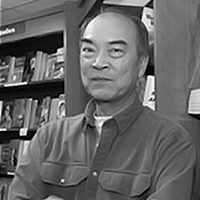
‘A life well lived’
Alex took me seriously from the time I met him as a graduate student. We golfed and socialized for many years after. I learned a whole lot about life while hanging around Alex and Joan. His writing showed me a lot as well. His was a life well lived.
Craig R. McCormick (’89 MA American Stu.)
‘Generous spirit’
He was an accomplished classical piano player, as well as a great writer. I loved his playing and his generous spirit. RIP. Hope you find Dorene up there, and you can have fun going over the old days. You were a great man and talent. He did so much to bring prominent writers to WSU. And I cherish the putter he gave me. Safe journeys.
Barbara L. Feil, retired, former owner of Feil’s Antiques, Pullman
‘Very talented’
He must have taught longer than 33 years, because I had him for my Honors intro to writing in the Fall of 1980. He was very talented.
Phyllis Hunt (’84 Chem.)
‘What college should really be like’
Alex was a good guy and a great creative writing teacher for me. Had some great times in his poetry classes where I felt, maybe for the first time—along with Bruce Anawalt—that this is what college should really be like. Could be.
Michael Rutledge Riley (’89 English)
My Writing Professor: Elegy for Alex, by Sherman Alexie (‘94 American Stu.)
Alexie wrote a powerful recollection of his WSU writing professor and friend.
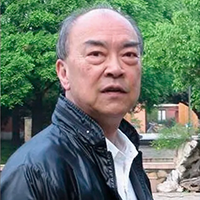
Do you have favorite memories of Alex Kuo? Share them with us at wsm@wsu.edu.
Photos this page courtesy WSU Department of English, University of Alaska Fairbanks, and Seattle Post-Intelligencer, respectively.