
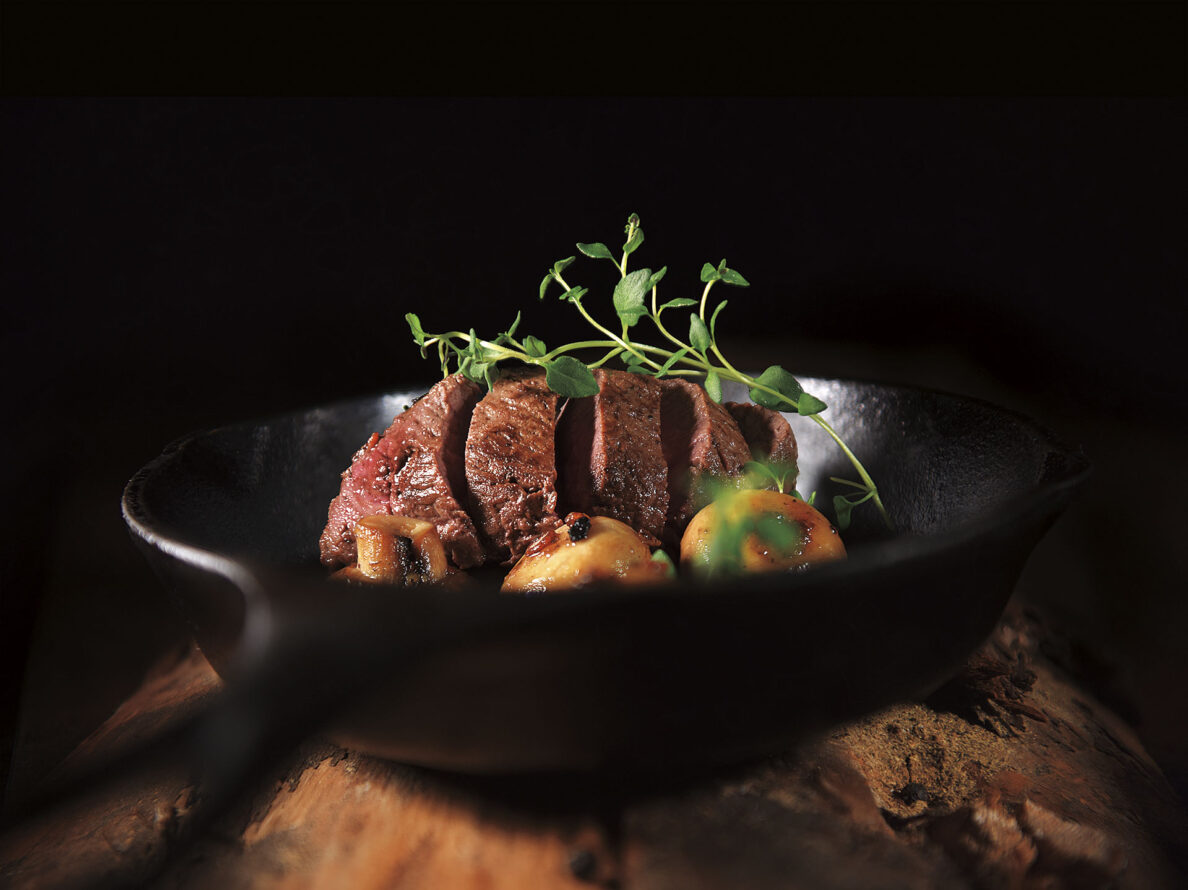
A thick and hearty belly-warming stew. Tenderloin with a rich and creamy mushroom sauce. Savory summer, German, and breakfast sausage. Homemade jerky.
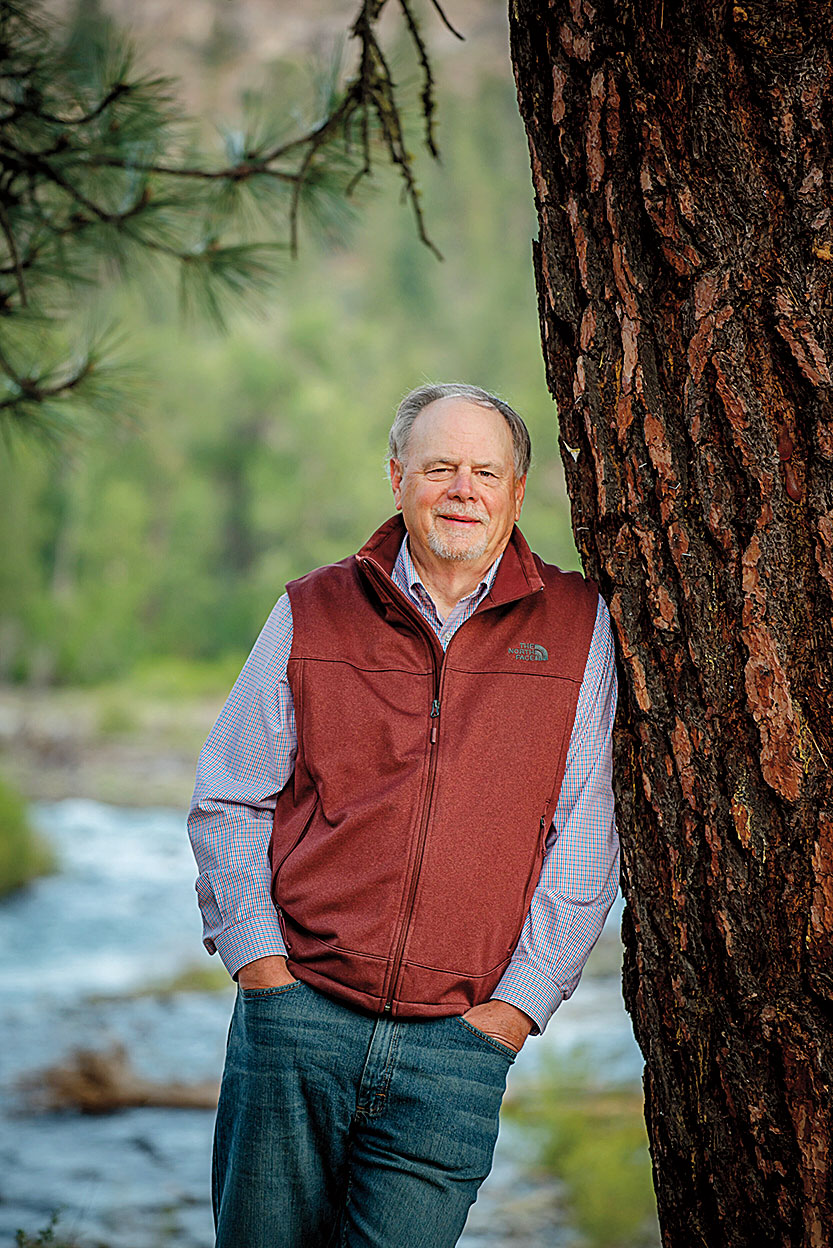
These are just some of the flavorful preparations of the wild game—elk and deer, in particular—Rob Phillips hunts each fall.
High in protein, rich in minerals, and lower in fat than many other kinds of red meat, elk, deer, and‚ if you’re really lucky, moose are versatile alternatives to beef. Chest freezers are replenished with recently procured wild game by late November. With careful planning, caches can last well into the next hunting season.
“If you get a deer or an elk, you can eat on it all year long. They’re big animals,” says Phillips (’78 Comm.), an avid angler and hunter whose weekly outdoors column has run in the Yakima Herald-Republic since 1991. “I got an elk in Montana a year and a half ago, and I’m still enjoying some of that meat.”
Elk season starts in mid-September and goes through mid-November for most hunters in eastern Washington; it lasts just a couple of weeks for hunters in western Washington. Buck hunting in a few higher elevations starts in mid-September, and general seasons for deer last until late November. Moose season is open October through November in northeast Washington. A limited number of once-in-a-lifetime moose permits are issued each year on a drawing basis.
Typically, hunters are allowed one deer or elk per season. Phillips got his first deer in 1977 while still a student at Washington State University. He’s hunted most years since, killing approximately 30 deer and a couple of elk in five decades.
In an effort to keep elk out of crops, some ranchers and other private landowners open their acreage to hunters through a special program run by the Washington Department of Fish and Wildlife. “You take an elk or two out of a herd, and they’ll move on pretty quickly,” Phillips says.
One of his favorite places to hunt white-tailed deer is Whitman County. “On the Palouse, they’re mostly grain-fed due to the surrounding wheatfields, and they’re some of the best-tasting deer in the world, if you ask me.”
Elk and deer taste best when trimmed and deboned in the field, Phillips says. Leaving meat on the bone lends a “gamey” flavor that many eschew. Otherwise, elk enjoys a mild flavor. Deer venison’s flavor is slightly stronger and more distinctive.
“Elk and venison taste differently because they eat different things,” Phillips explains. “Elk are more like cattle; they graze on grass. Deer are browsers; they eat leaves and flowers,” as well as grass, fruit, and nuts.
“There’s probably no healthier red meat than deer and elk,” Phillips says. “They haven’t been shot up with growth hormones or whatever else might go into meat these days. Wild game meat is low in calories and cholesterol, and there’s very little fat.”
There’s 7 grams of fat in a 3-ounce serving of ground deer venison compared to 13 grams in lean ground beef. Elk is similar, with 7.4 grams. Because both elk and deer contain so little fat, they easily dry out, becoming tough if cooked too long. So Phillips errs on the side of medium rare, with temperatures of 130 to 135 degrees.
Venison has been consumed since ancient times, particularly in northern Europe. During the Roman period in Great Britain, game was roasted or boiled and paired with sweet, fruity sauces made from dates or prunes.
In North America, deer and elk were important First Foods for Indigenous peoples. While there’s no definitive record of turkey being on the table at the first Thanksgiving, venison was a centerpiece. Records show Wampanoag hunters brought five deer to the feast.
These days, chronic wasting disease is a concern. It’s a fatal spongiform encephalopathy disease caused by abnormal proteins called prions. CWD affects deer, elk, and moose, and spreads when infected animals shed prions through bodily fluids, picked up by other animals through direct contact. Signs—emaciation, erratic behavior—typically show in late stages, when CWD attacks the nervous system.
According to the Centers for Disease Control, CWD has been documented in wild or captive cervids in 36 states— including Washington, California, Idaho, and Montana—as of April 2025. It can only be definitively diagnosed through laboratory testing of lymph nodes or brain tissue.
The Washington Animal Disease Diagnostic Laboratory, part of WSU’s College of Veterinary Medicine, confirmed the state’s first case of chronic wasting disease in July 2024. WADDL is the primary CWD testing laboratory for Washington, California, and some tribal organizations.
“WADDL is on the front line of detection and monitoring for the spread of this deadly wildlife disease,” says executive director Kevin Snekvik (’91 Zool., ’94 DVM, ’02 PhD Vet. Sci.). “Heading into the fall 2025 hunting season WADDL’s surveillance testing for CWD, in partnership with WDFW, was expanded to test over 9,000 animals, including deer, elk, and moose. WADDL prioritized these samples and hired multiple additional technicians to ensure this critical testing is completed in a timely manner.”
Health officials advise against eating meat from infected animals, though the disease is not known to affect humans or domestic animals. Tests are required in certain hunting regions. Phillips has never had an animal test positive.
Many hunters use modern rifles. Phillips uses a more primitive muzzleloader. “It’s more challenging to take an animal with a bow or muzzleloader,” he says. “You’ve got to get closer. It takes more skill. (Deer and elk) have an incredible sense of smell and hearing, and a large field of vision. You’ve got to be really good to get close.”
Competition can be tough during the general hunting season, especially in central Washington where Phillips lives in Gleed, just northwest of Yakima. Particularly for elk season, “the hills are alive with hunters,” Phillips says. “Some families have had the same elk campsite for generations. They’ve been coming up here since the ’50s, and they set up some pretty amazing camps—with generators, lights, TVs. One camp even had a hot tub heated with a wood fire. It’s a whole deal. You’ll see $450,000 motor homes parked up in the woods for two weeks.”
At the same time, he says, “You’ll also see a guy sleeping in the back of a Subaru.”
Phillips tries to avoid the masses. And, because of how close he lives to the foothills of the Cascade Range, he’s often home in time to sleep in his own bed. “I can be at the foot of Cleman Mountain in probably 20 minutes,” he says. “It’s just up the road. I can be hunting in no time.”