
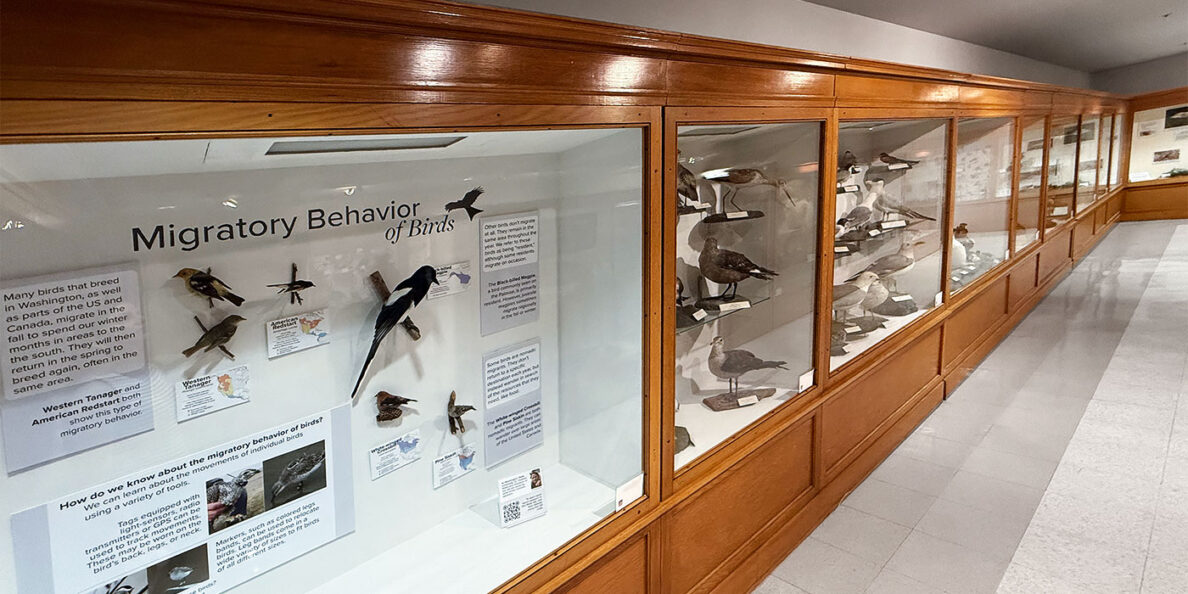
Specimen No. 4 is a small, translucent jellyfish collected near Keyport on the Olympic Peninsula. Not much else is known about the little marine animal, stored in a glass jar labeled with cursive handwriting, other than the date it was collected: July 30, 1899.
“I thought it was so gorgeous,” says Jessica Tir (’23 MS Biol.) who recently retrieved the long-lost specimen, part of an old marine collection.
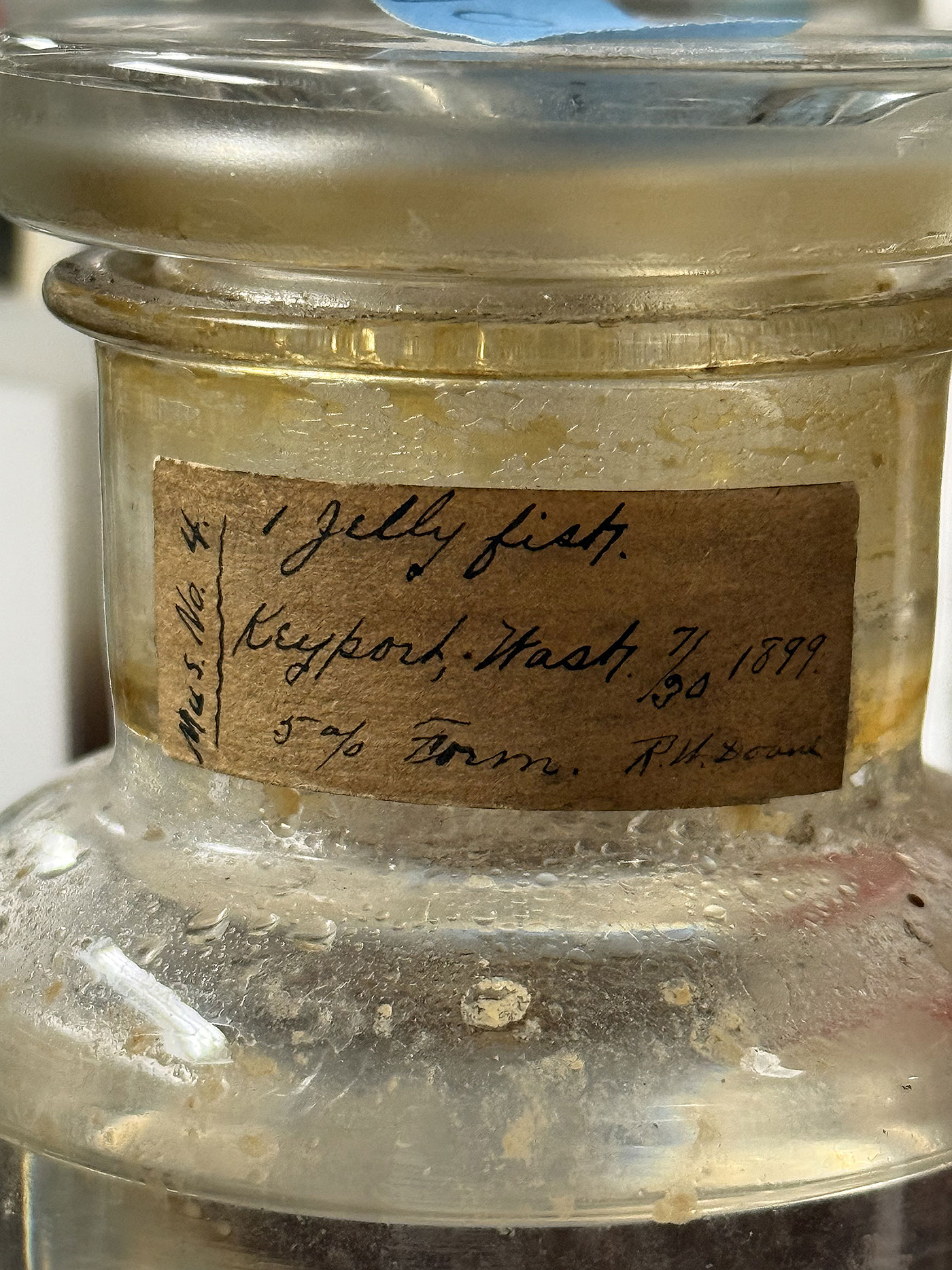
Bits and pieces, scattered across Heald, Eastlick, and Abelson halls, were found during preparations for the upcoming demolition of Heald Hall, slated for tear-down during the 2025-2027 biennium. The jellyfish was in the Eastlick batch.
“Someone found it, along with a bunch of other specimens, and contacted me,” Tir says.
It’s unusual because of how old it is, and because it’s an invertebrate, which leads Tir to think it could have been floating around Eastlick Hall “for probably at least 50 years. We started as a museum of everything. Over the years, we became more and more specific.”
The Charles R. Conner Museum at Washington State University, which predates WSU’s first graduating class, specializes in vertebrates. Most of the collection comes from the Pacific Northwest.
“We have the largest public collection of taxidermy in the Northwest,” says Tir, who manages the collections and day-to-day operations of the museum. She started volunteering at the museum as a graduate student in 2019 and served as a research assistant here for three years before landing the curator role—her “dream job”—in January 2024.
“If it has to do with vertebrates,” she says, “we’re interested.”
Two storage rooms, tucked nearly out of sight on the south end of the first floor of Abelson Hall, hold some of the more than 70,000 specimens of birds, mammals, amphibians, reptiles, and fish that make up the museum’s research collection. Some 700 mounts of birds and mammals make up its public exhibits. Admission is free.
More than 20,000 people visit the Conner Museum each year, including students of all grade levels—from preschool to college—plus FFA groups, campus tours, and clubs such as the local Audubon Society.
“I hope they learn something new about the natural history of the region that they live in or that they go to school in or that their kids go to school in. I hope they find value in having this public display available to them,” says Rachel May Woods, a doctoral student who researches migratory behavior in birds. She’s worked at the museum for three years as a collections assistant, preparing specimens for both the research collection and public displays.
(From original photo by Jessica Tir)
“The museum stands out to me because it’s really the only public collection like this in our region,” Woods says. “The closest one to the east is the Museum of the Rockies in Bozeman. To the west is the Burke Museum in Seattle. In this region—central and eastern Washington, northern Idaho, and northwestern Oregon, this is the only one. It’s a WSU landmark.”
It’s also, she says, “a nice way to fill time in between festivities on football weekends or Family Weekends.”
Both Woods and Tir encourage fans to stop by before a game. “We definitely see a spike on football weekends,” Tir says. “There’s a lot of animal history here, and it’s a big part of WSU’s history. We would argue that our collections are priceless.”
Founded in 1890, WSU opened its doors to students in 1892. The first class graduated in 1897. The museum was established three years before that, in 1894. But the idea for it dates to 1893, when Charles Conner, president of the WSU Board of Regents, drove to Chicago to fetch specimens that Washington state displayed at the World’s Columbian Exposition, or World’s Fair. Those specimens became the foundation of the collection that would eventually be named for Conner.
One of Tir’s projects is to “really dig into” and write about the history of the Conner Museum. To that end, she’s starting doctoral studies at WSU in fall 2025 with the aim of getting her doctorate in 2030.
Early curators left their mark. Zoology professor and significant Northwest ornithologist William T. Shaw, coauthored 1953’s Birds of Washington State, describing all the known birds of Washington state and where they are found. He prepared many Arctic seabirds and small songbirds, which are still on display, such as the puffins, Grey-crowned Rosy Finches, and the Varied Thrush. He also assembled a bird exhibit for the Alaska-Yukon-Pacific Exposition in 1909.
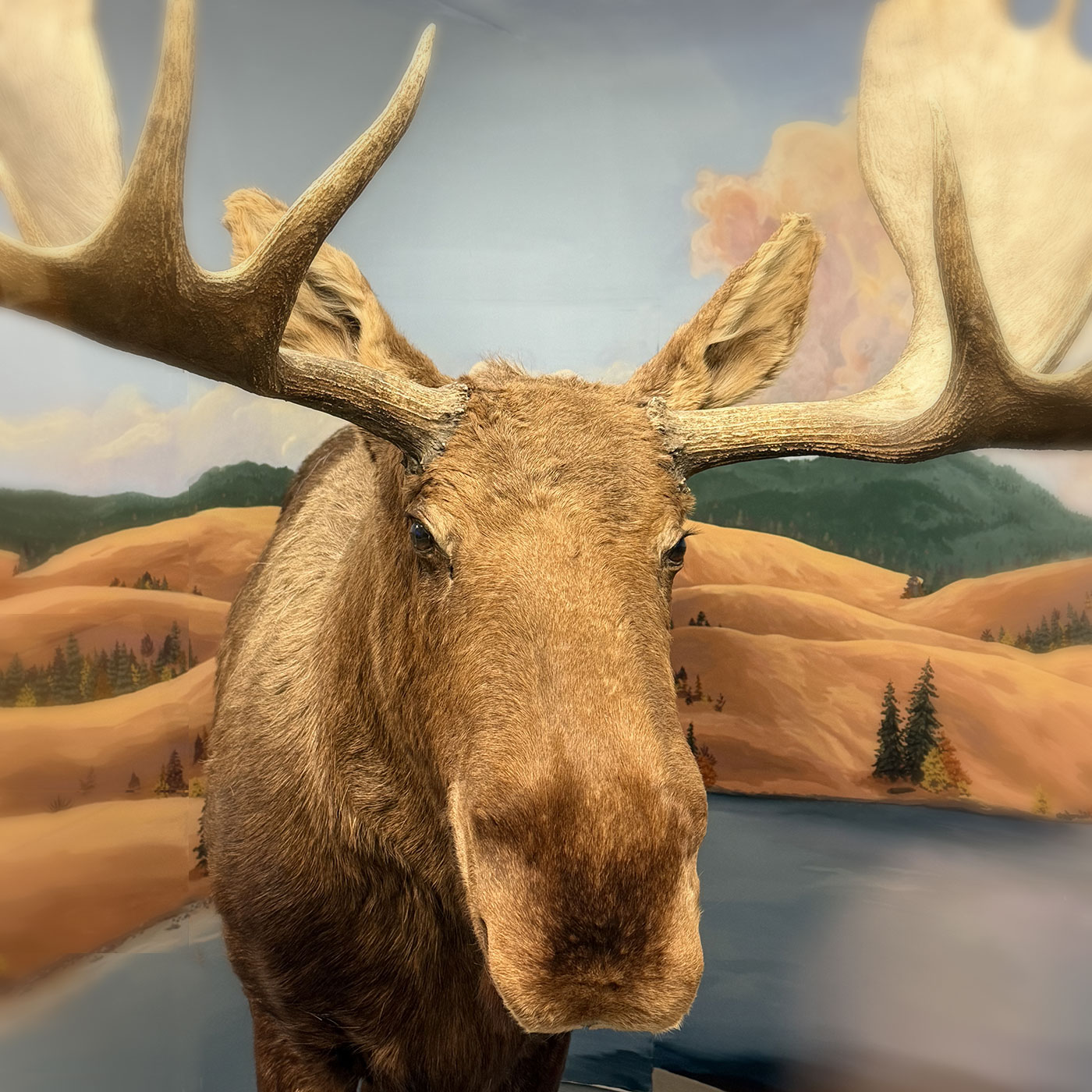
George Hudson, a professor of zoology from 1938 to 1972, prepared many of the display mounts in the museum, including many ducks, two penguins, a gray wolf, moose, beaver, caribou, and swan. “He was very talented,” Tir says. “Anytime he went somewhere, he would bring things back for the museum,” birds from Mexico, for example. “We have a bunch of specimens from the Philippines because he collected animals while serving in the Army during World War II.”
The museum’s north gallery houses a cast of a Prosaurolophus maximus skeleton, the leg bone of a mammoth, the skeleton of a bald eagle, head mounts of a sassaby and a waterbuck, a taxidermied kangaroo with a joey, and a taxidermied aardvark. “I don’t know much about where she came from,” Tir says of the aardvark, “just that she’s very old. Even the case she’s in is an antique.”
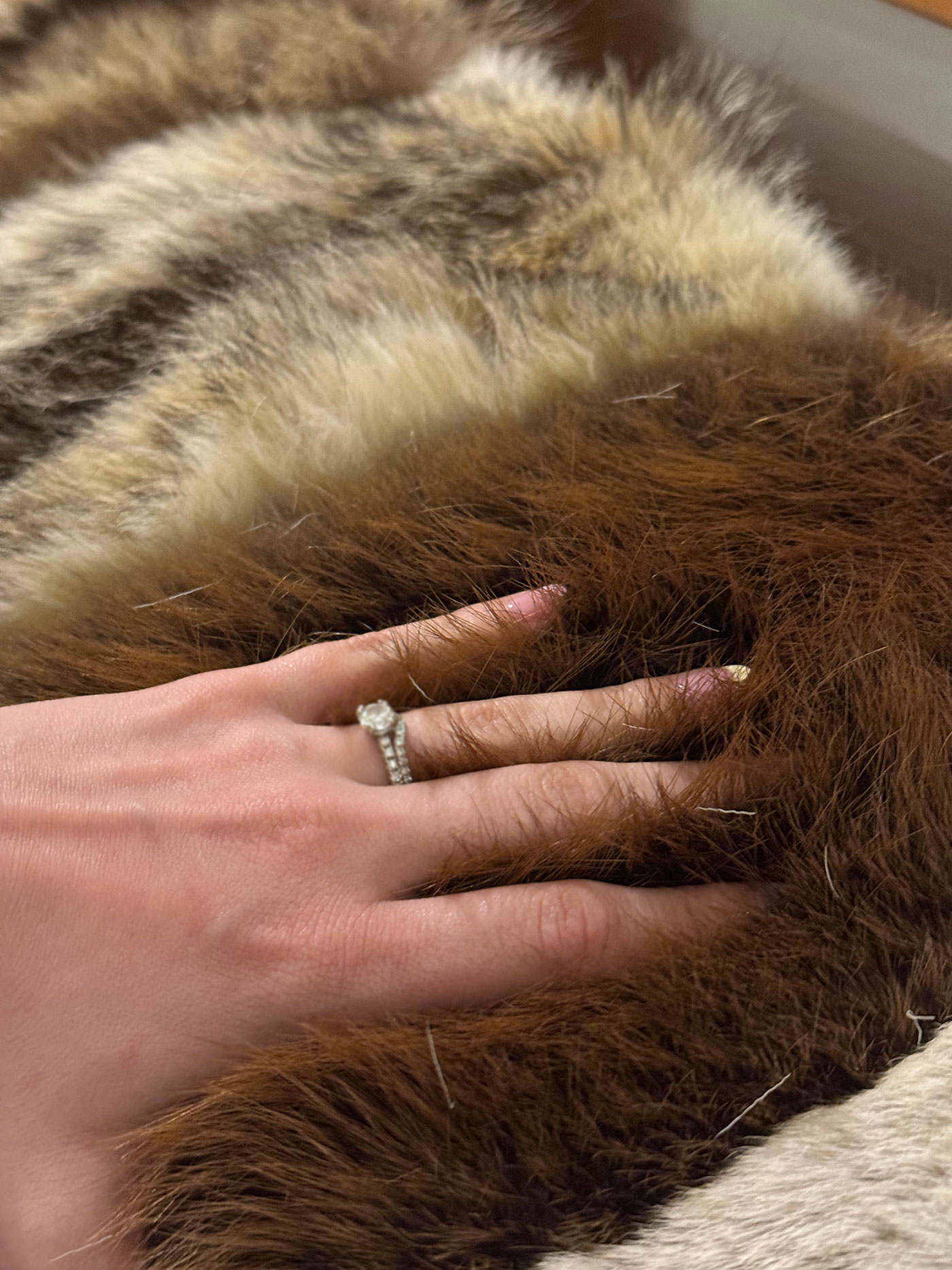
There are also several cabinets of taxidermied birds as well as touch table with pelts of different animals, including an otter, a skunk, and a bear, that visitors are encouraged to feel. “People love the touch table,” Tir says.
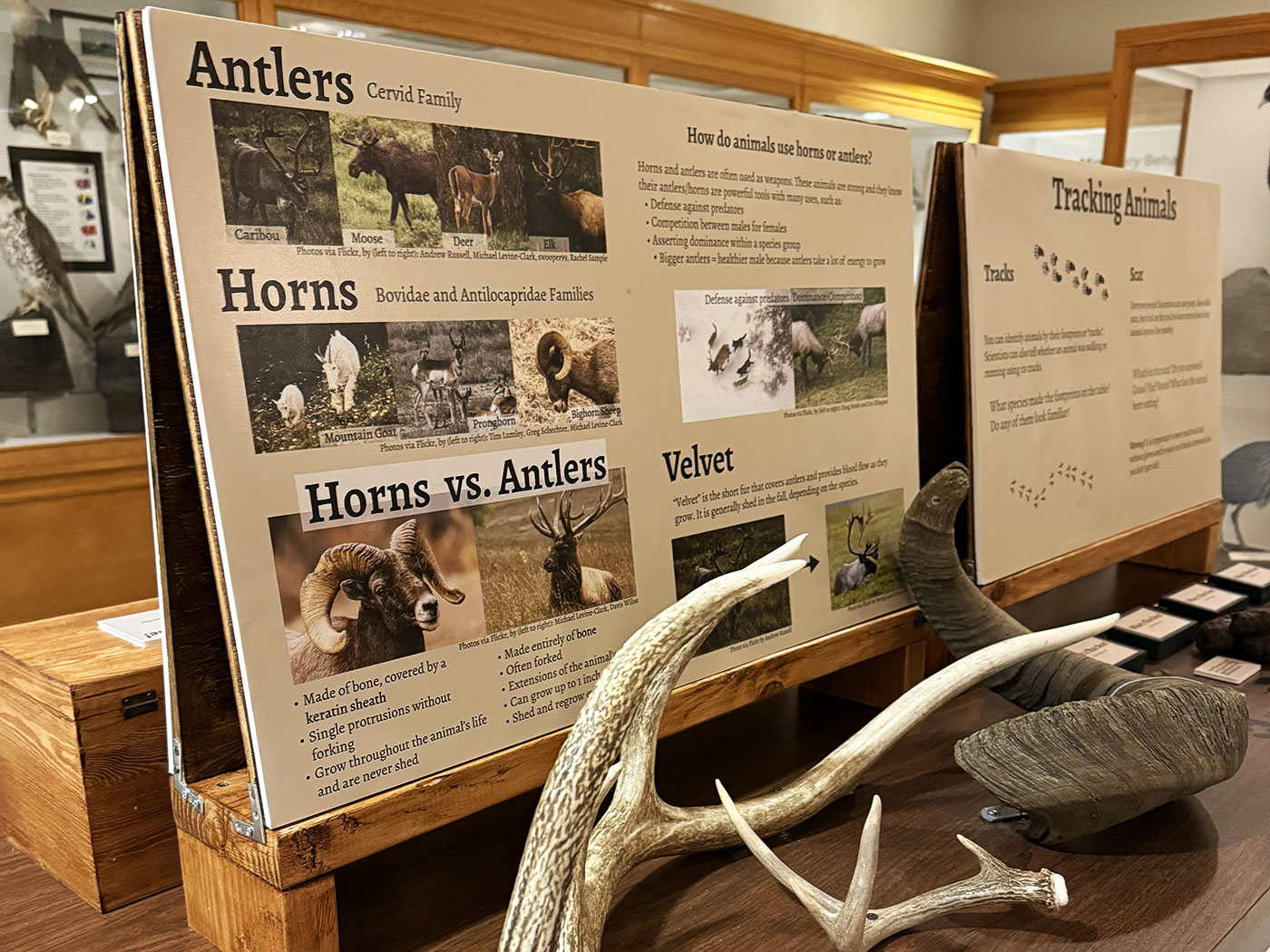
A new touch table was recently installed in the east galley, the biggest of the museum’s three galleries. It holds bird and mammals from the Northwest, including a taxidermied cougar that was recently relocated from a tucked-away back corner.
“Now it’s the first thing you see when you come into the east gallery,” Woods says, noting it makes for a dramatic greeting. “It’s one of the better-looking taxidermies, in my opinion.”
Woods particularly enjoys an east gallery exhibit on how different species are formed. “It talks about the process of speciation, using woodpeckers as an example. It’s an example of one of the updated displays we have,” she says.
The west gallery mostly holds a mix of mammals and birds, including an American bison that was on display for decades at a tavern. The room is being gradually rethemed to highlight aquatic animals, including penguins, beavers, seabirds, and a 5-foot-long whale skull.
The museum aims to install two to three new exhibits each year. And, notes Tir, “A lot of our displays have undergrad involvement. It’s a good way for them to practice their science communication skills.”
The new touch table in the east gallery, for example, was a project for a student’s Honors College thesis. An intermediate painting class recently completed a mural, unveiled in spring 2025.
For her master’s degree, Tir studied how birds, specifically pine siskins, communicate about food. “They are very cool little birds,” she says, noting a new birdsong display is in the works at the Conner Museum.
A microphone records birdsong at the School of the Environment’s E.H. Steffen Center, a 45-acre outdoor lab on the WSU Pullman campus. “We will see a live feed of whatever’s calling on campus—magpies, chickadees—and use AI to figure out what bird is calling,” Tir explains.
One of the museum’s tucked-away storage rooms houses rows of tall, metal cabinets, filled with drawers of skulls, bones, and animal skins stuffed with cotton. There are the skeletons and pelts of several cougars. “We also have an unusually large collection of swans,” Tir notes, pulling open one of the drawers to reveal white, feathery study skins.
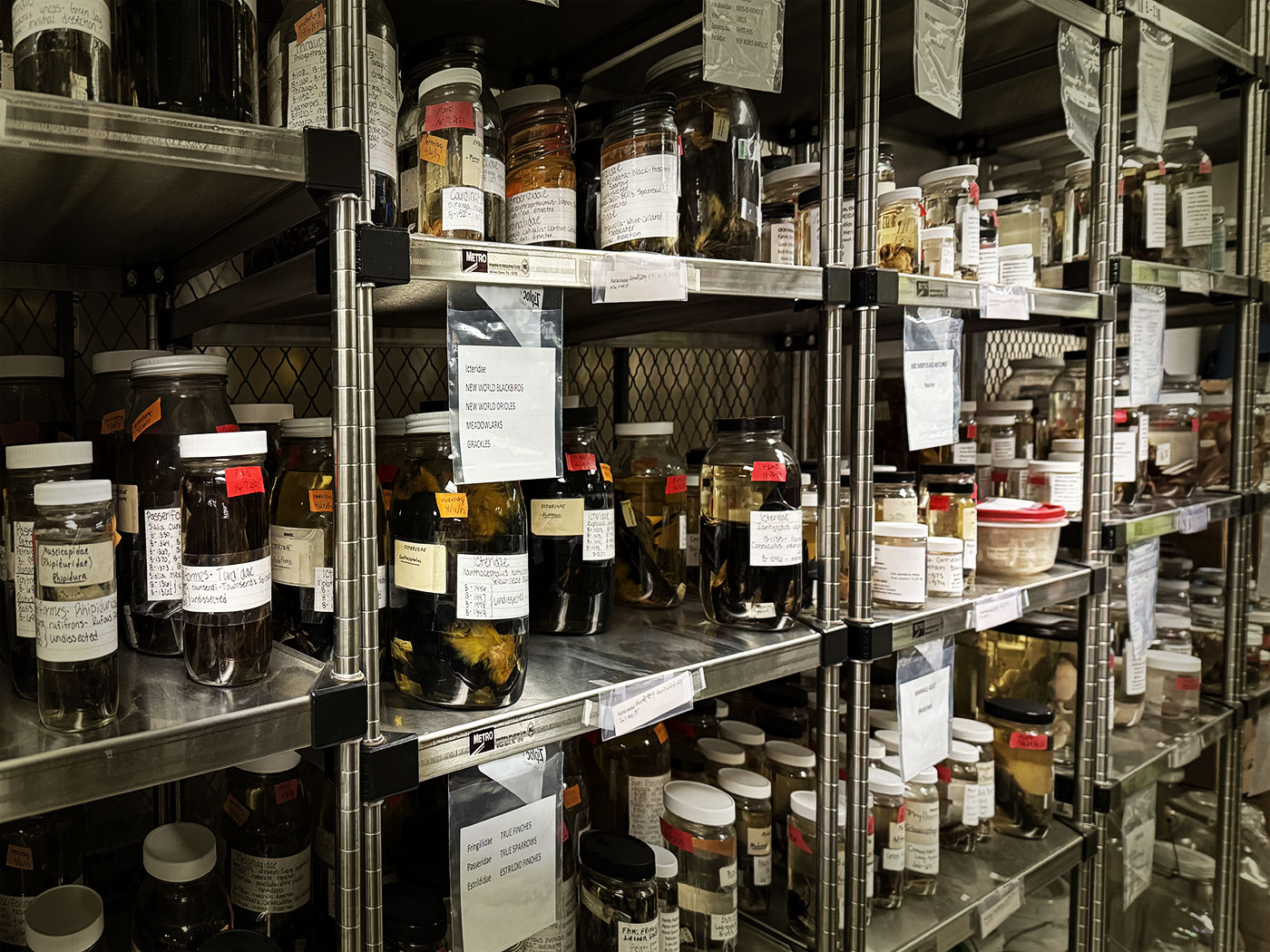
The other storage room is filled with shelves lined with jars filled with specimens preserved in fluid. This is where specimen No. 4 now calls home.
“We don’t have a lot of marine animals and invertebrates,” Tir says. “At some point, the museum decided to specialize in vertebrates and other stuff kind of got put in a closet—which is unfortunate. If no one is watching over the specimens, they can dry out and become damaged. We’re lucky the jellyfish is in really good shape.”
Her plan is to catalog the jellyfish and the other findings from Heald, Eastlick, and Abelson halls, and welcome them back to the collection at the Conner Museum. “That’s another one of my goals: get this data out there for people to use. It’s part of making science accessible.”
(Photo Jessica Tir)
Read more
Get real at campus museums (Fall 2025)
Fine Specimens (Summer 2009)
Conner Museum (School of Biological Sciences)