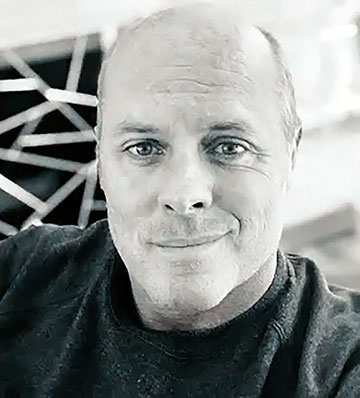
Tim Mulligan had always enjoyed writing. During the COVID-19 pandemic, he tried a new genre: supernatural horror.
“I hadn’t done anything creative like this before,” says Mulligan (’90 Hosp. Busi. Mgmt.), chief human resources officer for California Coast Credit Union. “I started creative writing in my mid-50s when many people are looking to retire. Now that I’m an empty-nester, I’ve become addicted to writing and creating. I feel like I am just getting going. You’re never too old to start something new.”
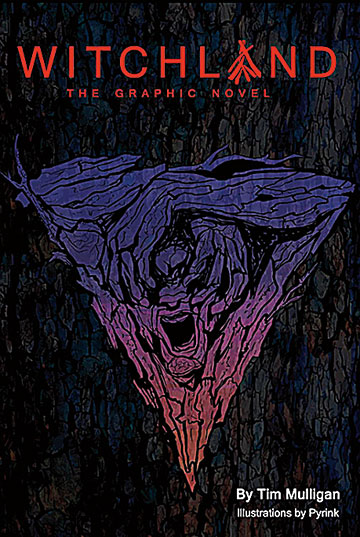
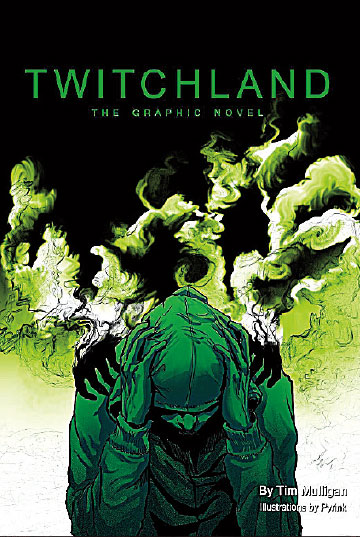
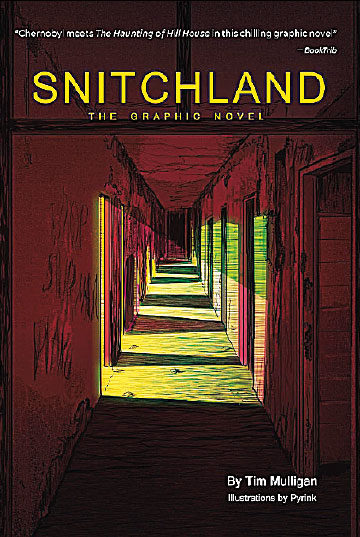
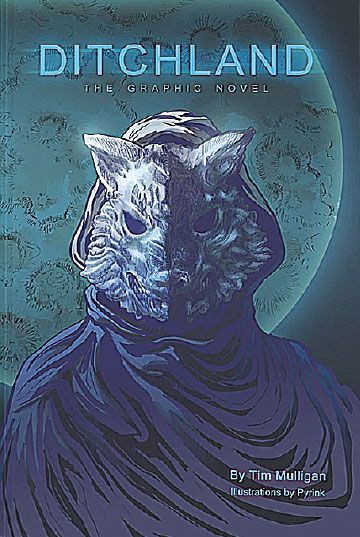
Mulligan’s first two graphic novels were published in 2024. A third was released in 2025 and a fourth in 2026. The dark, spooky, and semi-autobiographical World of Witchland series is set in his hometown of Richland. “People who live there don’t talk about the nuclear reactor,” Mulligan says. “But you can’t deny its history. It’s part of living and growing up there. I hear from people reading the books who aren’t from Washington, and they can’t believe it’s a real place.”
Witchland started as a play Mulligan later adapted. San Diego’s Backyard Renaissance Theatre Company staged the work in late 2021. It follows a same-sex couple as they move from Seattle to Richland for a fresh start and instead find a witch who terrorizes residents. The saga continues in the ghostly Snitchland, which explores political conspiracy and environmental corruption. In Twitchland, toxic waste turns bats into violent zombie-like creatures.
Ditchland features what Mulligan calls “my version of werewolves.” The fifth, and likely final installment, Switchland, is a flashback, slated for publication in late 2026 or early 2027. “It’s the origin story of my witch, but it also tells the story of UFO or flying saucer sightings at Hanford in the 1940s,” Mulligan says.
The decommissioned nuclear production complex looms large in the series. Queer subthemes and social commentary run throughout the books, which feature characters based on Mulligan’s own family—himself, his longtime partner, and their adopted daughter. They also have an adopted son, who’s not depicted in the books. “He was like, ‘Leave me out of it,’” Mulligan says. “But the main character is based on my daughter. She thinks it’s fun.”
Mulligan splits his time between San Diego and Palm Springs. But he was born and raised in Richland. “I have a lot of affection for it,” he says. “But it wasn’t great for me. I got bullied quite a bit. Luckily, I had a good group of friends.”
He did at Washington State University, too. In fact, several Cougs inspired characters in the Witchland books.
Mulligan was “super involved” with WSU’s hospitality program, serving as president of the Sigma Iota student club and completing internships in Los Angeles and New York City. After graduation, he moved to San Francisco to work for Westin Hotels and Resorts.
Terry Umbreit (’84 PhD Ed.), director of the School of Hospitality Business Management until his retirement in 2008, “was a mentor to me,” says Mulligan, who later taught at WSU Everett, mentored and hired WSU students, and served on Carson College’s Human Resources and Management Advisory Board. He also set up the Mulligan Hospitality Scholarship.
“My ties to WSU go long and deep,” says Mulligan, who also earned a law degree from Gonzaga University. In 2000, he moved from Seattle to San Diego, where he was the human resources director for the famed San Diego Zoo—and where he wrote his first book.
Quarantined in Palm Springs during the pandemic, Mulligan wrote two cookbooks and the Witchland play. “I’ve been cooking forever, and hospitality is in my roots,” Mulligan says. But “I never thought anyone would see the play. It was kind of my own fun project.”
After San Diego, Witchland was performed in Palm Springs as well as off-Broadway in New York City. Encouraged by the response, Mulligan decided to turn the story into a graphic novel.
Each book is “a little different in tone.” But the target audience is the same: “horror fans or thriller fans, and fans of graphic novels and comic books.”
The books are “creepy and scary and fun,” Mulligan says. “I want people to enjoy themselves and give into the supernatural elements. If they learn something about Hanford, that’s a plus. There’s a little bit of history and a lot of craziness and the chance to read something that’s unlike anything they’ve ever read before.”