

The Storm’s been brewing since 2000. And while Nate Silverman hasn’t been part of the excitement since its first season, he attends every home game of the women’s professional basketball team, often sitting courtside with clients.
“It’s full circle for me,” says Silverman (’04 Sport Mgmt.), who started his career in promotions and ticket sales, and now serves as chief commercial officer of the Seattle Storm. “I’m fortunate that, in my role, I have the opportunity to share incredible experiences with clients, colleagues, friends, and family. I don’t think there’s a better experience than sitting courtside with your feet on the floor.”
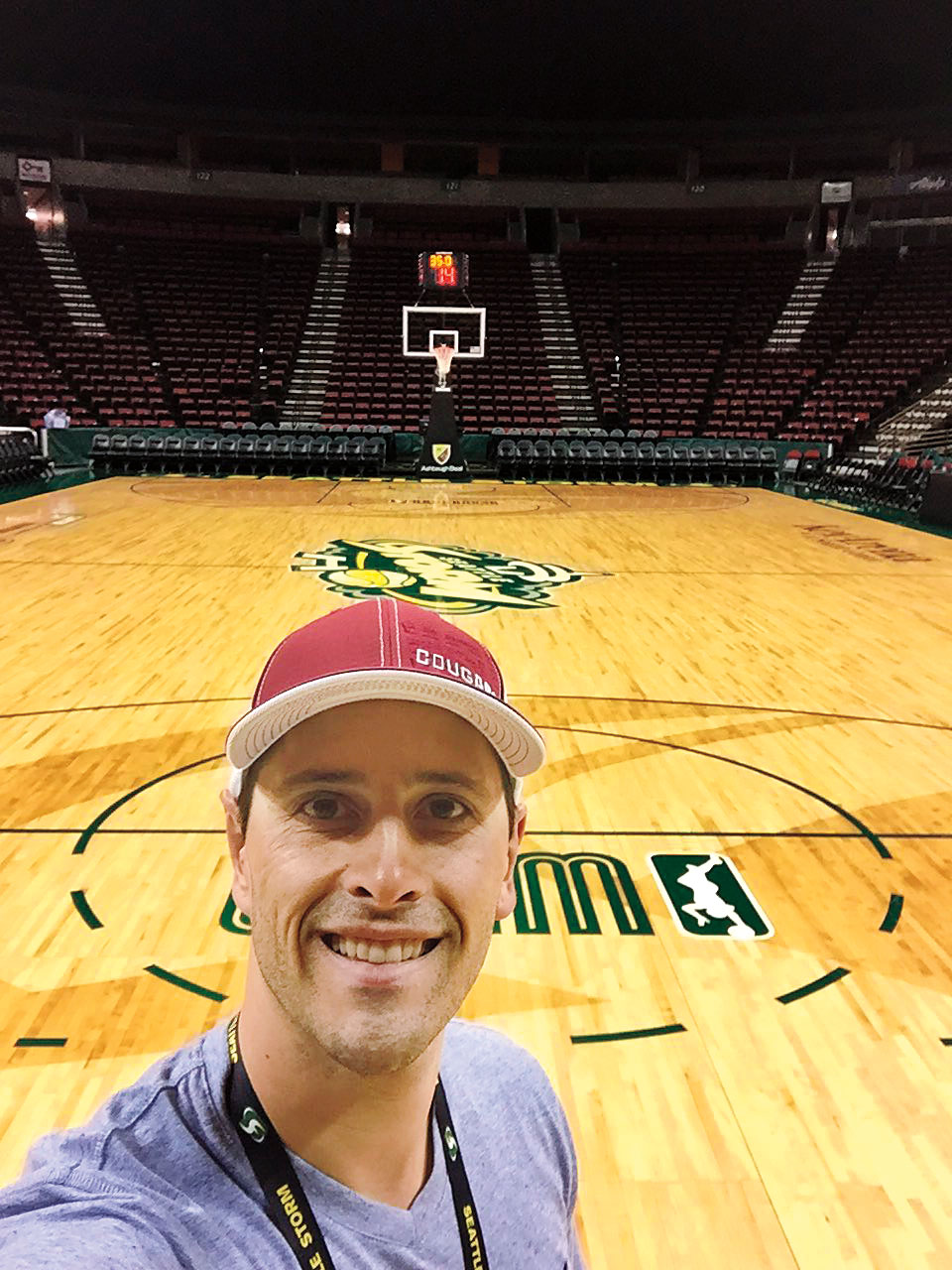
The Storm’s 27th season—Silverman’s twelfth with the team—starts this spring. Since 2014, he’s led the four-time WNBA champions’ corporate partnership, community, and social impact efforts. One of his proudest achievements includes securing naming rights for the state-of-the-art BECU Storm Center for Basketball Performance, built in 2024. The deal marked the first time an independently owned WNBA team secured a sponsor for the naming of its practice facility.
“That was definitely a landmark moment,” says Silverman, noting another top accomplishment with the Storm is negotiating a TV partnership to air home games with KOMO and The CW Network.
In all, Silverman has worked more than two decades in the sports and entertainment businesses. He’s been a member of the board of directors of the Seattle Sports Commission since 2018 and a member of the board of trustees of the Seattle Chamber of Commerce since 2023.
He joined the Storm in 2014 as vice president of corporate partnerships, was named senior vice president in 2017, and was promoted again in 2022. During his tenure, corporate partnership revenue growth jumped nearly 500 percent.
The team also expanded its social justice and community platforms, which Silverman ran until 2025 when the Storm hired its first social impact officer. Since 2020, the community and social impact department has raised and donated more than $2 million and led the development of youth programs reaching more than 55,000 children and teens in the greater Seattle area.
“Growing up, I was always passionate about sports, especially basketball,” Silverman says.
He didn’t realize he could study sport management until he transferred to Washington State University. “I remember seeing the major listed, and I was shocked. It opened my eyes that there are careers in sports” beyond being an athlete. “It sparked something in me.”
Silverman took tickets at volleyball games, served as an away-team liaison for basketball, and gave away rally towels and T-shirts during football games. Going to the 2003 Rose Bowl was a highlight.
Senior year, he was a finalist for an internship with the Seattle SuperSonics. “I remember sitting in the nose-bleed section as a kid and waiting post-game to try to get autographs from players,” he recalls.
When he didn’t get the job, he petitioned the New York Knicks, landed a position in game-day promotions, and moved to Manhattan. The role involved throwing T-shirts into the crowd and escorting the anthem singer onto the court—and he loved it. He was interested in all aspects of sport management—everything, that is, except sales.
But, back in Seattle, that’s what the longtime Sonics and fledgling Storm needed. So, Silverman says, “I figured it was the best way to get my foot in the door.”
Today, “I work on finding brands that align with our values, brands that want to lift and elevate our players, women’s sports, and the Seattle region in general,” Silverman says.
At the end of 2025, “we finished out the year up in every way: ticket revenue, sponsorship revenue, merch revenue, attendance, TV viewership,” Silverman says. “I think we’re in a pivotal moment in women’s professional sports, especially in the WNBA, particularly the Storm. The numbers are just off the charts.”
He doesn’t travel to away games as much anymore. Silverman and his wife, Alona, a nurse practitioner, have two children: six-year-old daughter Tayla and son Weston, who turns four in May.
He still does attend home games.
“It’s always exciting on game day,” Silverman says. “Even after more than 20 years in the business, the energy inside of a packed arena still gives me goosebumps.”