
Ten years ago, Washington State University’s Elson S. Floyd College of Medicine opened its doors with a bold mission: Provide more doctors for rural and underserved communities.
Now, members of that first graduating class in 2021 are establishing their careers. Several alumni recently reflected on their experiences at the College of Medicine, including the paths they traveled to becoming physicians.
Their experiences match the vision of the late WSU President Floyd of educating doctors who reflect the diversity of the communities they serve.
Christie Kirkpatrick Schmutz (’21 MD), internist
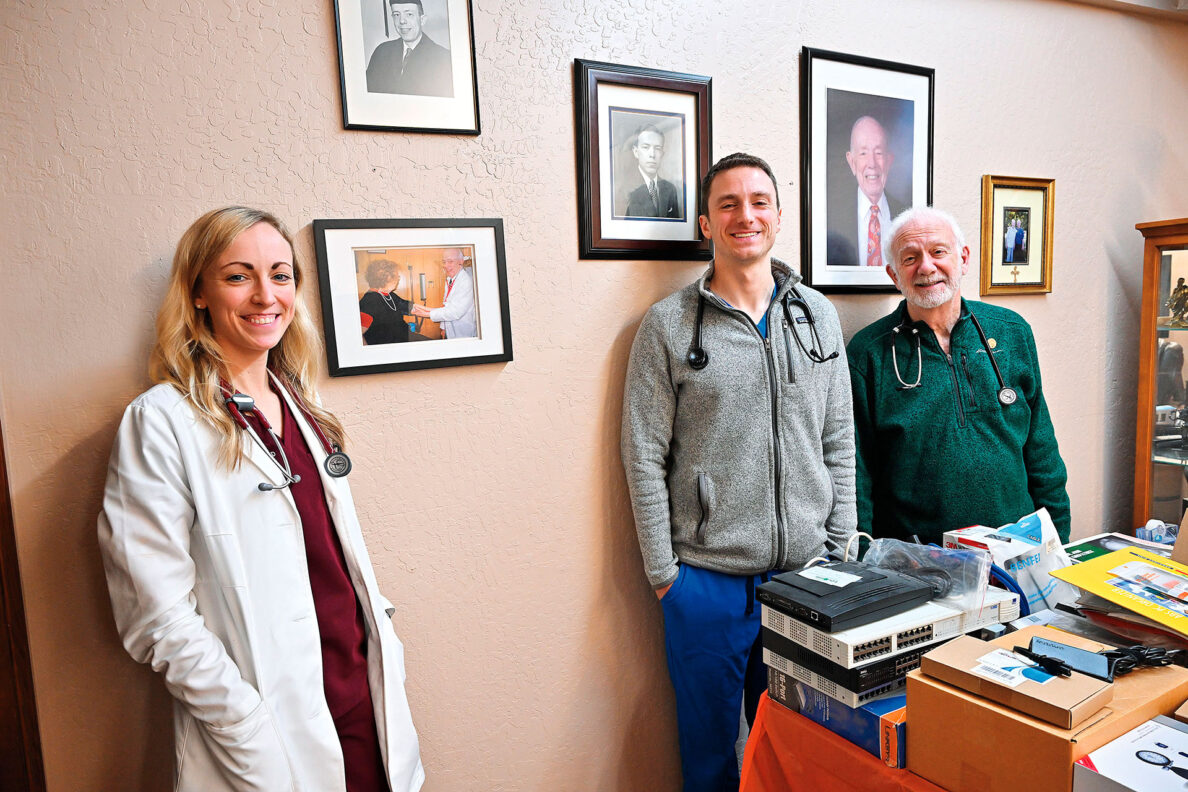
Christie Kirkpatrick Schmutz’s family has been caring for patients in southwest Washington since the 1940s, but she wasn’t initially sure she wanted to be a doctor.
That changed the summer she worked as her dad’s medical scribe at Kirkpatrick Clinic in Longview and watched him interact with patients.
“It was inspiring. He was more than a doctor, he was a life coach,” she says. “Oftentimes, we look at a small mill town and see a lot of poverty and interpersonal challenges among families. My dad helped patients work through those things. It wasn’t just, ‘Your blood pressure is fine. See you next year.’ It was ‘How’s work and how’s your family? Did your daughter get into college?’”
In 2024, Kirkpatrick Schmutz joined her dad and brother at Kirkpatrick Clinic, where patients call them Dr. Richard, Dr. Scotty, and Dr. Christie. Being part of the clinic established by her grandfather aligns with her deep affection for her hometown and the WSU College of Medicine’s focus on the community medicine exemplified by her dad.
As an internist, Kirkpatrick Schmutz sees a wide variety of patients, but about half of her practice is obesity medicine.
“Like anywhere in America, I see a lot of obesity, which is the root of so many other medical conditions,” she says. “Being in the medical school’s first class and being a trailblazer gave me the confidence to pursue an emerging field during residency.”
At Kirkpatrick Schmutz’s residency at Virginia Mason Medical Center in Seattle, a primary care internist introduced her to prescription medications showing promise for weight loss. She followed up with an obesity medicine rotation and took a deep dive into new weight loss medications.
“I’m the local expert on Ozempic and Mounjaro medications,” says Kirkpatrick Schmutz, whose undergraduate studies were in nutrition and exercise science. “I was excited to learn that I could offer treatment to patients for a very frustrating disease. I was counseling patients on eating healthy and being active. For many, that wasn’t enough.”
Besides Longview and Kelso, the clinic’s patients come from the surrounding rural areas. Chronic pain from job-related injuries is also common among patients, and so are anxiety and depression.
“I always knew that I wanted to come home to Longview to practice,” Kirkpatrick Schmutz says. “I like that I’m bringing a big city education and quality of care to a small town, my hometown.”
David Choi (’21 MD), psychiatrist
Becoming a doctor wasn’t something David Choi pictured for himself in high school. Even attending college seemed like a stretch.
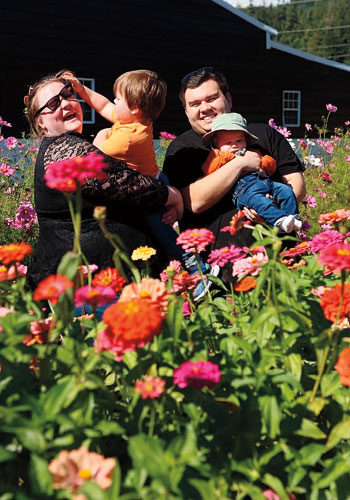
“My family had had some struggles, including losing my brother to suicide,” says Choi, now a psychiatrist at Salem Hospital in Oregon. “It was a rocky time. My objective was to get a job and help support my family.”
Scholarships made higher education possible for Choi, a first-generation college student from Washougal. At WSU Vancouver, he became the student body president. He took electrical engineering classes before evaluating health care careers. Outside of class, Choi started a medical transcription service used by psychiatrists at Columbia River Mental Health Services.
He also met then-WSU President Floyd and lobbied for the new WSU medical school in his student government role.
“It was a wild ride,” Choi says. “The traditional path to medical school is to get good grades, focus on undergraduate research, and do one volunteer activity. Instead, I used what was important to me and the community around me to guide my decisions. I’m glad I had the chance to explore in college, because I had no idea what I wanted to do.”
In medical school, Choi continued to use his leadership skills. The American Association of Medical Colleges has a student branch, and Choi chaired the western region, which represented 21 medical schools. “The leadership experience made me really confident for my residency,” he says.
At Salem Hospital, Choi sees patients from a wide geographic area of Oregon. He also works at an addiction treatment center.
“I come from a low socioeconomic background, but I had a lot of support,” he says of becoming a psychiatrist. “I had a loving family and a family away from home through WSU. And I was encouraged to get involved in leadership.”
Choi says he’s grateful for Floyd’s vision. “The medical school’s stance for caring for people comes from Elson Floyd’s heart. I genuinely believe he was the reason I had such a positive experience.”
David Riesberg (’21 MD), interventional radiologist
After 10 years in the military, David Riesberg was looking for his next career. In a bit of serendipity, he and his wife settled in Spokane just as WSU announced plans to open the new medical school.
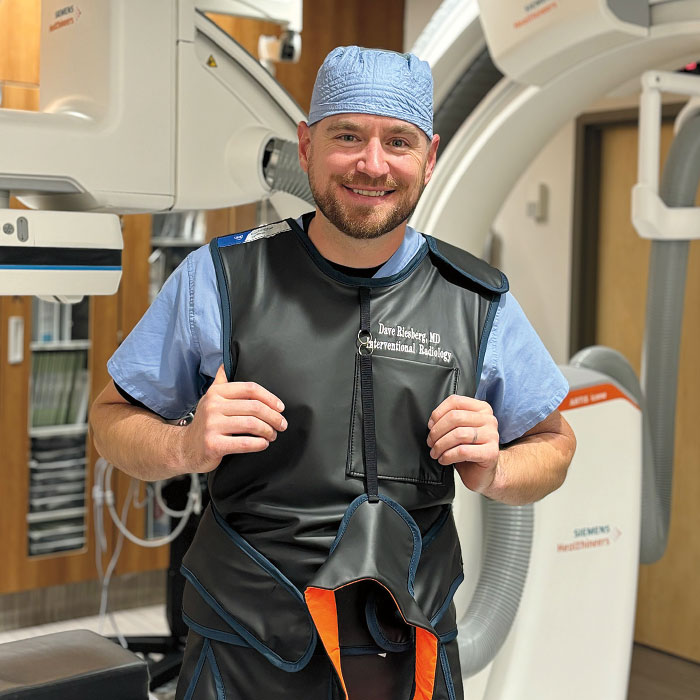
His wife, Jaycie (’12 DVM), was starting a residency in veterinary ophthalmology. Riesberg enjoyed listening to her “medical talk” with her colleagues, and he’d previously taken the MCAT exam.
“I decided to toss my hat in the ring,” he says. “Since my wife is a WSU graduate, I was familiar with what the new medical school was trying to accomplish. I liked the focus on rural and underserved communities.”
Riesberg was older than his classmates, but the sense of camaraderie and leadership among the inaugural class felt familiar to the former Green Beret. His military career gave him a flexible mindset that served him well in the classroom, and his life experiences helped shape his medical path.
During a stint as a volunteer EMT with the Deer Park ambulance service, Riesberg was exposed to interventional radiology after transporting an elderly stroke patient to Providence Sacred Heart Medical Center in Spokane.
“The patient’s stroke was amenable to a thrombectomy,” Riesberg says. “From the vasculature in her groin, an interventional radiologist was able to go in and remove the clot, essentially saving her brain. I was blown away by the procedure.”
Riesberg is currently doing his residency in radiology at the University of Utah, with additional training at the Huntsman Cancer Institute. When he completes the work, he will be board certified in both diagnostic and interventional radiology. Eventually, he and his wife would like to practice in a smaller town in the West.
That desire was influenced by Riesberg’s short internship with an orthopedic surgeon in Omak during medical school, where he got a first-hand look at the challenges and rewards of rural medicine.
“It’s like being in the military,” he says. “You’re in a resource constrained environment, and you have limited assets available. How are you going to complete your mission?”
“10 Years of Homegrown Health Care at the Elson S. Floyd College of Medicine” video
Celebrating the Legacy of Elson S. Floyd, Visionary Behind the WSU College of Medicine