

When Washington State University President Elizabeth “Betsy” Cantwell was interviewed for this story in late April, there was a long shadow over higher education, one cast by state budget woes and federal disruptions. No one could predict what would happen by August, when the story was set to publish.
But certain things were clear, Cantwell observed. “We know our mission is to make sure anyone who wants an education like we offer has access to one. We know our communities need us. And we know our Cougs love us.”
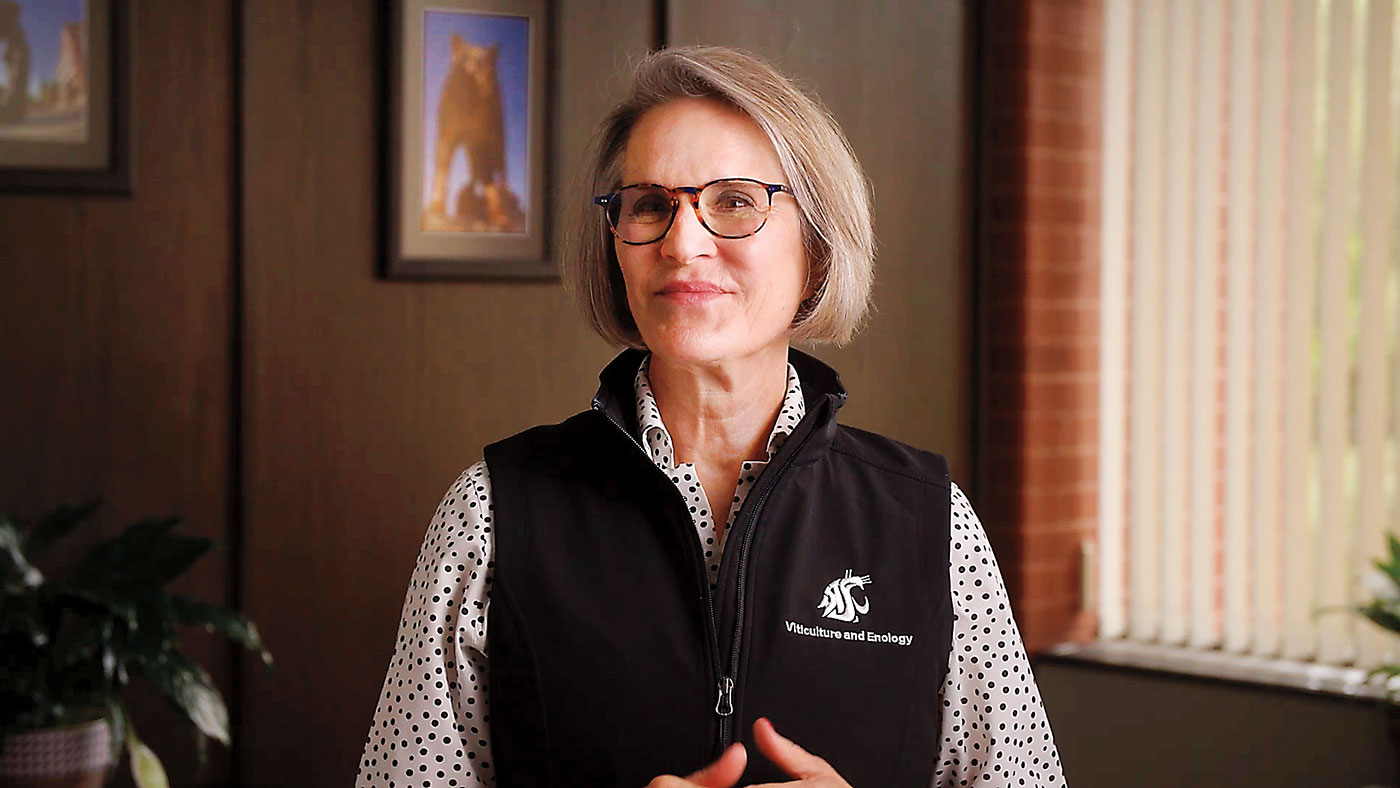
Cantwell was less than a month into her job as WSU’s twelfth president, having come from the same position at Utah State University. Her résumé also includes senior leadership positions in research and innovation at the University of Arizona and Arizona State University, and service to US national security with strategic roles at Lawrence Livermore National Laboratory and at Oak Ridge and Los Alamos National Laboratories.
She’d recently returned from a whistlestop tour of WSU campuses around the state. One of her takeaways is that WSU is in a better position to push past hurdles than many other colleges and universities around the country. With newer buildings and facilities on all five of WSU’s physical campuses, “we’ve been well taken care of by the state of Washington,” she says.
“You don’t see that all that often,” she adds. “As a nation, most of our investments into public higher education were made in the ’50s and ’60s. Having that gives us enormous run room to be innovative.”
She says WSU has a strong brand that is, like its logo, recognized around the world. And the university’s dedication to students is evident, with a smorgasbord of academic, financial, social, and community-based programs available across all campuses.
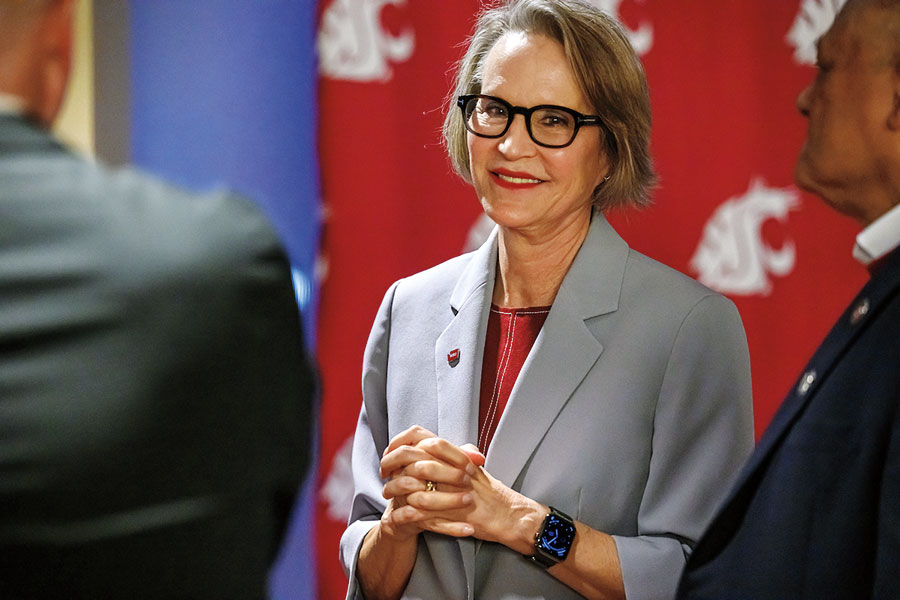
Nevertheless, changes are coming.
The long-predicted and long-dreaded, among higher education professionals, “enrollment cliff” has arrived. A falling birth rate that began in 2007 means a drop-off in the number of 18-year-olds graduating from high schools, who make up the traditional pool of college students.
But change is also coming through technology and innovation, and through an evolution of the concept of higher education.
“While the experience of coming to campus will endure, because that brings a lot of value, for some the days of taking four or five years of your life to go to school will be waning,” Cantwell says. “That doesn’t mean what we do, or the excellence we bring to our mission, won’t be available. We just will do it in new and different ways.”
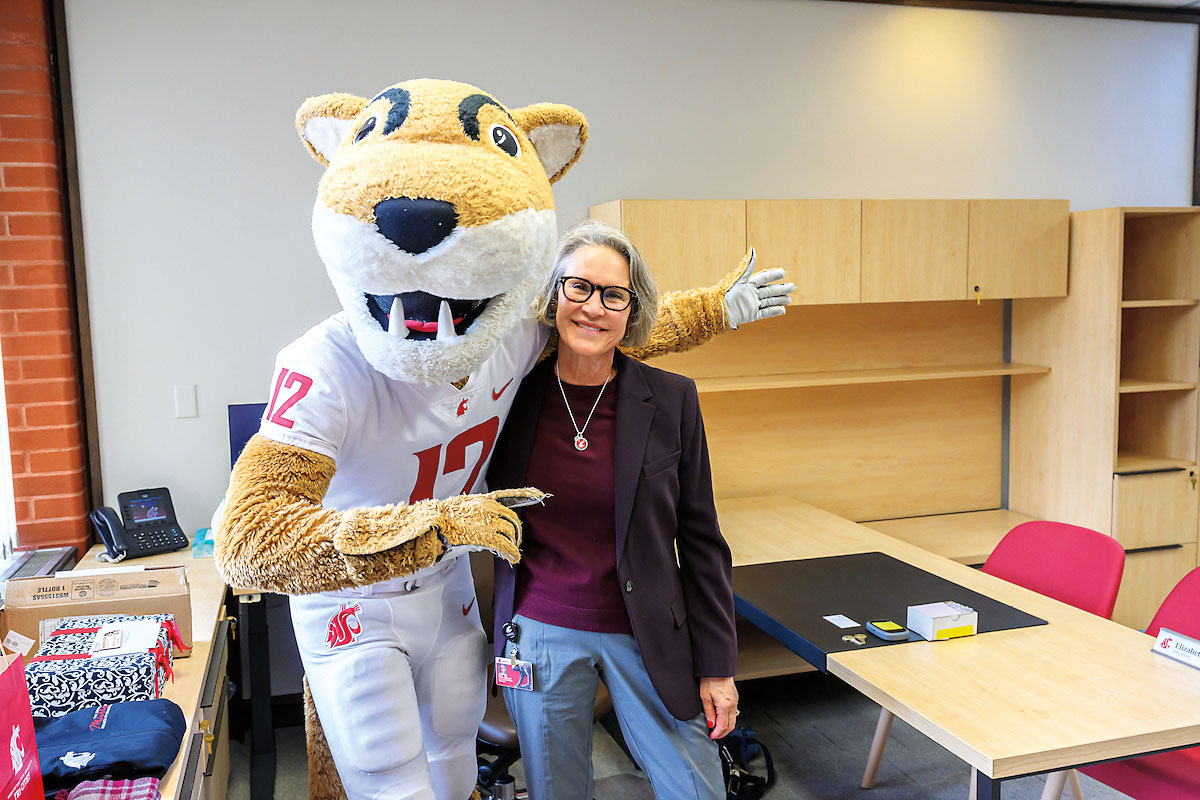
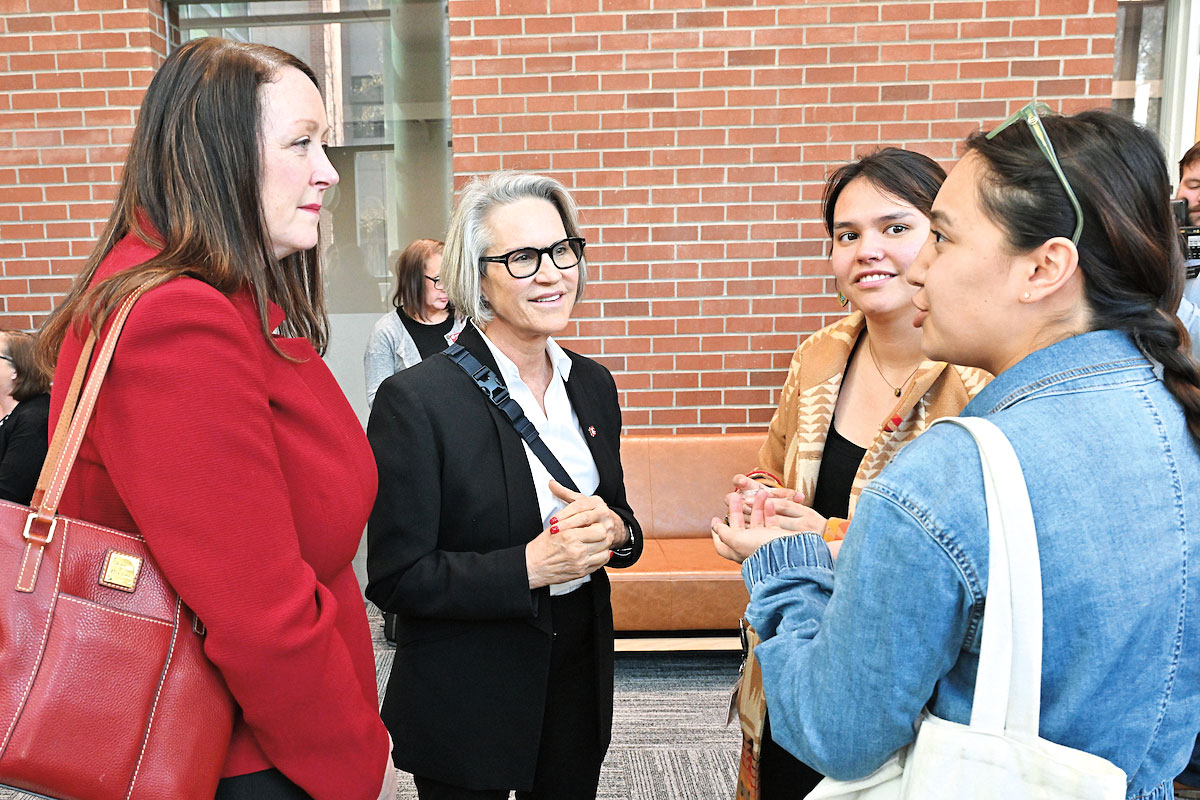
(Photo Robert Hubner)
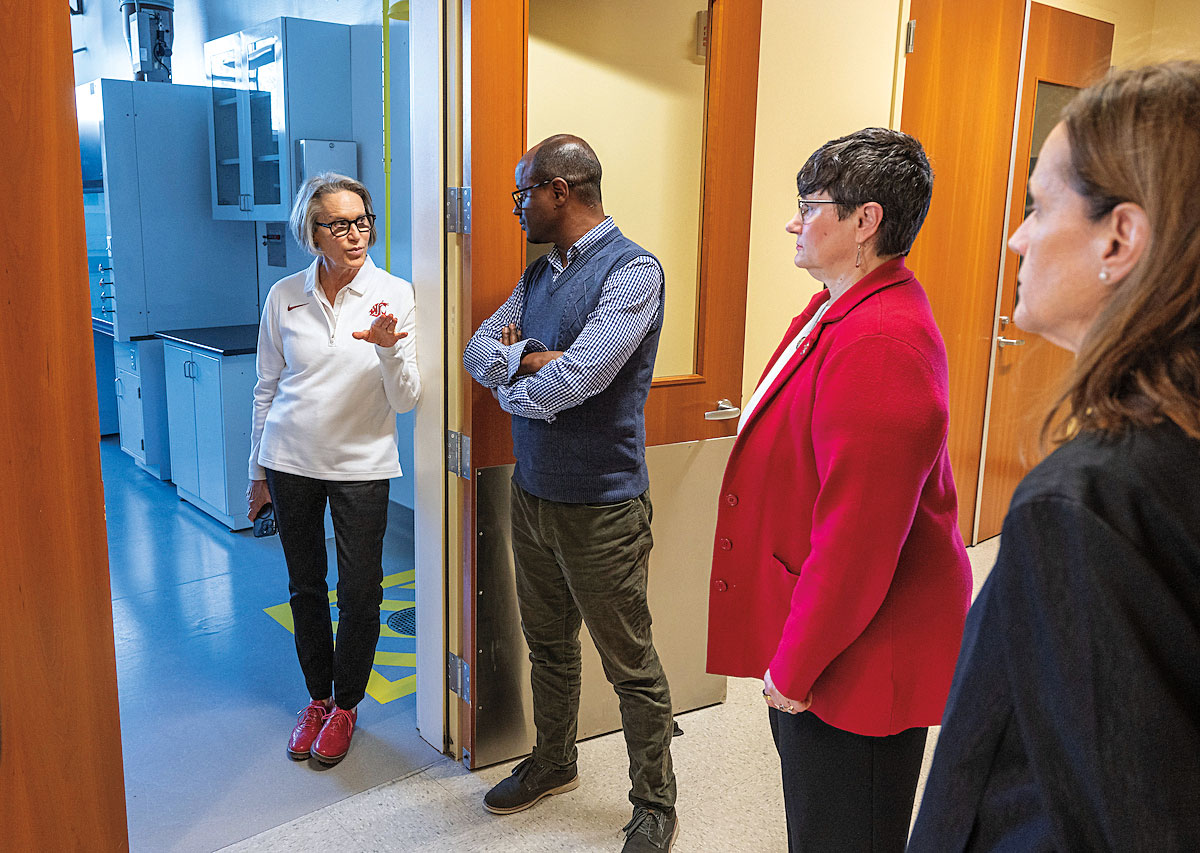
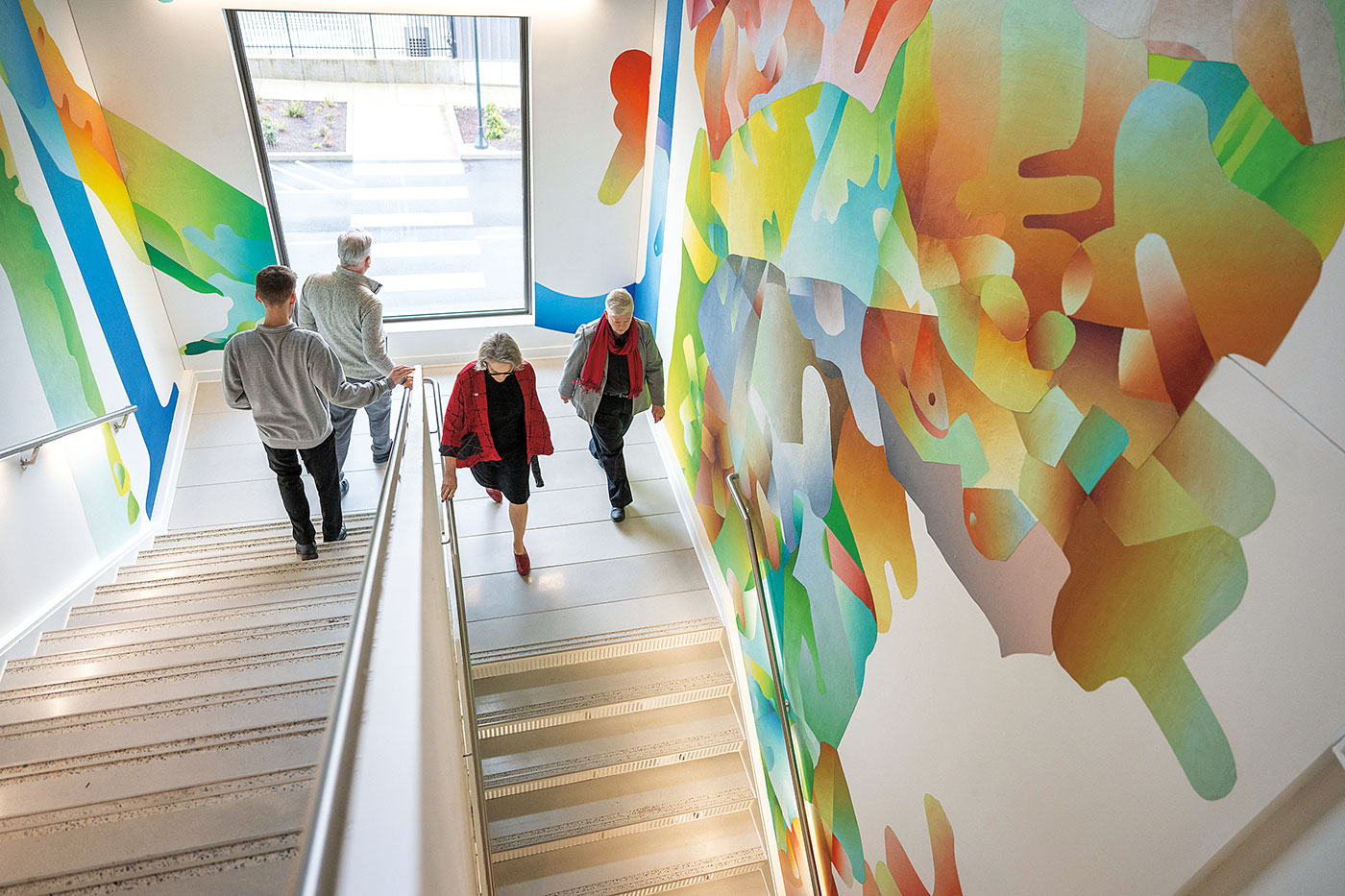
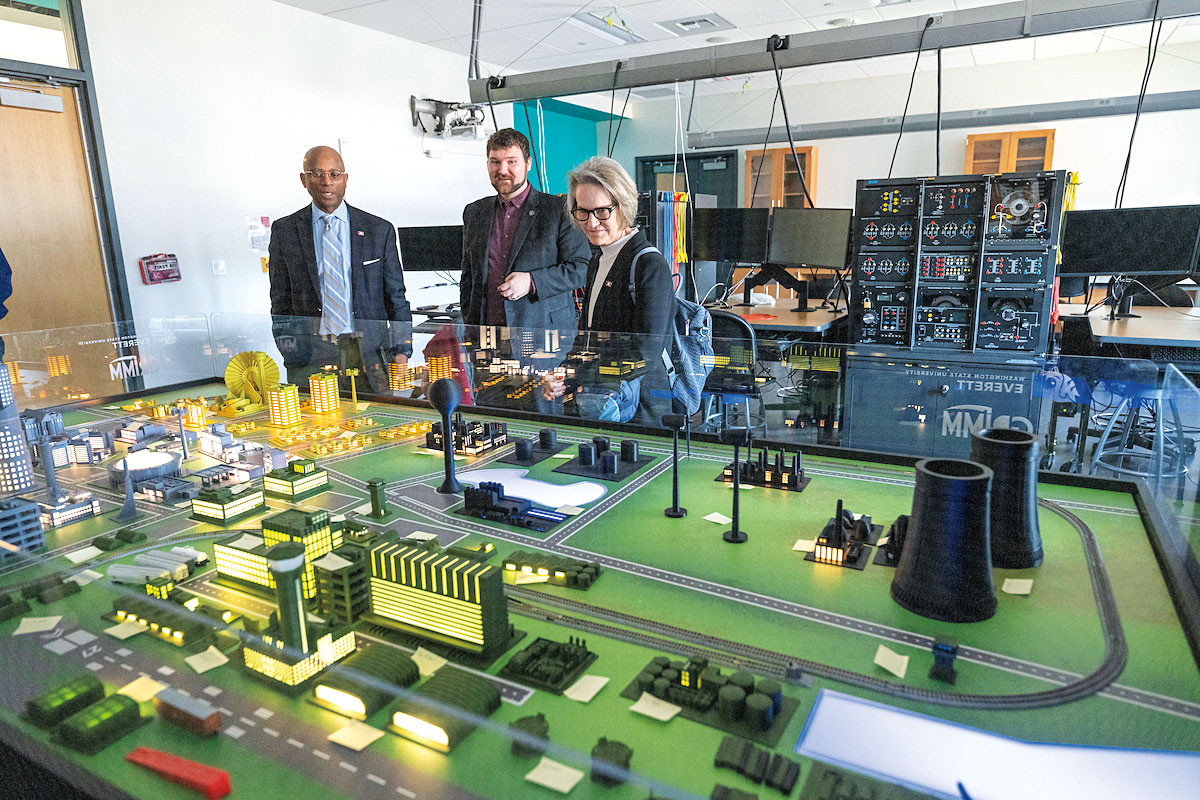
(Photo Robert Hubner)
Different might mean offering shorter programs to help working professionals gain skills needed to advance in their careers. Or it could mean instruction that combines faculty discussion with immersive technologies or digital experiences, a hybrid approach that’s already in use in some programs
Cantwell believes artificial intelligence has great potential for higher education—to complement, not replace, faculty and staff. For example, AI could bring personalized learning by assessing a student’s progress and designing educational components that target that student’s gaps. It could alert counselors that a student is in mental distress.
“It really expands the world of the possible,” she says.
To get there, Cantwell likes the strategic process of future-casting: imagining various possibilities, then developing plans around those. For instance, WSU Health Sciences might bring in WSU alumni in the health care professions to discuss how they think delivery of care could change in coming decades. That helps structure discussions of how education might need to adapt.
“When you do that, you create a learning organization, and you disaggregate power and authority,” she says. “People have permission to think big and talk about their ideas. And people in universities are very, very good at coming up with interesting new ideas.”
Cantwell doesn’t discount the weight of uncertainty in higher education right now. But she believes institutions like WSU will survive—and thrive. And though she is just starting her time here, she knows what she’d like her legacy to be: “That we feel good about everything Washington State University stands for, and that we fully realize our capacity to serve our communities.”
Envisioning what can be: A letter from President Cantwell